
Medically reviewed: 9 September 2026 · Last updated: 9 September 2026
A plain-language guide to what an ECG checks, how the test is done, and what it costs in India.
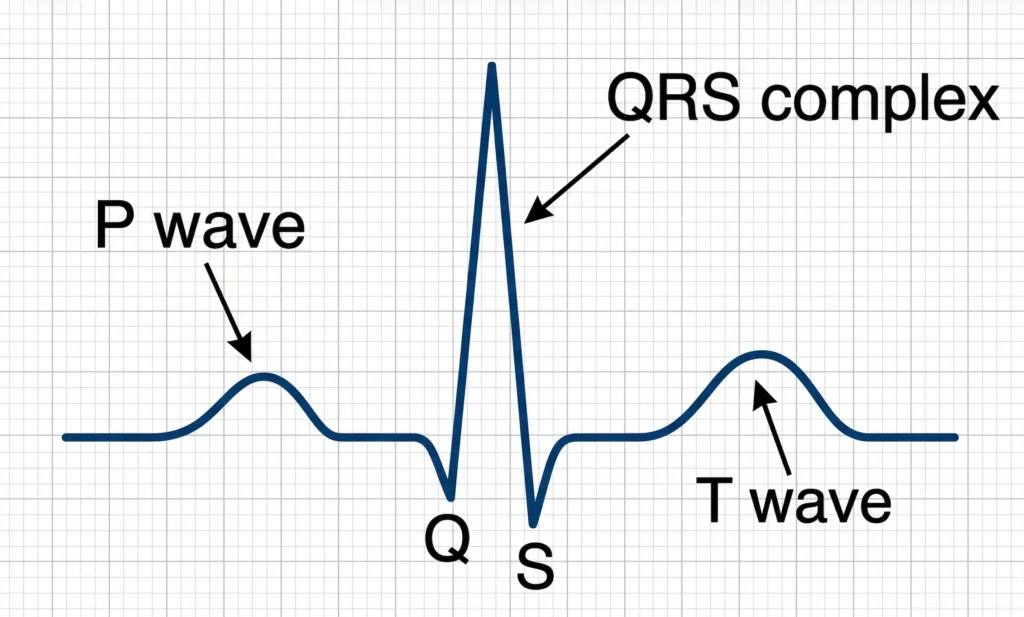
Your doctor says you need an ECG, and the first thought is: what is this test, and should I worry? Relax. An ECG is one of the simplest, safest and quickest heart checks there is. This guide explains what an ECG test is, how it works, its types, its cost, and why doctors reach for it so often.
Quick Answer
- What It Is: An ECG (electrocardiogram) records your heart's electrical activity as wave patterns.
- How Long: The whole test takes about 5 to 10 minutes.
- Does It Hurt: No. Sticky pads read signals from your skin. Nothing goes into your body.
- Is It Safe: Yes, including for children and during pregnancy.
- Cost in India: Roughly ₹150 to ₹800, most often around ₹300 to ₹500, depending on the city and centre.
What Is an ECG Test, in Simple Words?
Your heart runs on tiny electrical signals. Every heartbeat begins with a small electrical spark that travels through the heart in a set path and makes it squeeze and pump blood. An ECG, short for electrocardiogram, is a machine that picks up those signals through sticky pads on your skin and draws them as waves on paper or a screen.
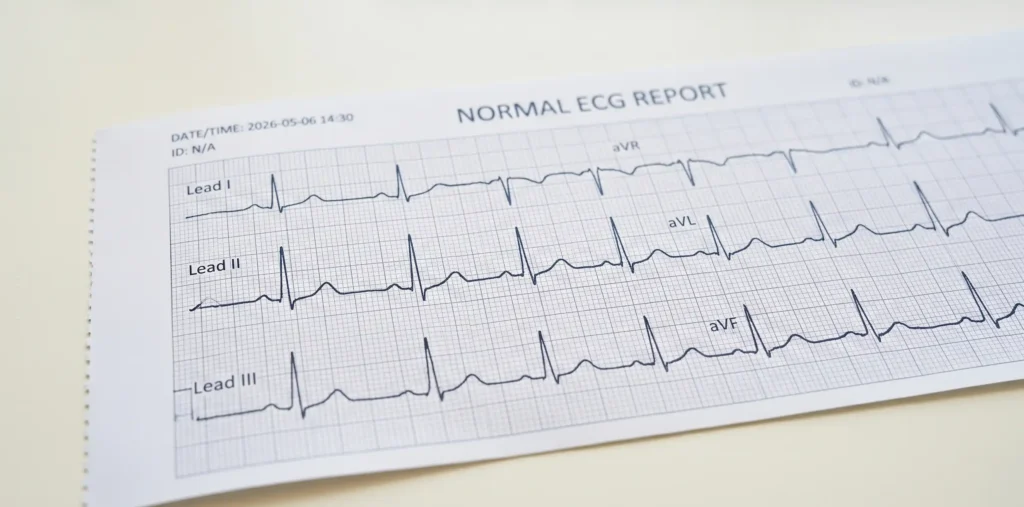
By reading the shape and timing of those waves, a doctor can tell whether your heart is beating at a healthy rate and steady rhythm, and can look for certain signs of strain or damage. It is often the very first test done when someone has chest pain, palpitations or breathlessness, because it gives quick answers. To understand the numbers on your own report, see our guide to the ECG normal range.
Why Do Doctors Recommend an ECG?
Doctors order an ECG to check symptoms or to watch heart risk. Common reasons include:
- Chest pain or tightness: To check quickly for signs of a heart problem.
- Palpitations: A fast, slow or irregular heartbeat that needs explaining.
- Breathlessness or dizziness: Especially if it comes on with little effort or with fainting.
- Monitoring risk: In people with high blood pressure, diabetes or a family history of heart disease.
- Before surgery: As part of the checks that help doctors plan safe anaesthesia. It is also a first step when doctors suspect coronary artery disease.
Good to Know: In an emergency with chest pain, an ECG is often done within minutes of arrival, because it can point to a heart attack in progress and guide fast treatment.
How Is an ECG Test Done?
The whole thing is simple and quick. Here is what happens, step by step.
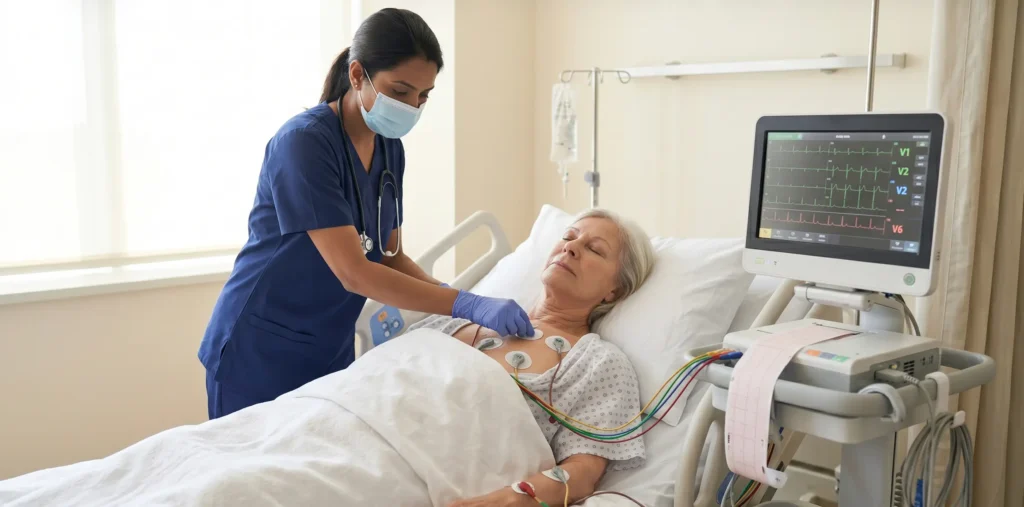
- You lie down: On a bed or couch, relaxed, with your chest, arms and ankles accessible.
- Pads are placed: Small sticky pads, called electrodes, go on your chest, arms and legs.
- Wires connect them: The pads link by wires to the ECG machine.
- You stay still: Breathe normally and keep quiet for a short time while it records.
- Done: The machine prints the waves, the pads come off, and you carry on with your day.
Important: The ECG machine only reads the signals coming out of your body through the pads. It does not send any electric current into you. There is no injection and no cut.
Is an ECG Test Safe?
Yes, an ECG is considered very safe. It is painless, and the pads simply listen to your heart rather than doing anything to it. There is no injection and no imaging radiation of the kind used in an X-ray or CT scan. The only minor issue some people notice is mild skin redness where the sticky pads were placed, which settles on its own.
Because it is so gentle, it can be done on almost anyone, including children and pregnant women. It is a common, reassuring test during pregnancy, when a faster heartbeat and palpitations are normal, and it does not harm the mother or baby.
Types of ECG Tests
Not every ECG is the same. The type your doctor picks depends on what needs checking.
| Type | How It Works | When It Is Used |
|---|---|---|
| Resting ECG | Done lying still for a few minutes | The standard, most common test |
| Stress ECG (TMT) | Recorded while walking on a treadmill | To see how the heart handles effort |
| Holter Monitor | A small device worn for 24 to 48 hours | When symptoms come and go |
A stress ECG can help assess the heart during exertion, which is useful when symptoms appear mainly with effort, and a Holter monitor helps catch an occasional irregular rhythm that a short resting test might miss.
ECG Test Cost in India
An ECG is an affordable and widely available heart test. The cost usually ranges from about ₹150 to ₹800, and most centres charge somewhere around ₹300 to ₹500. The exact fee depends on the city, the diagnostic centre, and whether it is part of a package. A home visit may add a small convenience fee, so it is worth checking the current rate with the centre before you go.
ECG vs 2D Echo: What Is the Difference?
These two tests get confused often, but they look at different things. An ECG reads the heart's electrical signals. A 2D Echo is an ultrasound that shows the heart's structure and how well it pumps, including the ejection fraction, which our guide to EF in a 2D Echo report explains. Doctors sometimes order both together for a fuller picture.
When to Seek Emergency Help
Do not wait for a scheduled test if chest pain or pressure comes with sweating, breathlessness, dizziness, fainting, or pain spreading to the arm or jaw. In India, call 112 or 108 and get emergency care immediately. In a heart attack, every minute counts.
Key Takeaways
- Simple and Quick: An ECG records the heart's electrical activity in 5 to 10 minutes.
- Painless and Safe: No injection, no cut, and safe for children and in pregnancy.
- Three Main Types: Resting, stress (TMT) and Holter, chosen to fit the symptom.
- Affordable: Usually around ₹300 to ₹500, though the exact fee varies by centre.
- Symptoms First: Severe chest pain with sweating needs emergency care, not a scheduled test.
Frequently Asked Questions
What is an ECG test used for?
It records the heart's electrical activity to check the rate, rhythm and signs of strain or damage. Doctors use it for chest pain, palpitations, breathlessness and routine heart checks.
Is an ECG test painful?
No. The sticky pads only read signals from your skin. Nothing is inserted, and no current is sent into your body. Some people feel mild skin redness afterwards, which fades.
How long does an ECG take?
The recording itself lasts under a minute. With pad placement and preparation, the full process is usually done in 5 to 10 minutes.
Is an ECG safe during pregnancy?
Yes. An ECG is safe in pregnancy and does not harm the mother or the baby. It is often used to check palpitations, which are common as the heart works harder during pregnancy.
Can an ECG be done on children?
Yes. It is a common, painless test in children. The only minor effect can be a temporary skin rash where the pads were placed, which clears on its own.
Can an ECG miss a heart problem?
Yes. A resting ECG can look normal even when a problem exists, especially in early stages. If symptoms continue, doctors order further tests such as a stress test or echo.
How much does an ECG test cost in India?
It usually costs about ₹150 to ₹800, most often around ₹300 to ₹500. The exact fee varies by city, centre and whether it is a home visit, so check locally before booking.
What is the difference between an ECG and a 2D Echo?
An ECG reads the heart's electrical signals, while a 2D Echo is an ultrasound that shows the heart's structure and pumping strength. Doctors sometimes use both together.
References
- Electrocardiogram (ECG or EKG). American Heart Association, 2024.
- Electrocardiogram (ECG or EKG). Mayo Clinic, 2024.
- Electrocardiogram (ECG). National Health Service UK, 2024.
- Electrocardiogram (EKG). Cleveland Clinic, 2024.
- Electrocardiogram (ECG) in children. Great Ormond Street Hospital, 2024.
- Electrocardiogram. MedlinePlus, US National Library of Medicine.
Written by
Iraphan Khan, BSN, RN, D.Pharm, Public Health Researcher
Founder of RealMedVision, writing patient-focused health content based on clinical guidelines and peer-reviewed research.
Medically reviewed by
Dr Praveen Verma, MBBS, MD (Pathology), Pathologist and Clinical Laboratory Specialist
Dr Himanshu Morya, MBBS, Medical Educator
Last medically reviewed: 9 September 2026
Medical Disclaimer
This page is published for education and awareness. It is not medical advice, a diagnosis or a treatment plan. Only a qualified doctor can decide if you need an ECG and interpret the result. If you have severe chest pain, breathlessness or fainting, call 112 or 108 immediately.