
Medically reviewed: 7 September 2026 · Last updated: 7 September 2026
A healthy heart pumps out 55 to 70 percent of its blood with every beat. Here is what your number says, and just as importantly, what it cannot say alone.
The ejection fraction normal range is 55 to 70 percent. Most people meet this number for the first time on an echo report, next to letters like EF or LVEF, with no explanation attached. This guide explains what the percentage measures, what the different bands mean, and why doctors always read it together with your symptoms rather than on its own.
Quick Answer
- Normal ejection fraction is 55 to 70 percent in adults.
- 41 to 49 percent is mildly reduced and does not always mean heart failure.
- 40 percent or less is reduced and needs proper evaluation by a doctor.
- EF measures the share of blood the left ventricle pushes out with each beat.
- No single EF number tells the whole story. Symptoms, history and other tests complete it.
What Ejection Fraction Actually Measures
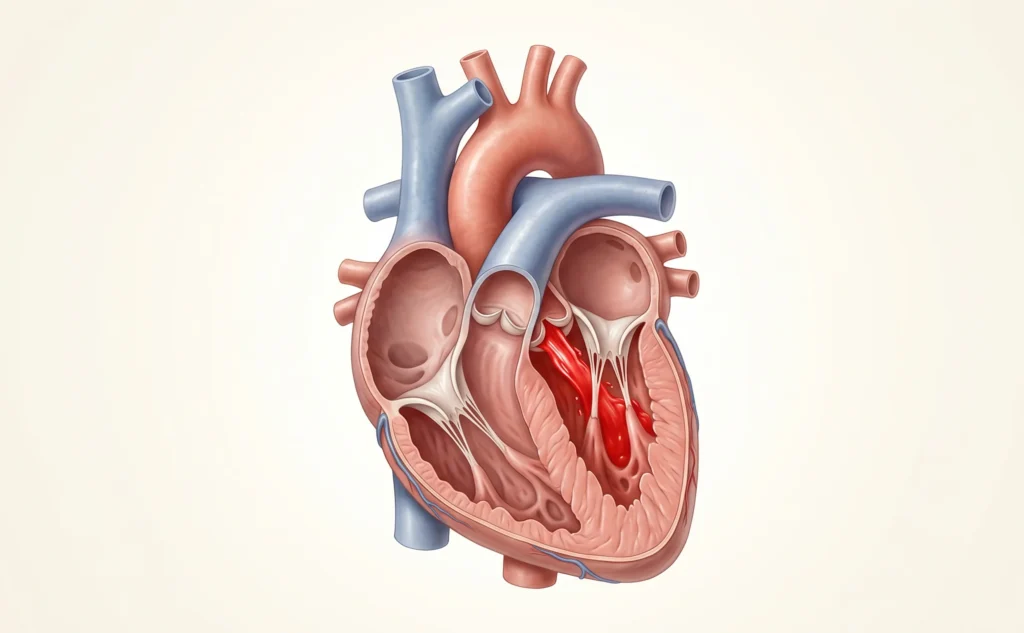
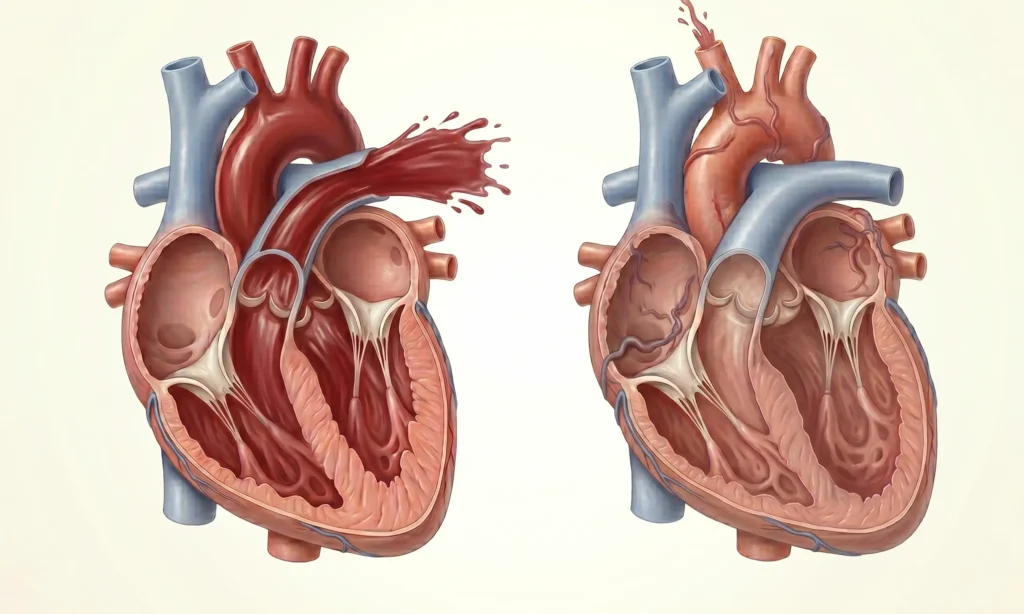
Your heart never empties completely. With each beat, the left ventricle, the main pumping chamber, pushes out a portion of the blood it holds and keeps the rest for the next cycle. Ejection fraction is that portion written as a percentage.
Say the ventricle fills with 100 ml of blood and pushes out 60 ml in one beat. The EF is 60 percent, and the 40 ml left behind is completely normal. The number matters because it is a quick, repeatable way to track how strongly the heart squeezes.
Ejection Fraction Normal Range and What Each Band Means
| EF range | What it usually means |
|---|---|
| 55 to 70 percent | Normal pumping function |
| 50 to 54 percent | Near the lower end of the range used in practice |
| 41 to 49 percent | Mildly reduced. May or may not mean heart failure is developing |
| 40 percent or less | Reduced. Needs evaluation and a treatment plan with your doctor |
| Above 75 percent | Higher than usual. Can itself point to a condition such as hypertrophic cardiomyopathy |
Patient-friendly bands based on American Heart Association materials. A report is always read with your symptoms, history and other findings.
One thing these bands do not do is diagnose heart failure by themselves. When heart failure is actually present, doctors use the EF to name its type: reduced EF at 40 or below, mildly reduced between 41 and 49, and preserved at 50 or above. Those labels apply only after heart failure itself has been confirmed.
A reading of 60 sits comfortably in the healthy zone, which is why it is the most common number on reports. We have covered that exact result in detail in our guide to EF 60 in a 2D echo report.
What a Low EF Means, and What It Does Not
A reduced EF means the heart is pushing out a smaller share of blood with each squeeze. Depending on the cause and how low it goes, this can contribute to breathlessness, tiredness and reduced stamina.
Here is the part many articles get wrong: a low EF and heart failure are not the same thing. Some people have a reduced EF with no symptoms at all. Doctors only call it heart failure with reduced ejection fraction, or HFrEF, when the EF is 40 or below and the symptoms of heart failure are actually present. If your report shows a low number, the next step is learning the warning signs of heart failure so you know exactly what to watch for.
Possible Causes of a Reduced EF
The muscle usually weakens for a reason. The common ones include coronary artery disease and the damage a heart attack leaves behind, though the list is wider than most people expect.
- Long-standing high blood pressure that the heart has pushed against for years
- Cardiomyopathy, disease of the heart muscle itself
- Heart valve problems that overload or starve the pumping chamber
- Some abnormal heart rhythms, and myocarditis, an inflammation of the muscle
- Certain medicines, including some cancer treatments
What About a High EF?
Higher is not automatically better. An EF above 75 percent can itself point to a condition such as hypertrophic cardiomyopathy, where a thickened, stiff ventricle ejects a high percentage of a smaller amount of blood. An overactive thyroid or severe anaemia can also push the number up for a while. As always, the cause behind the number matters more than the number.
Heart Failure With a Normal EF
Heart failure can also exist with a normal EF. Doctors call this HFpEF, heart failure with preserved ejection fraction. The muscle becomes thick and stiff, the ventricle holds less blood than it should, and although the percentage pumped looks normal, the total amount may still fall short of what the body needs. This is exactly why a normal EF alone never rules heart problems out.
Symptoms That Can Appear With Heart Failure
An EF number by itself does not produce one specific symptom. What people feel comes from the underlying condition, or from heart failure when it develops alongside a reduced EF. The pattern usually includes:

- Breathlessness: first on activity, later even while lying flat
- Deep tiredness: a fatigue that rest does not repair
- Swelling: fluid collecting in the feet, ankles or legs by evening
- Palpitations: a fast or irregular heartbeat as the heart tries to compensate
One example, shared as an illustration: a man with an EF of 38 percent who feels fine sitting down, gets breathless climbing one flight of stairs, and finds his ankles swollen every night. That combination, not the number alone, is what pushes doctors to act.
Emergency
Severe breathlessness at rest, chest pain, or fainting needs emergency care now. Call 112 or 108, do not wait for an appointment.
How Doctors Measure EF
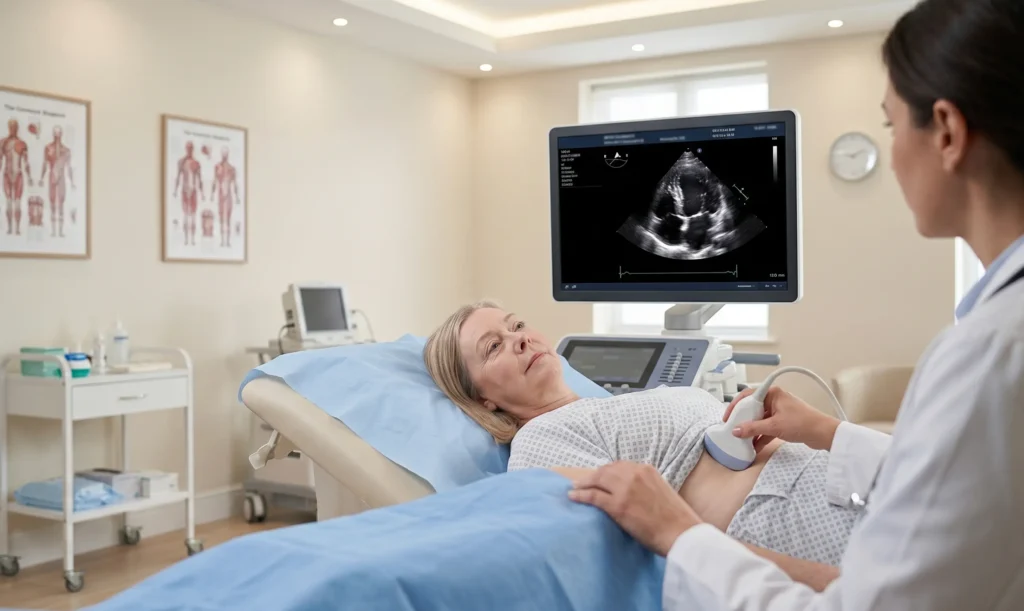
The echocardiogram, a painless heart ultrasound of about 30 to 45 minutes, is the most commonly used test for measuring EF and checking the heart's structure. When more detail is needed or the echo pictures are unclear, cardiac MRI is considered the reference standard for measuring the chambers precisely. A nuclear MUGA scan, CT, or catheterisation are used in specific situations your cardiologist will explain.
EF Is Only One Part of the Picture
EF describes the squeeze. It says nothing about how well the heart relaxes and fills, how the valves open and close, what shape the arteries are in, or how steady the rhythm is. That is why a report with a normal EF can still come with further tests, and why a doctor never treats the percentage in isolation.
Can a Low EF Improve?
Often, yes, and this is the most hopeful part of modern heart failure care. For heart failure with reduced EF, treatment is built on four foundation medicine groups: an ARNI or an ACE inhibitor or ARB, a beta blocker, a mineralocorticoid receptor antagonist such as spironolactone, and an SGLT2 inhibitor. Together they take load off the heart and help the muscle recover strength over months.
Diuretics sit alongside these. They ease fluid buildup and breathlessness, which matters enormously for comfort, but they are not one of the four recovery pillars. If the EF stays at 35 percent or below despite good treatment, your cardiologist may discuss devices such as an ICD or CRT. That decision rests on your symptoms, rhythm and response to medicines, never on the number alone.
How much an EF recovers varies from person to person and depends heavily on the cause and how early treatment starts. Some hearts improve dramatically, others stabilise, and both count as wins.
Protecting Your Heart and Your EF
- Blood pressure: keep it in your target range. Our age wise BP chart shows where that target sits
- Blood sugar: well-controlled diabetes protects both vessels and muscle
- Smoking: stopping is the single biggest favour you can do your heart
- Movement: stay active at a level that is safe for you. With a low EF or heart failure, ask your team what type and intensity fits
- Salt and alcohol: keep salt sensible, and reduce or avoid alcohol when your doctor advises it
- Medicines: taken regularly, not only on bad days
When Should EF Be Checked?
Nobody needs a routine echo just to know their number. The test earns its place in specific situations: after a heart attack, when heart failure type symptoms appear, when blood pressure has been high and hard to control for years, before and during certain cancer treatments, or when a doctor hears something unusual during an examination, often alongside an ECG.
If your EF is already reduced, repeat scans are not run on a fixed calendar. Your doctor repeats the echo when symptoms change, after treatment has had time to work, or when the result would genuinely change a decision.
Key Takeaways
- Read your EF as a band, not a verdict. 55 to 70 is normal, and one number never diagnoses anything alone.
- A reduced EF without symptoms is not automatically heart failure. Get it evaluated instead of assuming the worst.
- Ask your doctor which of the four foundation medicine groups you are on if your EF is 40 or below.
- Track symptoms as carefully as the number. Breathlessness, swelling and fatigue tell doctors more than the report alone.
Frequently Asked Questions
Is a low ejection fraction dangerous?
It can be serious, but how serious depends on how low it is, why it happened, and whether symptoms are present. Many people with a reduced EF live stable, active lives once treatment starts.
Can ejection fraction improve?
Yes, in many people it improves over months with the right medicines and follow up. How much depends on the cause and how early treatment begins, and responses vary from person to person.
Is a normal EF the same as a healthy heart?
No. Heart failure with preserved EF, valve disease and coronary artery disease can all exist with a normal percentage. The number is one piece of the assessment, not the whole of it.
What is a normal ejection fraction by age?
There is no separate EF chart by age in routine practice. The adult range of 55 to 70 percent stays broadly the same, and doctors interpret the result with your symptoms and test method.
What ejection fraction level is dangerous?
An EF of 40 percent or less needs proper evaluation and treatment. At 35 or below, doctors may also discuss protective devices. Risk depends on symptoms, cause and response, not the number alone.
Can you live with an ejection fraction of 20 or 30 percent?
Yes, many people live for years at these levels on proper heart failure treatment. It is serious and needs close care, and the outlook varies with the cause and how well treatment works.
What causes a low ejection fraction?
The common causes are a previous heart attack, long-standing high blood pressure, cardiomyopathy, valve disease, some rhythm problems, myocarditis, and certain medicines including some cancer treatments.
Can exercise improve ejection fraction?
Activity supports recovery alongside medicines, not instead of them. If your EF is low, ask your care team what type and intensity of exercise is safe before you start.
Does a low EF always mean heart failure?
No. Heart failure is diagnosed from symptoms and findings together, not from the percentage alone. A reduced EF without symptoms still needs evaluation, but it is not automatically heart failure.
Is an ejection fraction of 50 percent normal?
Fifty sits near the lower end of the range used in practice. On its own it does not diagnose anything. Doctors read it with your symptoms, heart structure and other findings, and often simply keep an eye on it.
References
- Ejection fraction heart failure measurement. American Heart Association.
- Ejection fraction: what does it measure? Mayo Clinic.
- Ejection fraction. Cleveland Clinic.
- Ejection fraction: what the numbers mean. Penn Medicine, 2022.
Written by
Iraphan Khan, BSN, RN, D.Pharm, Public Health Researcher
Founder of RealMedVision, writing patient-focused health content based on clinical guidelines and peer-reviewed research.
Medically reviewed by
Dr Praveen Verma, MBBS, MD (Pathology), Pathologist and Clinical Laboratory Specialist
Dr Himanshu Morya, MBBS, Medical Educator
Medical Disclaimer
This guide is for education and awareness. It is not medical advice and it cannot interpret your echo report for you. If your report shows a reduced EF or you have symptoms of heart failure, see a qualified cardiologist. For severe breathlessness, chest pain or fainting, call 112 or 108 immediately.