
Medically reviewed: 3 September 2026 · Last updated: 3 September 2026
Leg pain that starts with walking and eases with rest is a key warning sign. Here is what PAD feels like and how it is diagnosed and treated.
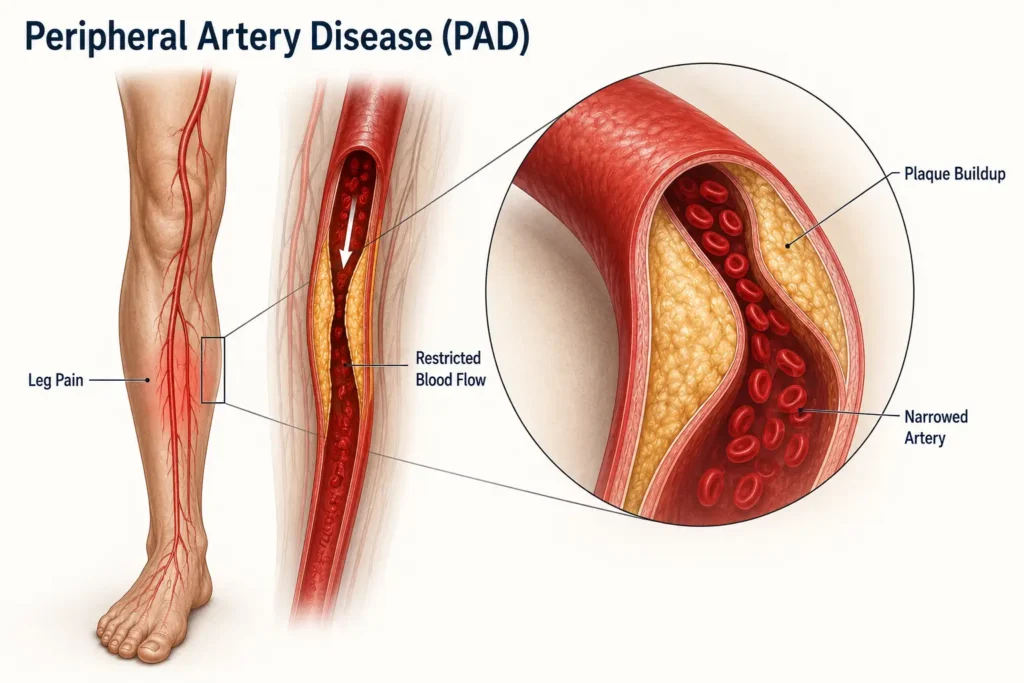
Peripheral artery disease, or PAD, is a narrowing of the arteries that carry blood to your legs. The most common symptom is leg pain or cramping during activity that improves with rest. Doctors call this intermittent claudication. Some people have no typical leg pain at all, which is one reason the disease often goes unnoticed for years.
PAD matters for more than your legs. The same fatty build-up that narrows leg arteries can affect the heart and brain, so people with PAD have a higher risk of heart attack and stroke. The reassuring part is that a simple, painless test can detect it, and most cases are managed well with the right treatment.
Quick Answer
- What it is: PAD is a narrowing of the leg arteries, usually caused by fatty plaque build-up called atherosclerosis.
- Main symptom: Leg pain or cramping during activity that improves with rest, known as intermittent claudication. Some people have no pain at all.
- How it is found: A quick, painless ankle-brachial index (ABI) test compares blood pressure at the ankle and the arm.
- Why it matters: PAD raises the risk of heart attack and stroke, so it is treated as a whole-body condition. Most cases are managed with lifestyle changes and medicines.
What Is Peripheral Artery Disease?
Peripheral artery disease happens when the arteries that supply blood to your legs become narrow or blocked. The usual cause is atherosclerosis, a slow build-up of fatty deposits called plaque inside the artery walls. As the plaque grows, the artery narrows and less blood reaches the leg muscles.
At rest, the reduced blood flow may be enough. During walking, your leg muscles need more oxygen, and narrowed arteries may not deliver it. That shortage causes the aching or cramping many people feel. The same process can affect arteries elsewhere, which is why PAD is closely linked with heart disease and stroke.
The risk of PAD increases with age. It is also higher in people who smoke or have diabetes, high blood pressure or high cholesterol. Symptoms can be mild or absent, so PAD may go unnoticed for some time. Learn more about heart failure warning signs and when they need medical attention.
What Does PAD Leg Pain Feel Like?
PAD pain usually feels like aching, cramping, heaviness or tiredness in the leg muscles. It often starts during walking, climbing stairs or exercise and improves after you stop and rest. The calf is a common spot, but the pain can also settle in the thigh, buttock, hip or foot.
The key clue is the pattern: activity brings it on, and rest makes it better. Other problems such as arthritis, sciatica or a muscle strain can cause similar pain, so this pattern alone cannot confirm PAD. A doctor can tell the difference with an examination and, if needed, a simple test. heart conditions can also cause symptoms that need proper evaluation.
Early Warning Signs of PAD
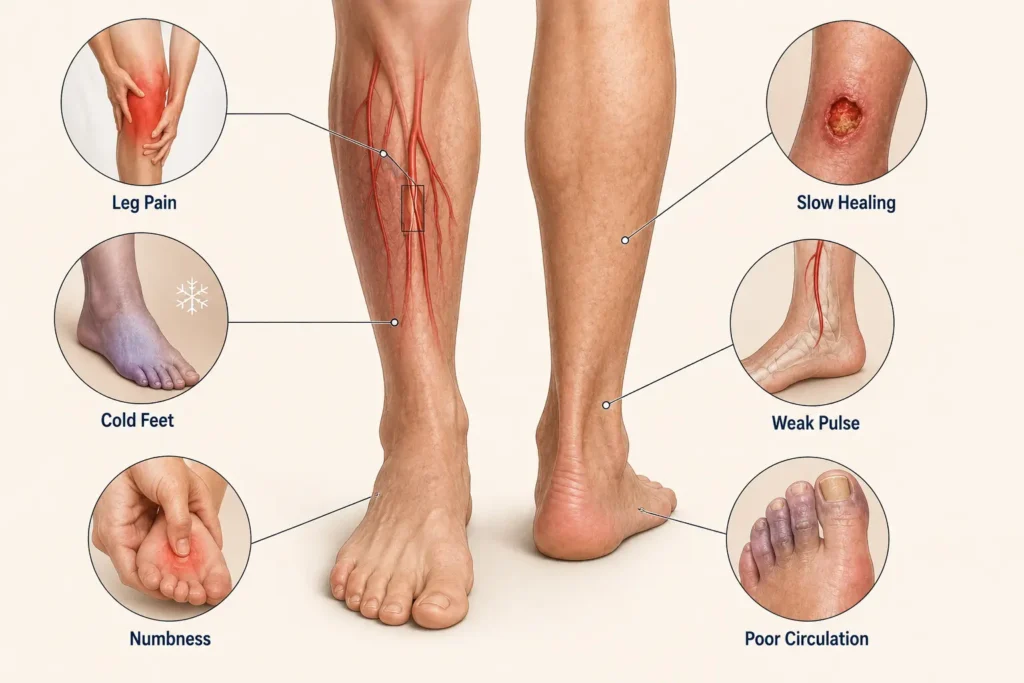
Peripheral artery disease symptoms usually build up slowly, so they are easy to blame on ageing or tiredness. Classic walking pain is only part of the picture. Many people have milder or unusual symptoms, and some have none. A new or worsening pattern matters most.
Leg Pain While Walking (Intermittent Claudication)
This is the classic sign. People feel a cramp, ache or heaviness in the calf, and sometimes the thigh or buttock, that starts after walking a certain distance and eases within a few minutes of rest. The pattern is predictable: walk, pain builds, rest, pain fades. If your leg pain follows this pattern, it is worth getting checked rather than putting it down to age.
Cold Feet or Toes
One foot that feels colder than the other, especially at night, can be an early clue. Reduced blood flow lowers the temperature in that limb. A doctor can often feel this difference during an examination, and many people notice it themselves.
Numbness or Heaviness
Some people describe a dull numbness or a tired, heavy feeling in one leg rather than sharp pain. Numbness or weakness can occur with PAD, but these symptoms can also have other causes, such as nerve problems or diabetes. A medical assessment is needed to find the reason.
Skin, Hair and Nail Changes
Over time, poor blood supply changes how the leg looks. The skin may appear shiny or pale, hair may thin below the knee, and toenails may grow slowly or thicken. These changes are gradual, which is why they are often missed.
Slow-Healing Sores on the Feet
A cut or blister that heals unusually slowly, does not improve, or keeps getting worse needs medical attention. When blood flow is poor, a small wound can linger and become infected. This is especially important if you have diabetes or known PAD.
When to Call Your Doctor
Book a check-up if leg pain reliably comes on with walking and eases with rest, if one foot stays cold or numb, or if a foot wound is slow to heal. Catching PAD early gives you the widest range of treatment options.
PAD Pain vs Muscle or Joint Pain
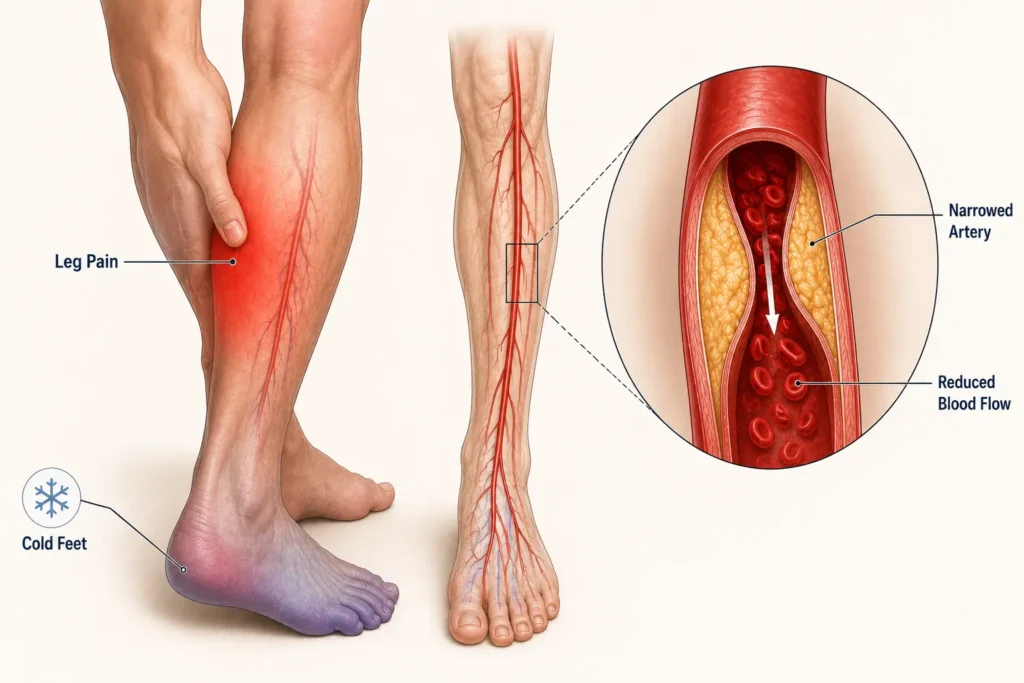
Not every leg pain is PAD. Arthritis, nerve problems and muscle strain are common and can feel similar. The table below shows the general differences, but only a doctor can confirm the cause.
| Feature | PAD | Other causes of leg pain |
|---|---|---|
| Trigger | Often starts with walking or exercise | Depends on the cause and may occur with movement or at rest |
| Location | Often in the calf, thigh or buttock muscles | May involve a joint, muscle or follow a nerve pattern |
| Effect of rest | Often improves after stopping activity | Depends on the underlying cause |
| How it is checked | May include an ABI test | Depends on the suspected cause |
Can You Have PAD Without Leg Pain?
Yes. Many people with PAD have no typical leg pain. According to the 2024 ACC/AHA peripheral artery disease guideline, people with no symptoms make up between 20 and 59 percent of those with confirmed PAD. So no pain does not always mean normal circulation.
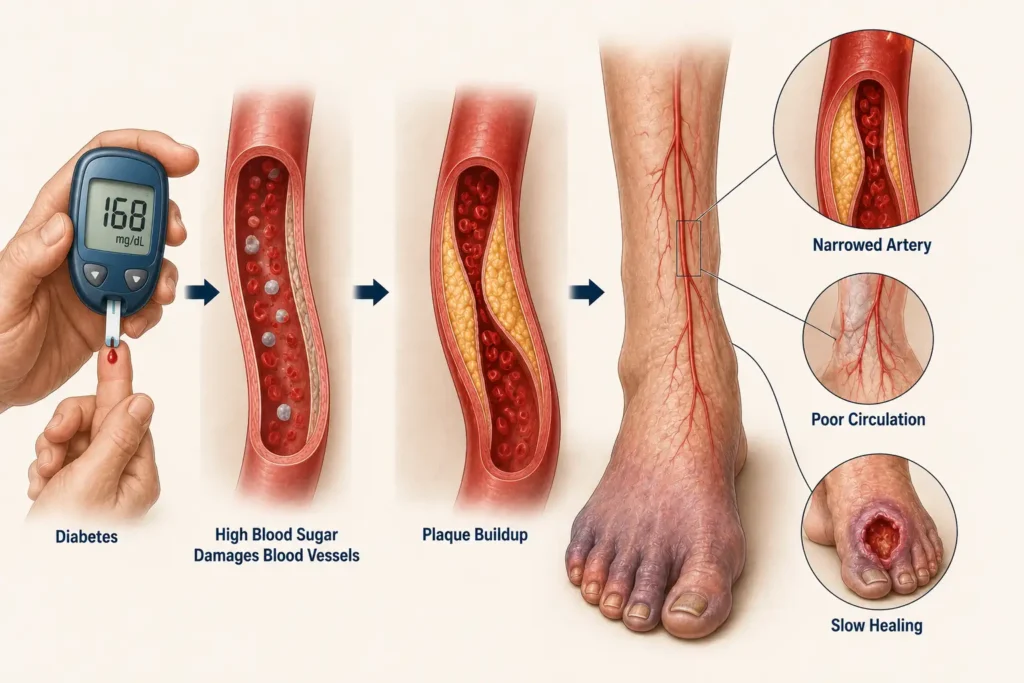
This can be harder to recognise in people with diabetes. Nerve damage from diabetes, known as diabetic neuropathy, can reduce sensation, so the usual warning signs may be dulled or confused with nerve pain. As a result, PAD can quietly progress until a wound appears or blood flow drops sharply. This is why people with diabetes and other risk factors may need testing even without leg pain. blood sugar levels can also be useful to understand when managing diabetes.
Clinical Note
Even without symptoms, PAD signals a higher risk of heart attack and stroke. That is why doctors treat the whole cardiovascular system, not just the leg.
Who Is at Higher Risk of PAD?
Some people are far more likely to develop peripheral artery disease than others. The main risk factors are well known, and most of them can be reduced or controlled.
- Smoking: one of the strongest modifiable risk factors for PAD.
- Diabetes: high blood sugar can increase damage to blood vessels and raise PAD risk.
- High blood pressure and high cholesterol: both can contribute to damage and plaque build-up in the arteries.
- Chronic kidney disease: this is associated with a higher risk of PAD. A family history of vascular disease may also increase risk.
- Past heart disease or stroke: these conditions can indicate atherosclerosis affecting arteries in different parts of the body.
Age matters too. Risk increases with age, particularly from 65 onward. People aged 50 to 64 with risk factors such as diabetes, smoking or a family history of PAD are also at increased risk. The more risk factors you have, the higher your chance of PAD, and a doctor can decide whether testing is appropriate. Good blood sugar control is also important for people with diabetes.
How Is PAD Diagnosed?
Diagnosing PAD does not usually need expensive scans. A careful history, a physical check and one simple bedside test tell a doctor a great deal.
Ankle-Brachial Index (ABI)
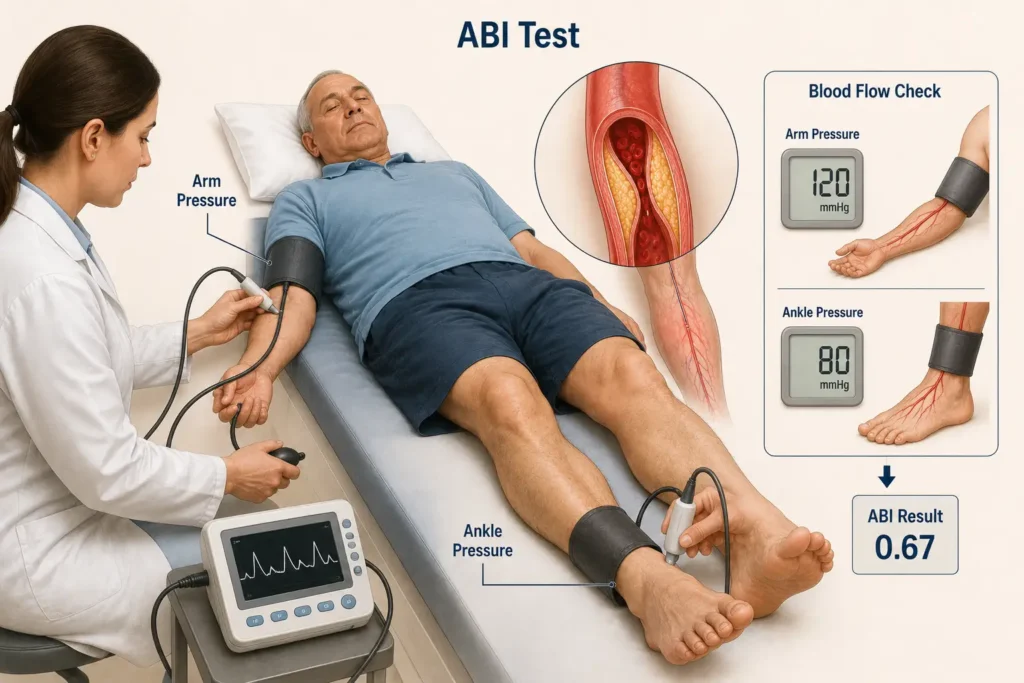
The ankle-brachial index (ABI) is a common noninvasive test used to help diagnose PAD. It compares the blood pressure at your ankle with the blood pressure in your arm, using a cuff and a small handheld device. A resting ABI of 0.90 or lower is considered abnormal and supports a diagnosis of PAD. The 2024 ACC/AHA guideline recommends a resting ABI when a person's history or examination suggests PAD, and considers ABI screening reasonable for people at increased risk.
Good to Know
In some people with diabetes or kidney disease, stiff arteries can give a falsely high ABI reading. In these cases a doctor may use a toe pressure test instead.
If more detail is needed, a Doppler ultrasound can show where an artery is narrowed, without needles or radiation. For people being considered for a procedure, a CT or MR angiogram gives a detailed map of the blood vessels. These are ordered only when the results will change treatment.
How Is Peripheral Artery Disease Treated?
The aim of treatment is not only to ease leg symptoms. It is to protect your heart and brain, slow the disease and keep you active. Stopping smoking, structured exercise and medicines that reduce cardiovascular risk are the core of treatment. A procedure is reserved for specific situations. The approach below follows the 2024 ACC/AHA guideline.
Exercise and Lifestyle
Stopping smoking is the most important step and slows the disease at any age. Structured walking is just as powerful. The 2024 guideline gives supervised exercise therapy, and structured community or home-based programmes, its strongest recommendation for improving walking distance and quality of life. A simple routine helps: walk until the discomfort builds, rest until it eases, then walk again, most days of the week.
Medicines
Medicines in PAD work mainly to lower cardiovascular risk. Doctors usually prescribe a single antiplatelet medicine such as aspirin or clopidogrel to reduce the risk of heart attack and stroke, along with a high-intensity statin to lower cholesterol and steady the plaque. Blood pressure and diabetes are treated to slow the disease further. For selected people with symptomatic PAD, low-dose rivaroxaban combined with low-dose aspirin may be recommended to reduce cardiovascular and limb-related events, depending on bleeding risk and other factors. All of these are decisions for your doctor.
When a Procedure May Be Needed
Many people with PAD can be managed without a procedure, especially when symptoms respond to medical treatment and structured exercise. A procedure is considered when leg symptoms seriously limit daily life despite good treatment, or when blood flow is so low that the limb is at risk. The less invasive option is balloon angioplasty, sometimes with a small stent, done through a tiny puncture. When blockages are long or complex, a surgical bypass may be needed. Recovery time varies with the procedure and the person's overall health.
When Should You Seek Medical Care Quickly?
Most PAD symptoms build up slowly, but a sudden change in blood flow can be an emergency. Get urgent medical help if you notice any of the following:
- Sudden, severe pain in the leg or foot, or a foot that suddenly turns cold, pale or blue.
- New numbness or weakness, or trouble moving the leg.
- A foot wound that will not heal, or blackened skin.
- Signs of infection around a foot wound, such as spreading redness, swelling or pus.
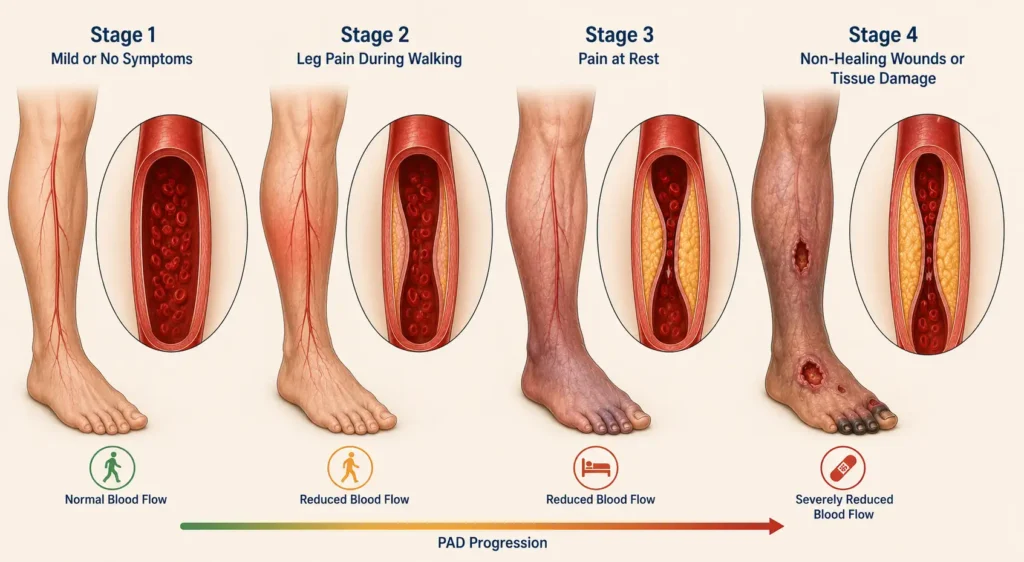
A sudden loss of blood flow to a limb needs to be assessed straight away, so treat these signs as urgent rather than waiting to see if they settle.
Key Takeaways
- Leg pain that comes on with walking and eases with rest is the most common sign of PAD, but many people have no pain at all.
- A quick, painless ABI test is a common way doctors confirm PAD, especially in people at higher risk.
- Stopping smoking, structured walking and heart-protective medicines are the core of treatment.
- PAD raises the risk of heart attack and stroke, so act early and treat the whole body.
Frequently Asked Questions
What is the first sign of peripheral artery disease?
The most common sign is leg pain or cramping that starts with walking or exercise and improves after resting. This is called intermittent claudication. Some people may instead notice a cold foot, numbness or a slow-healing wound.
Can PAD cause cold feet?
Yes. Reduced blood flow can make one foot feel colder than the other. If a foot stays unusually cold or changes color, especially along with pain or numbness, it should be checked by a healthcare professional.
Can you have PAD without any pain?
Yes. Many people with PAD do not have typical leg pain. People with diabetes may also have reduced sensation because of nerve damage, which can make symptoms harder to notice. An ABI test may help detect PAD when symptoms or risk factors suggest it.
How is PAD diagnosed?
A resting ankle-brachial index, or ABI, is a common noninvasive test used to help diagnose PAD. It compares blood pressure at the ankle with blood pressure in the arm. A resting ABI of 0.90 or lower is abnormal. Other tests may be used when more detail is needed.
Is peripheral artery disease serious?
PAD can be serious because it is linked with a higher risk of heart attack, stroke and problems with blood flow to the legs. Early diagnosis and treatment can help manage symptoms and reduce cardiovascular risk.
Can PAD be treated or reversed?
PAD can be managed, although existing artery narrowing is not usually fully reversed. Stopping smoking, structured exercise and appropriate medicines can improve walking ability, symptoms and cardiovascular health. Some people may need a procedure to restore blood flow.
Can I exercise if I have PAD?
Yes. Structured exercise, especially walking programmes, is an important part of PAD treatment and can improve walking ability and quality of life. Ask a healthcare professional about the right exercise programme for you.
Does PAD affect one leg or both?
PAD can affect one leg or both. Symptoms may be different in each leg depending on where and how much the arteries are narrowed.
Medical Disclaimer: This article is for general health information and does not replace an examination or diagnosis from a qualified healthcare professional. If you have leg pain, a non-healing wound or sudden changes in circulation, seek medical care. Do not start aspirin, clopidogrel, rivaroxaban, cilostazol or any prescription medicine based only on this article. A healthcare professional should decide what is right for you.
References
- Gornik HL, Aronow HD, Goodney PP, et al. 2024 ACC/AHA/Multisociety Guideline for the Management of Lower Extremity Peripheral Artery Disease. Circulation. 2024;149:e1313-e1410. Read the guideline
- American College of Cardiology. 2024 Guideline for Lower Extremity Peripheral Artery Disease: Ten Points to Remember. 2024. Read the clinical summary
- American Heart Association. Peripheral Artery Disease. Read the AHA overview
- Centers for Disease Control and Prevention. About Peripheral Arterial Disease (PAD). 2024. Read the CDC information
- National Heart, Lung, and Blood Institute. Peripheral Artery Disease. Read the NHLBI information
- Song P, Rudan D, Zhu Y, et al. Global, regional, and national prevalence and risk factors for peripheral artery disease in 2015: a systematic review and modelling analysis. The Lancet Global Health. 2019;7:e1020-e1030. Read the study
Written by
Iraphan Khan, BSN, D.Pharm
Founder of RealMedVision and creator of evidence-based health content.
Medically reviewed by
Dr Praveen Verma, MBBS, MD (Pathology)
Dr Himanshu Morya, MBBS, Medical Educator
Last medically reviewed: 3 September 2026