
Medically reviewed: 3 September 2026 · Last updated: 3 September 2026
Pregnancy asks the heart to work harder. For women with rheumatic heart disease, that extra demand needs careful, planned care. Here is what to watch for and how it is managed.

Rheumatic heart disease is valve damage caused by rheumatic fever, which can follow a group A streptococcal infection. During pregnancy, the body's blood volume rises and the heart pumps more, so a damaged valve has to cope with extra strain. Some women do not know they have the condition until pregnancy brings out the first symptoms.
The good news is that rheumatic heart disease can be managed during pregnancy. Early assessment and regular care from a cardiologist and obstetric team can help reduce complications and support a safe pregnancy. The level of risk depends on the type and severity of the valve disease and the mother's overall heart health.
Quick Answer
- What it is: Heart valve damage from rheumatic fever, which follows an untreated streptococcal throat infection, most often affecting the mitral valve.
- Why pregnancy matters: Blood volume and heart workload rise, so a damaged valve is under more strain, especially later in pregnancy and during labour.
- Signs to check: Breathlessness at rest, a racing heart, worsening swelling, extreme tiredness, or waking at night short of breath.
- How it is found: An echocardiogram (heart ultrasound) is the key test. It is safe in pregnancy and shows which valve is affected and how severely.
- Outlook: With early diagnosis and specialist care, many women have a safe pregnancy and healthy delivery.
What Is Rheumatic Heart Disease in Pregnancy?
Rheumatic heart disease begins with a throat infection in childhood, not with the heart. When a sore throat caused by streptococcal bacteria goes untreated, the immune system can react in a way that mistakenly attacks the body's own tissues, including the heart valves. This reaction is called rheumatic fever.
After one or more episodes of rheumatic fever, the heart valves can become scarred over the years. They may stiffen and narrow, called stenosis, or fail to close fully and leak, called regurgitation. The mitral valve, between the left upper and lower chambers of the heart, is the most commonly affected. This is structural valve damage, not a heart attack or a blocked artery.
Rheumatic heart disease affected over 55 million people worldwide in 2022, most of them women, and remains common in India and other lower-income regions. The World Heart Federation notes it is the leading cause of maternal cardiac complications in pregnancy in countries where the disease is common.
Why Pregnancy Adds Strain to a Damaged Heart
Pregnancy naturally changes how the heart works. The total blood volume rises, the heart rate goes up, and the heart pumps more blood every minute. These changes become more pronounced later in pregnancy, with major shifts also occurring during labour and after delivery. A healthy heart handles them without trouble.
For a woman with a narrowed or leaking valve, this extra workload is harder to manage. The heart is being asked to move more blood through a valve that is already damaged, so pressure can build behind it and fluid may back up towards the lungs. This is why symptoms sometimes appear or worsen as pregnancy progresses. Learn more about rheumatic heart signs after a throat infection.
Clinical Note
Moderate or severe mitral stenosis, a narrowed mitral valve, tends to be the hardest to tolerate in pregnancy, because the narrowed opening limits how much blood can pass through as demand rises.
Types of Valve Problems and Their Risk
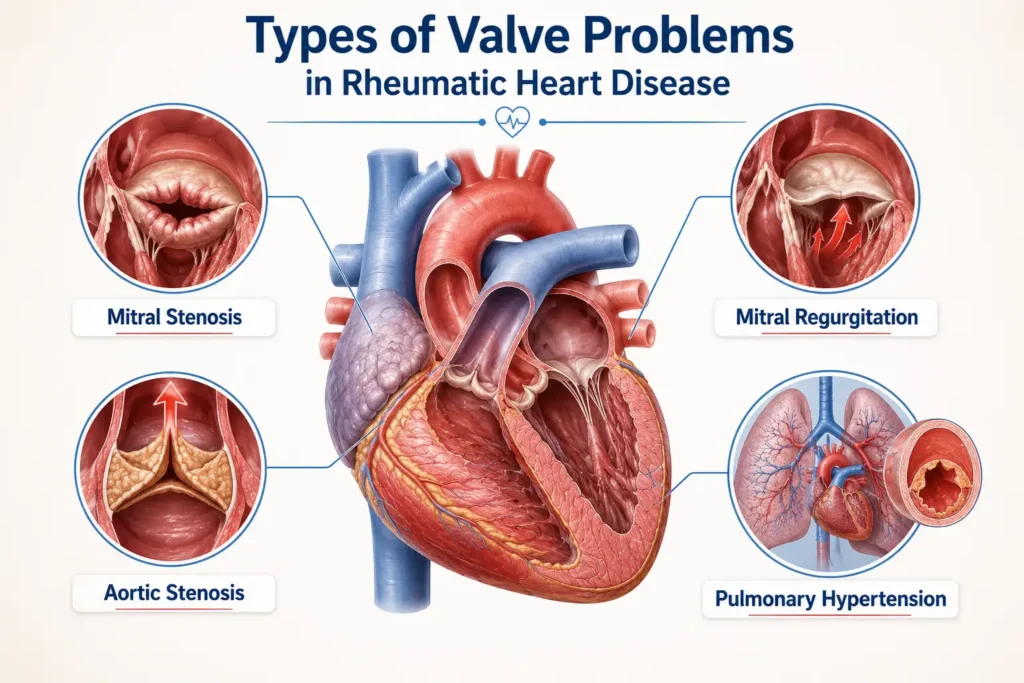
Which valve is affected, and how badly, changes the level of care a pregnancy needs. Stiff, narrowed valves are generally harder to tolerate than leaky ones. The table gives a simple overview, but only a specialist can assess an individual case.
| Valve problem | What happens | Pregnancy risk |
|---|---|---|
| Mitral stenosis | Mitral valve is narrowed | Often the hardest to tolerate, especially if moderate or severe |
| Mitral regurgitation | Mitral valve leaks backward | Usually better tolerated, still needs monitoring if moderate or severe |
| Aortic stenosis | Aortic valve is narrowed | Higher risk when severe, needs specialist assessment |
| Pulmonary hypertension | High pressure in the lung arteries | A high-risk situation that needs expert care |
In mitral stenosis, the narrowed valve limits blood flow, and fluid can back up towards the lungs as blood volume rises. In mitral regurgitation, some blood flows backward with each beat, so the heart works less efficiently. Both become more demanding in pregnancy.
Symptoms That Should Be Checked During Pregnancy
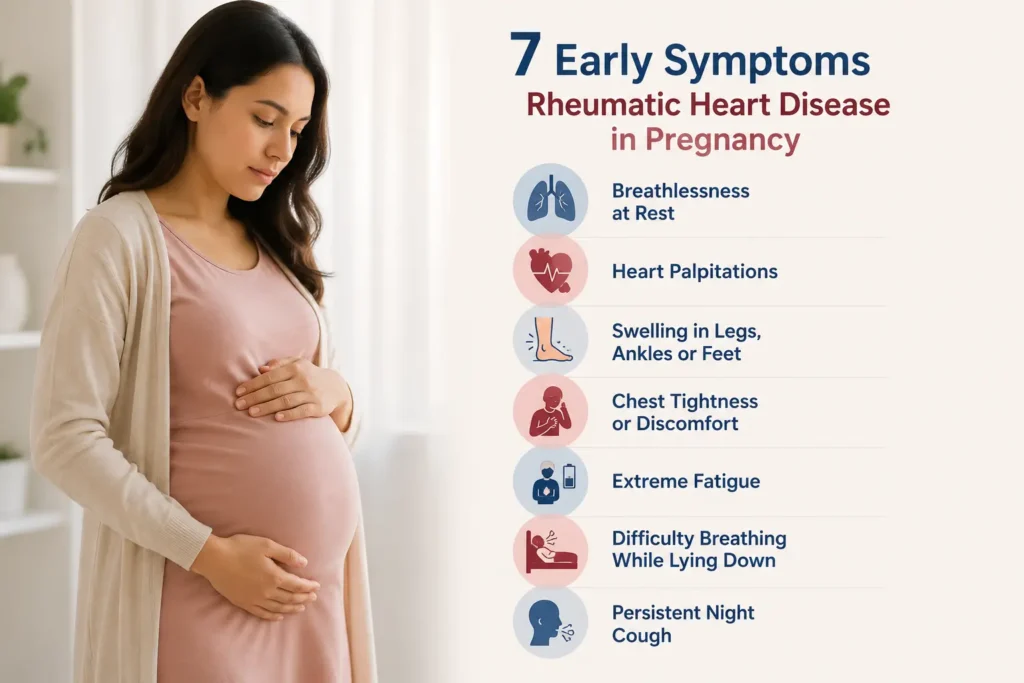
Many of these symptoms can look like normal pregnancy changes, which is why the condition is easy to miss. None of them proves rheumatic heart disease on its own, but any of them is worth checking, especially with a history of rheumatic fever or a known heart murmur.
| Symptom | Common in pregnancy | Should be checked |
|---|---|---|
| Breathlessness | On walking or stairs | While sitting, talking or lying down |
| Heartbeat | Slightly faster than usual | Racing, pounding or fluttering at rest |
| Swelling | Mild, in the evenings | Worsening, all day, in both legs |
| Tiredness | Common throughout | So severe that simple tasks feel exhausting |
| Night breathing | Usually undisturbed | Waking short of breath, needing to sit up |
Breathlessness at rest is not typical of normal pregnancy and needs medical assessment, particularly in women with known valve disease. Other symptoms to watch for include a racing or pounding heartbeat, swelling that keeps getting worse, chest tightness, extreme tiredness out of proportion to activity, and waking at night unable to breathe. A cough that brings up pink or frothy fluid is a serious sign that needs emergency care.
When to Call Your Doctor
Contact your doctor promptly if you notice breathlessness at rest, worsening swelling, a racing heart, or chest discomfort during pregnancy. Do not wait for these to settle on their own, especially with a history of rheumatic fever.
Causes and Risk Factors
An electrocardiogram, or ECG, records the heart's electrical activity and can pick up irregular rhythms such as atrial fibrillation. Blood tests can check for anaemia and other factors that affect the heart. Blood pressure is monitored throughout pregnancy, as raised pressure on top of valve disease adds to the strain. These support the diagnosis, but the echocardiogram remains the central test.
Some factors make the condition harder to manage during pregnancy: moderate or severe valve narrowing, especially mitral stenosis; a history of heart failure or an irregular rhythm called atrial fibrillation; pulmonary hypertension; anaemia or poorly controlled infections; and limited access to regular antenatal care. Women with several of these usually need specialist cardiac and obstetric care throughout pregnancy.
How Is It Diagnosed During Pregnancy?
Rheumatic heart disease can be assessed safely during pregnancy. An echocardiogram is the key test. It uses sound waves to check the heart valves and does not expose the baby to radiation. Other simple tests may also be used to assess the mother's heart health and overall health.
Echocardiogram (2D Echo)
A 2D echocardiogram is a heart ultrasound that uses sound waves to show the heart's structure and movement in real time. It is the main test for rheumatic heart disease. It shows which valve is affected, how severe the narrowing or leaking is, and how well the heart is pumping. It uses no radiation and is safe during pregnancy.
Supporting Tests
An electrocardiogram (ECG) records the heart's electrical activity and can pick up irregular rhythms such as atrial fibrillation. Blood tests can check for anaemia and other factors that affect the heart. Blood pressure is monitored throughout pregnancy, as raised pressure on top of valve disease adds to the strain. These support the diagnosis, but the echocardiogram remains the central test.
Treatment and Management
Treatment depends on which valve is affected, how severe the damage is, the symptoms, and the stage of pregnancy. The aim is to keep both mother and baby safe with a plan made by a cardiologist and obstetric team together.
Milder Valve Disease
Milder valve disease may be managed with regular cardiac and obstetric follow-up and close monitoring of symptoms. What is needed depends on the valve involved, the severity and how the pregnancy is progressing.
Medicines and Procedures
More significant disease may need medicines. Diuretics, sometimes called water tablets, help remove excess fluid. Beta-blockers can reduce strain on the heart. Anticoagulants, or blood thinners, may be needed in selected women with atrial fibrillation or a mechanical heart valve. When severe mitral stenosis does not respond to medicines, a procedure called balloon mitral valvotomy may be considered to widen the valve. Every one of these is a decision for the medical team, as the choice and safety depend on the individual and the stage of pregnancy.
Good to Know
Planning and management depend on the severity of valve disease and other risk factors. Women with significant heart disease should receive individual counselling from their cardiologist and obstetric team, ideally before pregnancy where possible.
Risks to the Baby and Everyday Care
When the heart cannot pump efficiently, the baby may receive less oxygen and nutrition through the placenta. This can raise the chance of premature birth, low birth weight, or slower growth in the womb. For this reason, the baby's growth is monitored alongside the mother's heart at specialist centres.
Alongside medical care, some everyday habits help. Keep all antenatal and cardiology appointments, rest when you need to, and keep a simple note of any new or worsening symptoms to share with your team. If breathing is harder when lying flat, tell your healthcare team rather than managing it alone.
Practical Advice
Follow the activity level recommended by your cardiologist and obstetric team. If you have swelling or heart failure, they may also advise you about salt and fluid intake. General advice that suits everyone can be unsafe here, so personal guidance matters.
Emergency Signs and Prevention
Some symptoms need emergency care. Seek help straight away if a pregnant woman has severe breathlessness, fainting, crushing chest pain, a very fast or irregular heartbeat, coughing up pink or frothy fluid, or sudden severe swelling of the legs or face.
Prevention starts in childhood. Prompt treatment of confirmed group A streptococcal throat infections can help prevent rheumatic fever and the valve damage that may follow. Children who have had rheumatic fever may need long-term penicillin to prevent further episodes. Women already living with rheumatic heart disease benefit from a heart assessment before and during pregnancy.
Key Takeaways
- Rheumatic heart disease is valve damage from rheumatic fever, and pregnancy adds strain because the heart works harder.
- Breathlessness at rest, worsening swelling, a racing heart, or waking short of breath should be checked.
- An echocardiogram is the key test and is safe in pregnancy.
- With early diagnosis and a cardiologist and obstetric team, many women have a safe pregnancy and healthy baby.
Frequently Asked Questions
Frequently Asked Questions
Is pregnancy safe with mild rheumatic heart disease?
Often, yes. With regular monitoring and specialist follow up, many women with mild disease can have a safe pregnancy. An echocardiogram should confirm how mild the valve disease is, since symptoms and a physical exam alone may not show the full picture.
Can a woman with rheumatic heart disease have a normal delivery?
Many women can have a vaginal delivery. A caesarean birth is not automatically required because of rheumatic heart disease. The delivery plan depends on the valve problem, its severity, and the mother's heart condition near delivery.
Is rheumatic heart disease curable?
Rheumatic heart valve damage is usually permanent and medicines cannot reverse the scarring. Medicines can control symptoms, while procedures or valve treatment may be needed in some severe cases.
Can rheumatic heart disease be prevented?
Rheumatic heart disease can often be prevented by preventing rheumatic fever. Prompt treatment of confirmed group A streptococcal infections in childhood can help prevent rheumatic fever and the valve damage that may follow. Better access to healthcare also plays an important role.
Is rheumatic heart disease common in India?
Yes. India has a high burden of rheumatic heart disease, particularly among younger people and communities with limited access to early healthcare. It remains an important heart health concern for women of childbearing age.
What is the risk to the baby?
Severe maternal heart disease can increase the risk of problems such as poor growth in the womb, low birth weight, and premature birth. The level of risk depends on the mother's heart condition, so the baby may need regular growth monitoring.
Can rheumatic heart disease get worse during pregnancy?
It can. Pregnancy increases blood volume and the amount of work the heart has to do. Symptoms may become more noticeable, especially with moderate or severe mitral stenosis or pulmonary hypertension. Regular follow up helps the medical team identify changes early.
Should I see a doctor before planning pregnancy?
Yes, if you have known rheumatic heart disease or a history of rheumatic fever. A pre pregnancy heart assessment can show how well the valves and heart are working and help your cardiologist and obstetric team plan your care.
Medical Disclaimer: This article is for general educational awareness only. It is not medical advice, a diagnosis, or a treatment recommendation. Pregnant women with known or suspected heart disease must consult a qualified cardiologist and obstetric specialist for personal evaluation and care. Do not delay seeking help if severe symptoms are present. In an emergency in India, call 112.
References
- World Health Organization. WHO Guideline on the Prevention and Diagnosis of Rheumatic Fever and Rheumatic Heart Disease. 2024. WHO official guideline
- World Heart Federation. Rheumatic Heart Disease. Heart Health resource. World Heart Federation
- GBD 2021 Rheumatic Heart Disease Collaborators. Global burden of rheumatic heart disease. PubMed
- European Society of Cardiology. 2025 ESC Guidelines for the Management of Cardiovascular Disease and Pregnancy. ESC official guideline
- American Heart Association. Rheumatic Heart Disease. American Heart Association
- Indian Council of Medical Research. Rheumatic Heart Disease in India. ICMR
- Mayo Clinic. Rheumatic Fever: Symptoms and Causes. Mayo Clinic
- Johns Hopkins Medicine. Heart Disease and Pregnancy. Johns Hopkins Medicine
Written by
Iraphan Khan, BSN, D.Pharm
Founder of RealMedVision and creator of evidence-based health content.
Medically reviewed by
Dr Praveen Verma, MBBS, MD (Pathology)
Dr Himanshu Morya, MBBS, Medical Educator
Last medically reviewed: 3 September 2026