
A patient-friendly guide by RealMedVision
Medically reviewed: 2 September 2026 · Last updated: 2 September 2026 · 10 to 12 minute read
The heart muscle can weaken for years before you feel much at all. These are the early signs worth knowing, and when they matter.
In This Article
What is it · 7 symptoms · Types · Causes & risk · Diagnosis · Treatment · When it's urgent · FAQs
Quick Answer
Cardiomyopathy is a disease of the heart muscle that can make it weak, thick, or stiff, so the heart pumps less effectively. Some people have no symptoms at first. When symptoms do appear, the common ones are breathlessness on activity, unusual tiredness, swelling in the legs, palpitations, dizziness or fainting, and chest discomfort. An echocardiogram is the main test used to find it.
Cardiomyopathy is easy to miss early on. People feel more tired than usual, get breathless on stairs, and put it down to age, stress, or being out of shape. Meanwhile the heart muscle quietly keeps working harder than it should.
The encouraging part is that when it is caught early, a lot can be done. Many people with cardiomyopathy live full, active lives with the right treatment. This guide walks through the early signs, when they matter, and how doctors confirm what is going on.
What Is Cardiomyopathy?
The heart is, at its core, a muscle whose job is to pump blood to the whole body. In cardiomyopathy, that muscle becomes damaged or abnormal, it may grow too thick, too weak, or too stiff. As it does, the heart cannot pump as well as it should.
This is different from a blocked-artery problem like a heart attack. Cardiomyopathy starts in the heart muscle itself. Importantly, some people have no symptoms at all in the early stages, and the condition is sometimes found by chance on a scan or during family screening. It is not rare either: the most common inherited form, hypertrophic cardiomyopathy, affects roughly 1 in 500 people. When the pumping strength drops, it often shows on a scan as a reduced ejection fraction, the share of blood the heart pushes out with each beat.
7 Symptoms of Cardiomyopathy
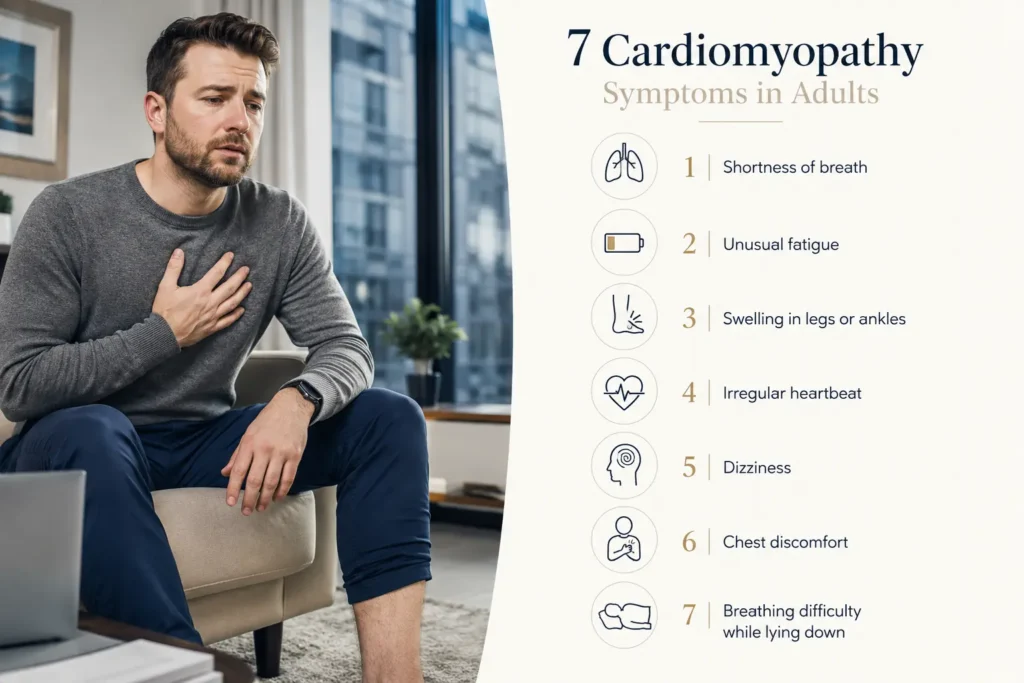
The signs tend to build slowly and are mild at first, which is exactly why they get brushed aside. Here are the ones worth knowing.
1. Breathlessness during normal activity
Not from running a marathon, but from climbing stairs, carrying groceries, or walking to the next room. As the heart struggles to keep up, pressure can build in the lungs and breathing starts to feel harder. When to get checked: if it is new, keeps returning, or is getting worse.
2. Unusual tiredness that rest does not fix
Not the tiredness of a long day, but a heavy fatigue that is still there after a good night's sleep. If rest is not fixing it, the heart may be working too hard to keep up. When to get checked: if it is persistent and out of proportion to your routine.
3. Swelling in the feet, ankles, or legs
When the heart cannot push blood forward well, fluid backs up in the lower body, usually worse by evening. This is called oedema. When to get checked: if the swelling keeps returning or is increasing, especially with breathlessness.
4. Palpitations, a racing or fluttering heartbeat
The heart racing, pounding, or skipping beats. Cardiomyopathy can disturb the heart's electrical system and cause an irregular rhythm. When to get checked: soon, and urgently if it comes with dizziness or fainting.
5. Dizziness or fainting
Dizziness or fainting can happen when the heart cannot keep enough blood flowing during activity, or because of an abnormal rhythm. There are other causes too, so it needs proper evaluation. When to get checked: any fainting during activity needs urgent assessment.
6. Chest discomfort or heaviness
Often not the crushing pain of a heart attack, but pressure, heaviness, or tightness, usually during effort. It can feel similar to angina, so it should not be dismissed. When to get checked: promptly, and as an emergency if it is severe or comes on at rest.
7. Breathlessness when lying down, or waking at night
Needing extra pillows to breathe (called orthopnoea), or waking suddenly gasping for air (called paroxysmal nocturnal dyspnoea), happens as fluid shifts when you lie flat. When to get checked: soon, as this points to the heart struggling with fluid.
| Symptom | What it may feel like | When to get checked |
|---|---|---|
| Breathlessness | Short of breath on normal activity | New or worsening |
| Fatigue | Tired despite rest | Persistent |
| Swelling | Puffy feet and ankles | Persistent or increasing |
| Palpitations | Racing or fluttering beat | Urgent if with dizziness |
| Dizziness or fainting | Lightheaded, or passing out | Fainting needs urgent care |
| Chest discomfort | Pressure or heaviness | Emergency if severe or at rest |
| Breathless lying down | Extra pillows, or waking gasping | Prompt assessment |
Common Types of Cardiomyopathy
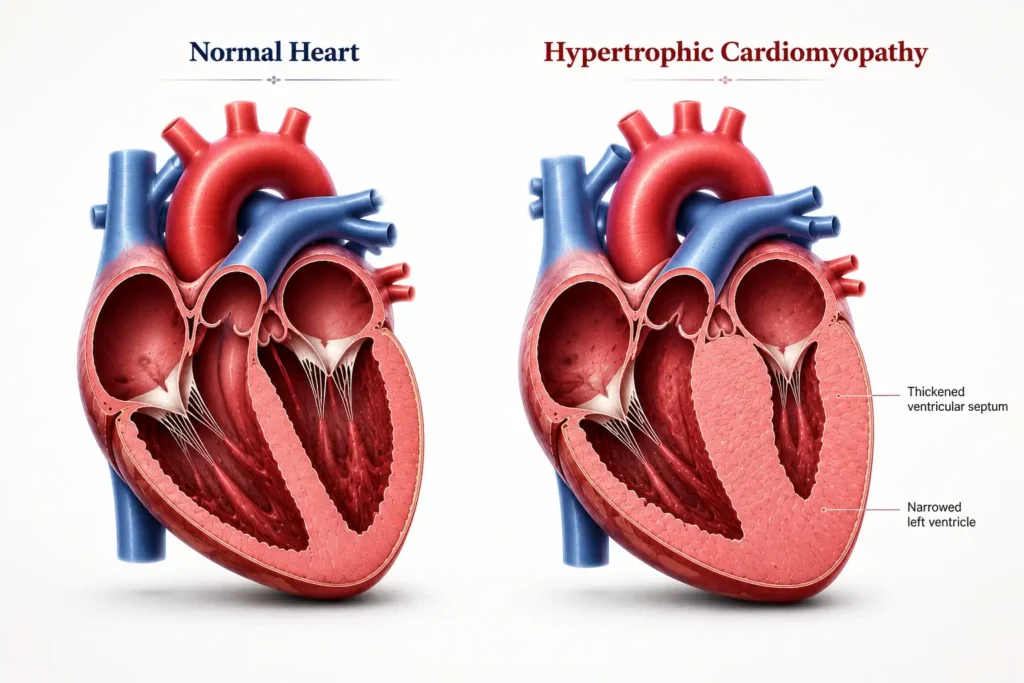
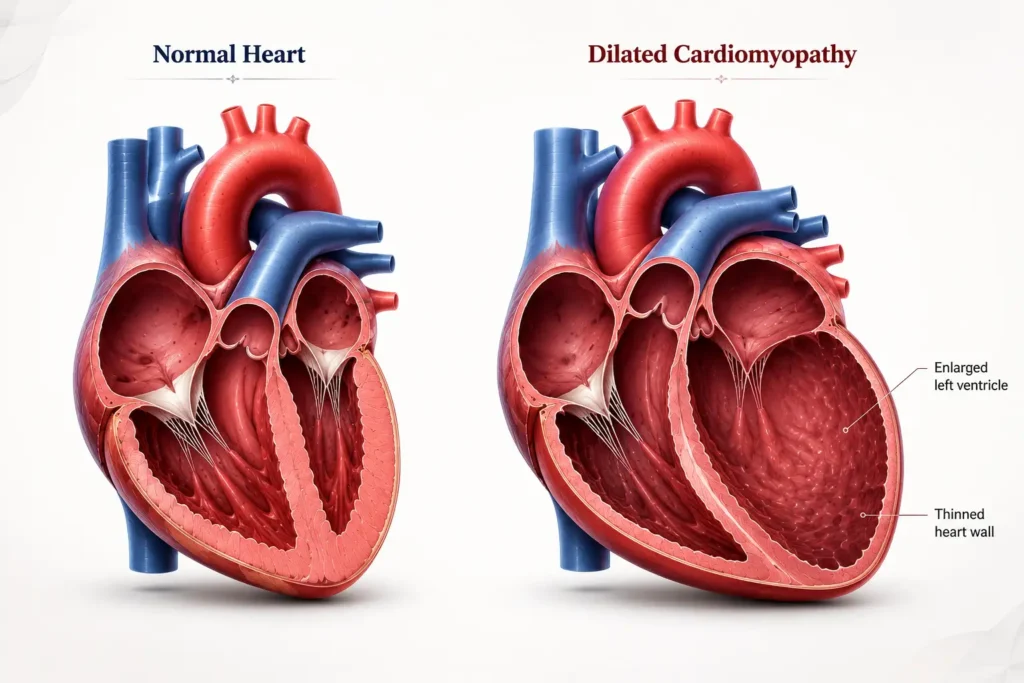
Cardiomyopathy is not one disease, and the type affects both the symptoms and the treatment. These are the main ones doctors see.
| Type | What happens to the muscle |
|---|---|
| Dilated | Chambers enlarge and weaken; the most common type |
| Hypertrophic | Muscle grows abnormally thick; often inherited |
| Restrictive | Muscle turns stiff and cannot fill properly |
| Arrhythmogenic | Muscle is replaced by fat or scar, disturbing rhythm |
One type worth naming separately is peripartum cardiomyopathy, which can develop in the last month of pregnancy or in the months after delivery. It causes the same heart-failure-type symptoms, breathlessness, swelling, and fatigue, and any new mother with these signs should be checked promptly. The stiff-muscle restrictive type can also be confused with constrictive pericarditis, where the sac around the heart is the problem rather than the muscle, and doctors test carefully to tell them apart.
Causes and Who Is at Higher Risk
Cardiomyopathy has many possible causes. Some forms are inherited, which is why a family history of cardiomyopathy or of unexplained sudden death at a young age matters so much. Other causes include long-standing high blood pressure, a previous heart attack that damaged the muscle, coronary artery disease, viral infections of the heart, heavy long-term alcohol use, thyroid and diabetes problems, autoimmune and inflammatory conditions, and less common ones such as amyloidosis, sarcoidosis, and iron overload. Certain chemotherapy drugs can also affect the heart muscle.
You are more likely to develop it with a family history of the condition, obesity, diabetes, high blood pressure, heavy alcohol use, or a past viral heart infection. In India, rising rates of diabetes and high blood pressure, along with later diagnosis, are making heart muscle disease more common in younger adults.
How Is Cardiomyopathy Diagnosed?
Doctors choose tests based on your symptoms, examination, family history, and the type of cardiomyopathy they suspect. Not everyone needs every test.
The main test is an echocardiogram (2D echo), an ultrasound that shows the heart's size, thickness, and pumping strength. An ECG records the heart's electrical activity, and a Holter, or ambulatory ECG, records the rhythm over a day or more to catch palpitations that come and go. A cardiac MRI is used when the echo does not give enough detail, and blood tests help find related problems like thyroid or diabetes. Genetic testing is offered when an inherited type is suspected or runs in the family.
If it runs in your family: if a parent, sibling, or child has hypertrophic cardiomyopathy or died suddenly and young from a heart problem, ask a cardiologist whether you need an ECG, an echocardiogram, or genetic counselling, even if you feel completely well. Screening can catch it before symptoms start.
How Is It Treated?
Treatment depends on the type of cardiomyopathy and how much the heart has been affected. The same medicine is not suitable for every type, so treatment is planned according to the patient's condition.
When cardiomyopathy weakens the heart's pumping ability, doctors may use a combination of medicines to control symptoms, reduce strain on the heart, and lower the risk of complications.
Diuretics, also called water tablets, can help remove extra fluid and reduce swelling or breathlessness. Other medicines may be used to control blood pressure, heart rate, or abnormal heart rhythms.
Hypertrophic cardiomyopathy (HCM) is managed differently from other types of cardiomyopathy. Treatment focuses on controlling symptoms, checking for blocked blood flow, and assessing the risk of dangerous heart rhythms.
Some people may need an ICD if they have a high risk of life threatening heart rhythms. The device can help prevent sudden cardiac death, but it does not treat the cardiomyopathy itself.
If severe symptoms continue despite treatment, selected patients may need procedures to reduce the thickened heart muscle. In advanced cases, a heart transplant may be considered. Cardiomyopathy can also lead to heart failure, so regular follow up is important.
Everyday steps that help: keeping salt low to reduce fluid, staying at a healthy weight, gentle regular exercise cleared by your doctor, avoiding alcohol and tobacco, and keeping blood pressure and diabetes well controlled. These support the heart but do not replace medical treatment.
When to See a Doctor, and When It's Urgent
See a cardiologist if you have ongoing fatigue, breathlessness on normal activity, swelling in the legs or feet, dizziness, or an irregular heartbeat, especially if a close family member has had cardiomyopathy or died suddenly and young from a heart problem.
Go to emergency care immediately if you have:
- Severe or sudden breathlessness, especially at rest
- Fainting, or nearly fainting
- Chest pain, especially if severe or at rest
- A racing or irregular heartbeat with dizziness
- Bluish or grey lips or skin
Call your local emergency number (108 or 112 in India, 999 in the UK, 911 in the US).
Key Takeaways
- Cardiomyopathy is a disease of the heart muscle, and some people have no early symptoms.
- Breathlessness, fatigue, swelling, palpitations, and fainting are the main signs to watch.
- An echocardiogram is the key test, and family screening matters when it runs in the family.
- Treatment is individual to the type; many people live full, active lives with the right care.
Frequently Asked Questions
What are the first symptoms of cardiomyopathy?
Usually unexplained tiredness, breathlessness on normal activity, and mild swelling in the feet or ankles. These are easy to blame on stress or age, which is why they get missed. If they persist, an echocardiogram and ECG can tell a doctor a lot.
Can you have cardiomyopathy without symptoms?
Yes. Some people never have symptoms, and others have none in the early stages. This is why it is sometimes found by chance on a scan or through family screening, and why knowing your family history matters.
What are the symptoms of hypertrophic cardiomyopathy?
They can include breathlessness on exertion, chest discomfort, palpitations, dizziness, and fainting, though some people have no symptoms. It is a leading cause of sudden cardiac death in young athletes, which is why fainting or a family history should always be checked.
Is cardiomyopathy hereditary?
Some forms are, especially hypertrophic cardiomyopathy. This is why a family history of cardiomyopathy or of unexplained sudden death at a young age is important, and why first-degree relatives are often offered screening or genetic counselling.
Can cardiomyopathy be cured?
Most types cannot be fully cured, but they can be well controlled, and many people live normal lives with treatment. Some causes, such as alcohol-related or thyroid-related cardiomyopathy, can improve significantly once the underlying cause is treated.
How is cardiomyopathy different from a heart attack?
A heart attack is a sudden event caused by a blocked artery cutting off blood supply to the heart muscle. Cardiomyopathy is a longer-term disease of the muscle itself. They differ, but a heart attack can leave damage that later causes cardiomyopathy.
Can young adults get cardiomyopathy?
Yes. Hypertrophic cardiomyopathy in particular can affect young people and is a leading cause of sudden cardiac death in young athletes. A young adult with a family history, or with unexplained fainting or palpitations, should speak to a doctor.
Which test confirms cardiomyopathy?
An echocardiogram is the main test, as it shows the heart's size, thickness, and pumping strength. An ECG, Holter monitor, cardiac MRI, blood tests, or genetic testing may be added depending on the situation.
Medical Disclaimer
This article is for general education only. It is not medical advice, diagnosis, or treatment. If you have breathlessness, swelling, palpitations, or any symptom described here, please see a doctor. For severe chest pain, fainting, or sudden breathlessness, seek emergency care immediately by calling your local emergency number (108 or 112 in India, 999 in the UK, 911 in the US). Never start, stop, or change any medicine without your doctor's advice.
References and Sources
- Cleveland Clinic. Cardiomyopathy: Symptoms and Treatment.
- American Heart Association (AHA). Symptoms and Diagnosis of Cardiomyopathy.
- Mayo Clinic. Cardiomyopathy: Symptoms and Causes.
- Johns Hopkins Medicine. Cardiomyopathy.
- AHA/ACC/HFSA. 2022 Guideline for the Management of Heart Failure, Circulation.
- AHA/ACC. 2024 Guideline for the Management of Hypertrophic Cardiomyopathy, Circulation.
- NHS UK. Cardiomyopathy.
Written by
Iraphan Khan, BSN, RN, D.Pharm
Founder of RealMedVision and a Public Health Researcher who creates evidence-based health content from trusted medical sources.
Medically reviewed by
Dr Praveen Verma, MBBS, MD (Pathology)
Dr Himanshu Morya, MBBS, Medical Educator
Last medically reviewed: 2 September 2026