
A patient-friendly guide by RealMedVision
Medically reviewed: 2 September 2026 · Last updated: 2 September 2026 · 9 to 11 minute read
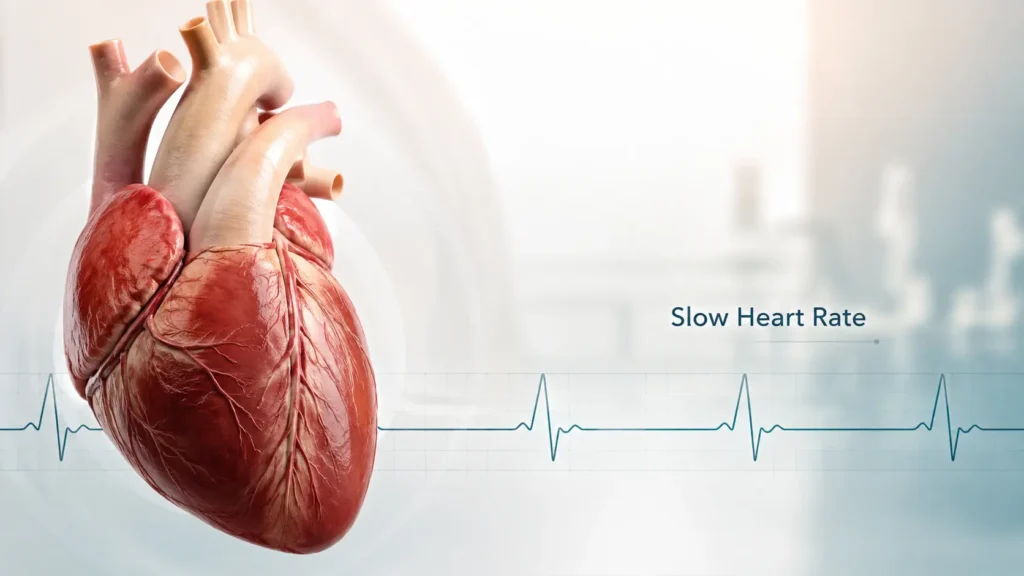
A slow heart rate is not always a problem. The real question is whether it is causing symptoms, and this guide helps you tell.
In This Article
What is it · Know your numbers · 7 symptoms · Causes · Diagnosis · Treatment · When it's urgent · FAQs
Quick Answer
Bradycardia means a resting heart rate below 60 beats per minute. On its own it is not always a problem, fit people and athletes often have slow rates and feel completely well. It becomes a concern when it comes with symptoms like tiredness, dizziness, breathlessness, or fainting, which suggest the heart is not pumping enough blood. An ECG is the main test used to confirm it.
A slow heart rate often gets noticed by accident, or through symptoms that are easy to blame on something else. People feel unusually tired, a bit dizzy, or breathless on stairs, and put it down to stress or age.
The good news is that bradycardia is very manageable once its cause is found. Sometimes it needs nothing at all. Sometimes it is a treatable thyroid or medicine issue, and in some cases a pacemaker helps. This guide explains the signs, the numbers, and when to take it seriously.
What Is Bradycardia?
The heart has its own electrical system. At the top sits a small area called the SA node, the heart's natural pacemaker, which sends the signal that sets your heart rate. In a healthy adult at rest, the heart usually beats 60 to 100 times a minute.
In bradycardia, the heart beats under 60 times a minute, either because the SA node is slowing down or because the signal is being blocked on its way through the heart. Fewer beats can mean less blood pumped around the body. When that happens, the brain and muscles may get less oxygen than they need, and that is what produces the symptoms. But a slow rate alone, without symptoms, is often harmless.
When Is a Slow Heart Rate a Problem?
There is no single cutoff where a heart rate suddenly becomes dangerous. What matters is the whole picture: your fitness, your age, whether there is a cause, and above all whether you have symptoms.
| Resting heart rate | What it can mean |
|---|---|
| 60 to 100 | Normal range for most adults at rest |
| Below 60, no symptoms | Often fine, common in fit people and athletes |
| Below 60, with symptoms | Worth checking, especially if new or worsening |
| Very low, with fainting or chest pain | Needs urgent medical assessment |
In short: a low number by itself is not the alarm. A low number together with how you feel is what matters. A regular runner resting at 50 and feeling great is very different from someone resting at 50 who keeps feeling faint.
7 Symptoms of a Slow Heart Rate
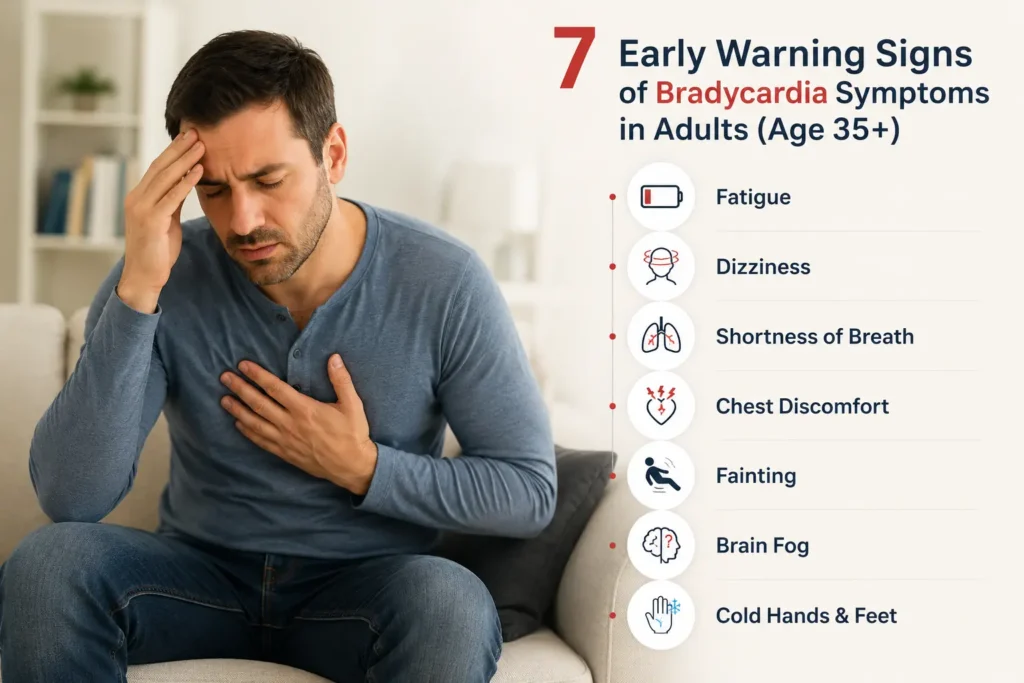
These are the signs that a slow heart rate may be affecting the body. They are easy to miss because they feel so ordinary.
1. Unusual tiredness
Sleeping well but still waking up drained, and everyday tasks leaving you worn out. If the heart is not pumping enough blood, the body simply has less to work with. It is often blamed on anaemia, thyroid trouble, or stress, and sometimes the real reason is a slow heart rate.
2. Dizziness or lightheadedness
Feeling lightheaded, unsteady, or close to fainting, often when standing up or after mild activity. It happens when blood flow to the brain briefly dips. If it keeps happening, it should be checked.
3. Shortness of breath
Getting breathless from light effort, like a short walk or one flight of stairs. When the rate is too slow, the heart may not pump enough blood to meet the body's needs. An ECG can quickly show whether the heart rate is behind it.
4. Chest discomfort or pressure
A vague pressure, heaviness, or tightness in the chest that comes and goes. It is different from the crushing pain of a heart attack, but any chest discomfort should be evaluated without delay rather than waited out.
5. Fainting or nearly fainting
Briefly blacking out, or feeling about to, because blood flow to the brain drops too low. Doctors call this syncope. Fainting should always be medically assessed, especially if it is unexplained, keeps happening, or comes with chest pain or a pounding heartbeat.
6. Confusion or trouble concentrating
A foggy, slowed-down feeling, forgetting simple things or struggling to focus. When the brain's blood supply is not steady, thinking can feel cloudy. This is one of the most easily missed signs, often written off as tiredness or age, especially in older people.
7. Feeling weak or unable to keep up with activity
A general weakness, or finding that exercise and effort tire you far sooner than they used to. When the heart cannot raise its rate to match activity, the body runs short during exertion. If your usual routine suddenly feels much harder, it is worth mentioning to a doctor.
| Symptom | When to get checked |
|---|---|
| Tiredness / weakness | Persistent and unexplained |
| Dizziness | If it keeps happening |
| Breathlessness | New or worsening |
| Chest discomfort | Without delay; emergency if severe |
| Fainting | Urgent assessment |
| Confusion / brain fog | Soon, if new or persistent |
What Causes Bradycardia?
A slow heart rate almost always has a reason behind it. The common ones are:
- Age-related changes: the SA node slowly wears with age, which is why bradycardia is more common after 60.
- Heart conditions: a past heart attack, rheumatic heart disease, or cardiomyopathy can damage the heart's wiring.
- Heart block: the signal is made normally but gets blocked on its way to the lower chambers. This ranges from mild to serious.
- Medicines: certain drugs, including some beta blockers, calcium channel blockers, and others, can slow the heart as a side effect.
- An underactive thyroid: low thyroid hormone slows many body processes, including heart rate.
- Sleep apnoea: pauses in breathing during sleep can disturb the rhythm and cause bradycardia at night.
- Electrolyte imbalance: minerals like potassium and calcium control the heart's signals, and an imbalance can slow it.
How Is Bradycardia Diagnosed?
The main test is an ECG, which records the heart's electrical activity in a few painless minutes and usually confirms a slow rate straight away. Because bradycardia often comes and goes, a Holter or event monitor, a small device worn for a day or longer, is used to catch it during normal life.
Beyond that, tests are chosen to find the cause. Blood tests check the thyroid and minerals like potassium and calcium. An echocardiogram is done if the doctor suspects a structural heart problem, and a sleep study may be arranged if sleep apnoea is likely. Not everyone needs every test.
How Is Bradycardia Treated?
Treatment depends on the cause and whether there are symptoms. If a slow heart rate is not causing any problems, it often needs no treatment at all, just monitoring. When treatment is needed, it usually targets the cause.
- Treating the cause: if an underactive thyroid or an electrolyte problem is behind it, correcting that can resolve the bradycardia completely.
- Adjusting medicines: if a medicine is slowing the heart, the doctor may change the dose or switch it. Never stop heart medicine on your own.
- Pacemaker: when bradycardia is due to certain electrical problems and causes symptoms like fainting, or in specific types of heart block, a pacemaker can keep the rate steady. It is a small device placed under the skin near the collarbone that gently prompts the heart when it beats too slowly.
Keep in mind: lifestyle habits like a healthy diet, regular activity, and not smoking support your heart in general, but they do not directly fix a slow heart rate caused by an electrical problem. The right treatment depends on the cause, which is why proper testing matters.
When to See a Doctor, and When It's Urgent
See a doctor if you have ongoing tiredness, dizziness, breathlessness, or a slow pulse with symptoms that has no clear reason. It is worth getting checked rather than assuming it is just age.
Go to emergency care immediately if you have:
- Fainting or loss of consciousness, even briefly
- Severe chest pressure or pain
- Severe breathlessness or weakness at rest
- Bluish lips or fingertips
These can point to a serious heart block or rhythm problem. Call your local emergency number (108 or 112 in India, 999 in the UK, 911 in the US).
Key Takeaways
- Bradycardia is a resting heart rate below 60, and on its own it is often harmless.
- It matters most when it comes with symptoms like tiredness, dizziness, or fainting.
- An ECG is the main test, and a Holter monitor helps catch it when it comes and goes.
- Treatment depends on the cause; some cases need nothing, others need a pacemaker.
Frequently Asked Questions
What heart rate is too low?
A resting rate below 60 beats a minute is called bradycardia, but there is no single number that is automatically dangerous. Fit people can sit well below 60 and feel fine. What matters is whether the slow rate comes with symptoms.
Is a slow heart rate always dangerous?
No. Many people with a slow heart rate feel completely well and need no treatment. It becomes a concern when symptoms appear, such as fainting, dizziness, breathlessness, or chest discomfort, or when the rate drops very low.
Can a slow heart rate be normal in athletes?
Yes. Regular endurance training makes the heart stronger and more efficient, so it pumps more with each beat and beats slower at rest. A fit person resting in the 40s or 50s who feels energetic is usually healthy, not unwell.
Can bradycardia be mistaken for something else?
Often, yes. Tiredness, dizziness, and brain fog also come from anaemia, thyroid problems, and low blood pressure. This is why an ECG is useful, as it gives a clear answer about the heart rate quickly.
When does bradycardia need a pacemaker?
A pacemaker is considered when a slow heart rate is due to certain electrical problems and is causing symptoms like fainting, or in specific types of heart block. It is not needed for every slow heart rate, and the decision is made by a heart specialist.
Is having a pacemaker fitted a major operation?
It is usually done under local anaesthetic with some sedation, rather than major surgery. Recovery time varies from person to person, and your medical team will tell you when you can return to your normal activities.
Can bradycardia affect younger adults?
Yes, though it is less common. Younger people can develop it from heart block, certain medicines, electrolyte problems, or conditions affecting the heart muscle. Unexplained fainting or a very slow pulse in a young adult should be checked.
Medical Disclaimer
This article is for general education only. It is not medical advice, diagnosis, or treatment. If you have dizziness, fainting, chest discomfort, or unusual tiredness, please see a doctor. For fainting, severe chest pain, or severe breathlessness, seek emergency care immediately by calling your local emergency number (108 or 112 in India, 999 in the UK, 911 in the US). Never start, stop, or change any medicine without your doctor's advice.
References and Sources
- Mayo Clinic. Bradycardia: Symptoms and Causes.
- Cleveland Clinic. Bradycardia: Symptoms, Causes and Treatment.
- American Heart Association (AHA). Bradycardia: Slow Heart Rate.
- StatPearls (NCBI). Sinus Bradycardia.
- NHS UK. Heart Block.
Written by
Iraphan Khan, BSN, RN, D.Pharm
Founder of RealMedVision and a Public Health Researcher who creates evidence-based health content from trusted medical sources.
Medically reviewed by
Dr Praveen Verma, MBBS, MD (Pathology)
Dr Himanshu Morya, MBBS, Medical Educator
Last medically reviewed: 2 September 2026