
You changed your diet completely—but your blood test still shows cholesterol still high after eating healthy. What is really going on?
Sometimes the real cause is much deeper than just food.
A patient-friendly guide by RealMedVision
Last Updated — May 2026
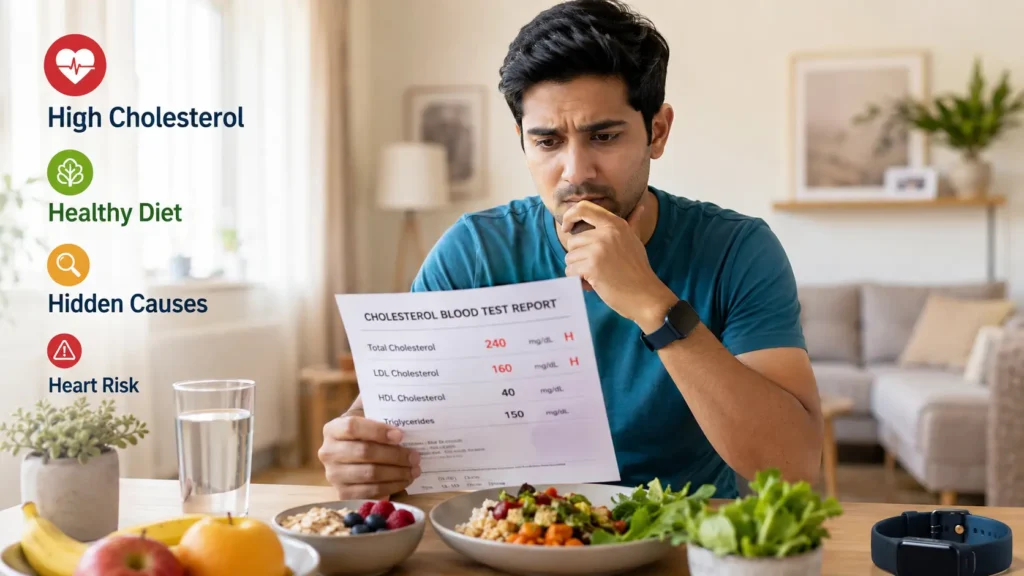
You switched to salads. You gave up fried food. You stopped eating butter. And yet your latest blood test still shows cholesterol still high after eating healthy.
Frustrating, right? You did everything right. And still the numbers won’t move.
The truth is diet controls only 20 to 30 percent of your cholesterol. The rest depends on your genes, hormones, thyroid, stress levels, and medical conditions most people never suspect.
The dangerous part is that high cholesterol gives no pain, no symptoms, and no warning. It quietly damages the arteries for years — until something serious like angina or a heart attack finally appears.
According to the World Health Organization, raised cholesterol contributes to over 4 million deaths every year globally. But here is the good news—once you understand the real causes, you can act early and protect your heart before permanent damage begins.
What Is Cholesterol?
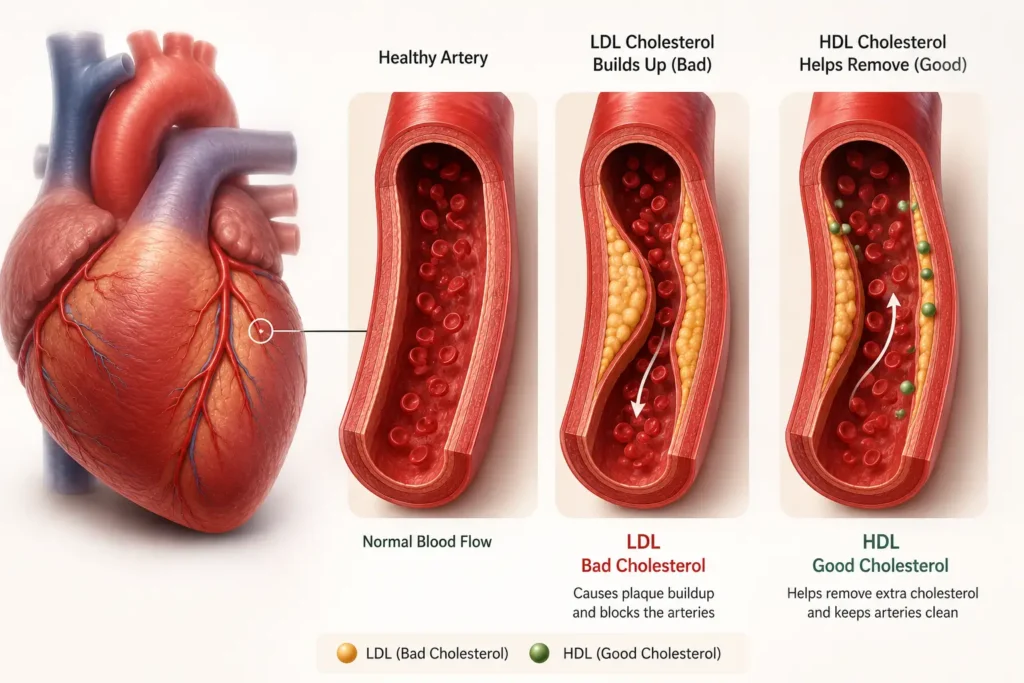
The body needs cholesterol to survive—but too much of the wrong type slowly damages the arteries.
Cholesterol is a waxy, fat-like substance produced naturally by the liver. The body actually needs it—to build cell walls, produce hormones, and support digestion.
But not all cholesterol works the same way.
LDL Cholesterol—called “bad cholesterol”—carries fat through the blood and deposits it inside artery walls when levels rise too high. Over time, this buildup is called plaque, and it slowly narrows the arteries.
HDL Cholesterol—the good kind—does the opposite. It picks up excess cholesterol from the arteries and sends it back to the liver for removal.
Why Is Cholesterol Still High After Eating Healthy?
This is the question most patients ask—and the answer surprises many of them.
Diet controls only about 20 to 30 percent of your cholesterol levels. The remaining 70 percent is controlled by your liver, your genes, your hormones, and several medical conditions that most people never suspect.
So when cholesterol is still high after eating healthy, the real cause is usually hiding somewhere else entirely.
Doctors often see patients who eat perfectly clean for months—and still walk in with LDL above 160. This is not a failure of willpower. It is biology working against them in ways diet alone cannot fix.
Hidden Causes Doctors Often Find
1. Genetics — The Most Overlooked Reason
One of the most common hidden causes is a condition called “familial hypercholesterolemia.” This is a genetic disorder where the liver cannot remove LDL properly from the blood—no matter how healthy your diet is.
For many patients, this is the real reason cholesterol still high after eating healthy continues to appear in blood tests.
According to the American Heart Association, about 1 in 250 people carry this genetic mutation. Many of them have no idea. ICMR data has highlighted that this condition is severely underdiagnosed in India.
If your parents or siblings have high cholesterol, your risk is significantly higher — and diet changes alone will not be enough.
2. Hypothyroidism
An underactive thyroid is one of the most commonly missed causes of high cholesterol. When the thyroid slows down, the liver loses its ability to clear LDL from the bloodstream efficiently.
Many patients discover cholesterol is still high after eating healthy—only to later find out their thyroid was the real problem all along.
3. Diabetes and Insulin Resistance
High blood sugar changes the way the body handles fats. It increases LDL, raises triglycerides, and lowers HDL—all at the same time. According to NIH research, many people with Type 2 diabetes continue to have cholesterol still high after eating healthy, even when they follow a disciplined diet.
4. Chronic Kidney Disease
The kidneys play a direct role in fat metabolism. When kidney function drops, cholesterol regulation is disrupted. This is where the real problem begins for many patients who are already eating carefully but still seeing high numbers.
5. Certain Medications
Some commonly prescribed medicines — including certain blood pressure drugs, steroids, and immunosuppressants — can raise LDL as a side effect. In some patients, this becomes one of the hidden reasons cholesterol still high after eating healthy and continues to appear in blood tests.
If you recently started a new medication and your cholesterol went up, this connection is worth discussing with your doctor.
6. Chronic Stress and Poor Sleep
Harvard Medical School research has linked long-term stress and poor sleep quality directly to elevated LDL levels. Stress hormones like cortisol interfere with how the liver processes fats. Many patients who eat well but sleep poorly find cholesterol still high after eating healthy — and this is often why.
Can You Have Normal Weight but High Cholesterol?
Yes, and this surprises most people.
Many patients assume that if their weight is normal, their cholesterol must be fine too. But that is not how the body works. A person can be slim, active, and eating healthy—and still have cholesterol still high after eating healthy because of genetics, hormones, or hidden medical conditions.
This happens because cholesterol is not just about body fat. It is about how your liver processes fats, how your genes regulate LDL clearance, and how your hormones behave internally.
A thin person with a family history of high cholesterol or an undetected thyroid problem can easily have LDL above 160 mg/dL.
Doctors call this “lean hypercholesterolemia”—and it is one of the most missed diagnoses in routine checkups. Many of these patients continue to have cholesterol still high after eating healthy but never get tested because everyone—including them—assumes their weight means their heart is safe.
It is not. Normal weight does not mean normal cholesterol. Only a lipid profile test can tell you the truth.
Types of Cholesterol — What Your Report Actually Means
Think of LDL as a delivery truck—it carries fat and deposits it inside your artery walls. HDL works like a cleanup crew—it picks up that excess fat and sends it back to the liver for removal.
When LDL rises too high and HDL falls too low, the delivery trucks outnumber the cleanup crew. This is exactly why many people find cholesterol still high after eating healthy — the cleanup system is simply not keeping up.
Your lipid profile report shows four numbers:
LDL below 100 mg/dL — optimal; LDL 130 to 159 — borderline high; LDL above 160 — high, needs attention; HDL above 60 — protective; HDL below 40 — risk factor
Do not just look at total cholesterol. Doctors focus on the LDL to HDL ratio—because that tells the real story of your heart risk.
Silent Signs High Cholesterol May Already Be Affecting Your Heart
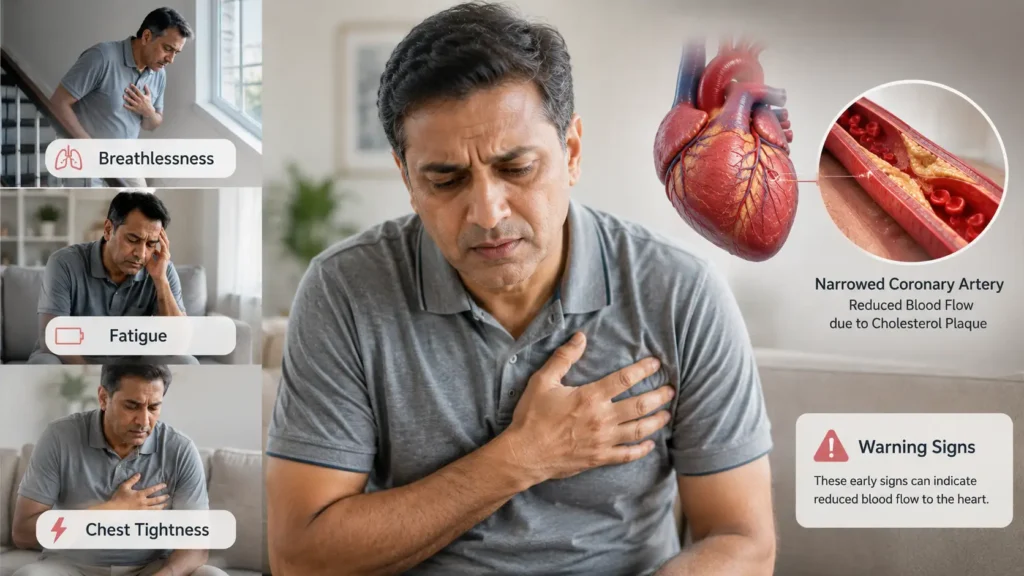
Most people wait for chest pain before they take cholesterol seriously. But the heart sends much quieter signals long before that.
Watch for these silent signs:
Unusual Fatigue —
Feeling tired even after proper sleep. When arteries narrow, the heart works harder and the body feels it quietly.
Mild Breathlessness —
Slight breathlessness during simple activities like climbing stairs or a short walk that never bothered you before.
Reduced Exercise Tolerance —
You used to walk 30 minutes easily. Now 10 minutes feels heavy. This gradual drop is an early warning sign.
These signs are easy to dismiss as stress or overwork. That is exactly what makes them dangerous.
If you notice any of these, do not wait. A simple lipid profile and ECG test can catch the problem early—before it becomes something far more serious.
Warning Signs You Should Not Ignore
This is the part most people get wrong — they wait for symptoms before taking cholesterol seriously. But cholesterol itself causes no pain.
By the time symptoms appear, the arteries are often already significantly narrowed.
Sometimes the body gives silent warning signs that something is wrong with the cardiovascular system. Watch for these:
Chest tightness or pressure during physical activity—this may be a sign of angina, which happens when narrowed arteries cannot supply enough blood to the heart during exertion.
Shortness of breath with mild effort — when the heart has to work harder because of reduced blood flow, even small activities become tiring.
Pain or cramping in the legs while walking—this may point to peripheral artery disease, where plaque has built up in the leg arteries.
Unusual and persistent fatigue—when the heart struggles to pump efficiently, the whole body feels it.
If you experience sudden severe chest pain, weakness on one side of the body, difficulty speaking, or sudden dizziness—go to the emergency department immediately. These may be signs of a heart attack or stroke.
How High Cholesterol Affects the Heart
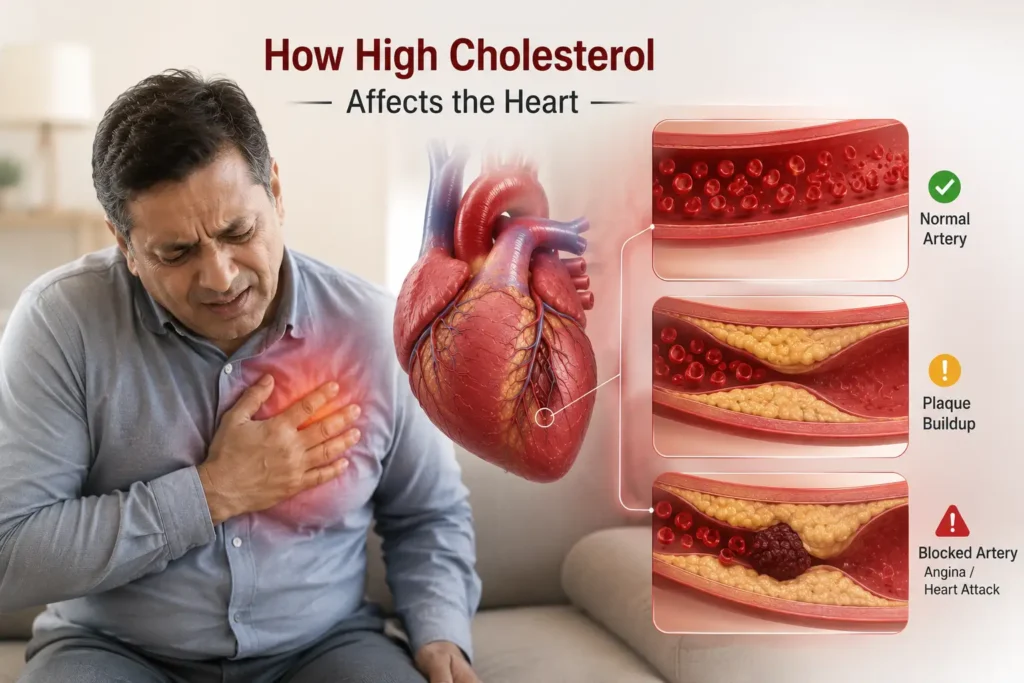
The danger of high cholesterol is not what it does today—it is what it builds toward over years.
When LDL deposits plaque inside the coronary arteries—the vessels that feed the heart—it slowly narrows the space blood has to flow through. The heart muscle begins to receive less oxygen than it needs.
This is how Angina develops. The chest feels tight or heavy, especially during activity or stress, because the heart is working harder through a narrowed passage.
Over time, if a plaque ruptures and a blood clot forms at the site, the result is a Heart Attack.
AIIMS cardiologists have documented that a significant proportion of first heart attacks in Indian patients occurred in people who had never been told their cholesterol was elevated—simply because they had never been tested.
Angina, Heart Attack and Blocked Arteries
When the coronary arteries become blocked, doctors classify heart attacks based on how severe the blockage is.
A STEMI—ST-Elevation Myocardial Infarction is a complete blockage of a coronary artery. It is a full heart attack and requires emergency treatment within minutes to hours.
An NSTEMI—Non-ST-Elevation Myocardial Infarction is a partial blockage. It is still a serious medical emergency, but the damage pattern is different.
Understanding the difference between STEMI vs NSTEMI matters because both are directly linked to the same root cause—plaque buildup driven by years of elevated LDL cholesterol, including in people who continue to have cholesterol still high after eating healthy.
High cholesterol can also affect the aortic valve over time. Aortic Regurgitation — where the aortic valve does not close properly — is one cardiovascular complication that researchers have linked to long-term lipid abnormalities and inflammation in the arterial walls.
ECG Test, Blood Tests and Diagnosis
Most people do not know they have a problem until a routine check reveals it.
The basic test for cholesterol is a Lipid Profile—a simple blood test that requires 8 to 12 hours of fasting. It gives you LDL, HDL, total cholesterol, and triglycerides in one report.
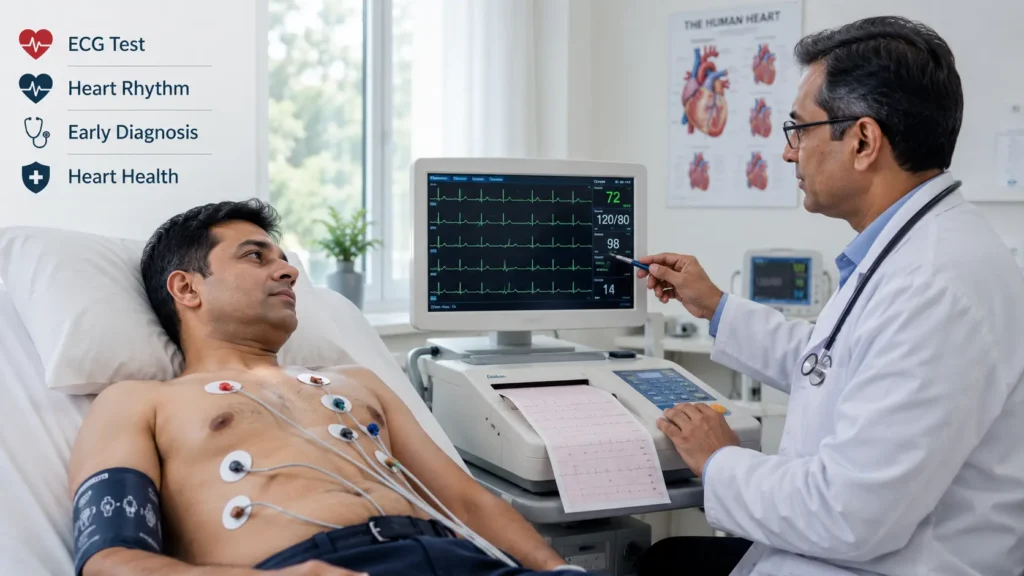
An ECG Test — Electrocardiogram—does not measure cholesterol directly. But it can detect electrical changes in the heart that suggest the heart muscle has been stressed or damaged by reduced blood flow. Doctors often use the ECG Test alongside blood tests when a patient reports chest discomfort or shortness of breath.
Doctors may also check your Ejection Fraction—a measurement of how much blood the heart pumps out with each beat. A normal ejection fraction is between 55 and 70 percent. When it falls below this, it may indicate the heart muscle has weakened after years of cardiovascular damage linked to cholesterol still high after eating healthy.
Your Normal Blood Pressure and Normal Heart Rate are also checked alongside cholesterol tests, because high cholesterol, high blood pressure, and abnormal heart rate often appear together and multiply each other’s risk.
The AHA recommends that all adults above 20 get their cholesterol tested at least once every 4 to 6 years. AIIMS cardiologists recommend starting at age 30 in India, given the country’s rising rates of early-onset cardiovascular disease.
Treatment Options Doctors Recommend
Treatment always depends on the LDL level, the presence of other risk factors, and the patient’s overall health picture.
For most people, doctors start with lifestyle changes. If those are not enough or if the cause is genetic, medication is added.
Statins are the most widely used and best-studied cholesterol-lowering medicines. They work by reducing the liver’s own production of cholesterol. Multiple large clinical trials have shown they significantly reduce the risk of heart attack and stroke in high-risk patients.
Ezetimibe reduces the amount of cholesterol absorbed from food in the intestine. It is often added when statins alone are not sufficient.
PCSK9 Inhibitors are newer injectable medicines used when LDL remains very high despite statins—particularly in patients with Familial Hypercholesterolemia.
Mayo Clinic guidelines emphasize that medication should always be combined with lifestyle changes—not used as a replacement.
Also, patients with conditions like Rheumatic Heart Disease or pre-existing valve problems need especially careful cholesterol monitoring, as inflammation and lipid buildup interact to accelerate damage in already compromised hearts.
Lifestyle Changes That Actually Help
Even if medication is needed, these changes make a real difference and they work for almost everyone.
Replace saturated fats—butter, full-fat dairy, fatty red meat with healthier fats from olive oil, nuts, avocado, and fish. Soluble fiber from oats, barley, lentils, and beans directly reduces LDL absorption in the gut.
Walk briskly for 30 minutes most days of the week. According to the AHA, at least 150 minutes of moderate aerobic activity per week raises HDL while lowering LDL and triglycerides.
Quit smoking — it lowers HDL directly and damages artery walls, making them more vulnerable to plaque.
Manage stress actively. Chronic stress raises cortisol, which the liver converts into cholesterol. Even simple breathing exercises and 7 to 8 hours of quality sleep improve lipid profiles meaningfully over time.
Prevention Tips for Long-Term Heart Health
Prevention works best when it starts early — before numbers become dangerous.
Get your lipid profile tested regularly. You cannot manage what you do not measure. Keep your Normal Blood Pressure in check—high blood pressure and high cholesterol together multiply cardiovascular risk far beyond either alone.
Maintain a healthy weight. Even modest weight loss of 5 to 10 percent of body weight can improve LDL meaningfully. But many people still experience cholesterol still high after eating healthy because long sitting hours and poor metabolism can continue affecting the way the body handles fats.
If your parents have high cholesterol or a history of early heart disease, start testing earlier and discuss genetic screening with your doctor.
When To See a Doctor
See a doctor without delay if your LDL is above 160 mg/dL, if your total cholesterol is above 200 mg/dL, or if you have any of the risk factors mentioned above — diabetes, thyroid problems, family history, obesity, or kidney disease.
See a doctor immediately if you feel chest tightness, pressure, or pain — especially with exertion. Do not wait for it to pass. Angina can be a warning before a heart attack, particularly in people who continue to have cholesterol still high after eating healthy, and early intervention can make a life-changing difference.
If you experience sudden chest pain, sudden weakness on one side, slurred speech, or sudden dizziness — call emergency services immediately. Every minute matters.
Can cholesterol stay high despite healthy eating?
Frequently Asked Questions (FAQs)
Yes, and it is more common than most people realize. Diet controls only 20 to 30 percent of cholesterol levels. Genetics, thyroid function, kidney health, medications, stress, and sleep all affect the remaining 70 percent. Cholesterol still high after eating healthy is often a sign that something beyond diet needs to be investigated.
Can stress increase cholesterol?
Yes. Chronic stress triggers the release of cortisol, which signals the liver to produce more cholesterol. Poor sleep also independently raises LDL over time. Managing stress is not optional — it is a genuine medical strategy for cholesterol control.
Can genetics cause high cholesterol?
Absolutely. Familial Hypercholesterolemia is a genetic condition where the body cannot clear LDL normally, regardless of diet. ICMR data suggests this condition is significantly underdiagnosed in India. If high cholesterol runs in your family, genetic factors must be assessed by a doctor.
Can an ECG test detect heart damage from cholesterol?
An ECG Test does not measure cholesterol directly, but it can show electrical signs that the heart muscle has been stressed or damaged due to reduced blood supply — which is often caused by plaque buildup from long-term high cholesterol. It is an important part of a full cardiac evaluation.
Can young adults have high cholesterol?
Yes. AIIMS research documented that young urban Indian adults in their 20s and 30s are being found with abnormal cholesterol profiles at alarming rates. Junk food, physical inactivity, chronic stress, and rising obesity are the main drivers in this age group.
Medical Disclaimer
This article is written for general educational awareness only. Cholesterol levels and treatment requirements vary significantly from person to person. Always consult a qualified doctor before starting any medicine or making major dietary or lifestyle changes based on your test results.
Conclusion
High cholesterol stays silent for years. No pain. No warning. Just quiet damage building inside the arteries.
If your cholesterol is still high after eating healthy, diet is not always the problem. Genes, thyroid, stress—the real cause may be hiding somewhere else.
Get tested. Know your numbers. Act early.
Because protecting your heart before damage begins—that is everything.
About the Author
Iraphan Khan, BSN | D.Pharm | CMLT, is a Healthcare SEO Strategist and Medical Content Writer at RealMedVision, creating clinically accurate content optimized for Google and AI search.
Medically Reviewed By
Dr Praveen Verma, MBBS, MD — Diagnostic & Pathology
Dr Himanshu Morya MBBS — Clinical Accuracy & Patient Safety
Kalpna Singh Shekhawat BSN NP — Patient Care & Practical Accuracy
References:
- World Health Organization (WHO) — Global Cardiovascular Risk Report 2021
- American Heart Association (AHA) — Cholesterol Guidelines 2018
- National Institutes of Health (NIH) — LDL Cholesterol and Cardiovascular Risk
- Mayo Clinic — High Cholesterol Causes and Treatment
- Harvard Medical School — Stress, Sleep and Cholesterol Connection
- Indian Council of Medical Research (ICMR) — Dyslipidemia Prevalence in India
- AIIMS New Delhi — Early Onset Cardiovascular Disease in Indian Adults
- Framingham Heart Study—Long-Term Cholesterol and Heart Disease Data
- Centers for Disease Control and Prevention (CDC) — Familial Hypercholesterolemia Facts
- European Society of Cardiology (ESC) — Dyslipidemia Management Guidelines 2019
- National Heart, Lung and Blood Institute (NHLBI) — Blood Cholesterol Causes and Risk Factors
- Journal of the American College of Cardiology (JACC) — LDL Reduction and Cardiovascular Outcomes