
Eating during dengue does not need to be complicated. Focus on fluids, light meals and foods your stomach can handle.
A patient-friendly guide from RealMedVision
10 to 12 minute read

Quick answer
During dengue, focus on fluids and light, easy-to-digest food. Drink water, coconut water, soups and fresh juices, and eat khichdi, dal, fruits and soft home food. However, no food raises the platelet count on its own, so diet supports recovery but does not replace fluids, rest and medical monitoring. What matters most is staying hydrated and watching for warning signs.
What should you eat during dengue?
The best dengue diet is built around two simple ideas: keep your body hydrated, and eat light food that is gentle on the stomach. During a fever, your appetite may drop and heavy meals can feel harder to tolerate. Small, frequent portions work better than three big meals.
Fluids come first. Fever and sweating cause fluid loss, so drinking through the day matters more than any single food. Nutritious food then supports your immune system and gives you energy while your body clears the virus.
Chart 1: Best foods and fluids during dengue
| Group | Good choices | Why it helps |
|---|---|---|
| Fluids | Water, coconut water, ORS, fresh lime water, thin soups, dal water | Replaces fluid lost to fever and keeps you hydrated |
| Light meals | Khichdi, plain dal and rice, dalia, upma, porridge, curd | Easy to digest when the appetite is low |
| Fruits | Papaya, pomegranate, orange, sweet lime, kiwi, banana | Vitamins and fluid, gentle on the stomach |
| Protein | Eggs, paneer, chicken, fish, dal, moong | Helps the body repair and recover |
Good to Know: There is no single magic food for dengue. The whole pattern of light meals and steady fluids is what helps, not one fruit or drink.
Which fluids are best in dengue?
Fluids are the most important part of a dengue diet. The aim is to replace what the body loses through fever and sweating, and to keep you from getting dehydrated. Sip small amounts often rather than drinking a lot at once.
- Water: The simplest and most important. Keep a bottle nearby and sip through the day.
- Coconut water: Naturally rich in minerals, gentle on the stomach and easy to keep down.
- ORS (oral rehydration solution): Especially important when there is a lot of fluid loss, sweating or any vomiting, as it replaces both water and salts.
- Soups and dal water: Warm, light and nourishing, and they add fluid along with a little nutrition.
- Fresh juices and lime water: Home-made, without added sugar, for vitamins and hydration.
Check your hydration: Pale, regular urine usually means you are drinking enough. Dark urine or passing very little means you need more fluids, or medical help if you cannot keep them down.
Which fruits are good for dengue patients?
Soft, water-rich fruits are the easiest to eat when the appetite is low, and they add vitamins and fluid at the same time. No fruit raises the platelet count by itself, but they support your nutrition and hydration while you recover.
- Papaya: Soft and easy to eat, with vitamins that support recovery.
- Pomegranate: Soft, easy to eat and provides fluids and nutrients when your appetite is low.
- Orange and sweet lime: Vitamin C and plenty of fluid, refreshing when you feel weak.
- Kiwi: Good source of vitamin C to support the immune system.
- Banana: Gentle, filling and easy to digest when you cannot manage a full meal.
About papaya leaf juice: You may have heard that papaya leaf juice increases platelets. Some small studies suggest it can raise the count a little faster, but a higher number is not the same as a safer illness, and reviews find the evidence too limited to confirm a real benefit. It is not a proven treatment for dengue. If you are considering it, discuss it with your doctor first. There is more detail in our guide on the dengue platelet count.
What foods should you avoid during dengue?
Just as important as what you eat is what to leave out. Dengue makes digestion sensitive, so heavy, oily and spicy food can add to nausea and discomfort. Avoiding these foods can make eating more comfortable while you recover.
Should you avoid painkillers during dengue?
This is not a food, but it matters just as much. For fever and body pain, paracetamol is generally preferred. Avoid aspirin and NSAIDs such as ibuprofen unless your doctor tells you otherwise, as they can raise the risk of bleeding, which is already a concern in dengue.
Can you eat rice, eggs and non-vegetarian food in dengue?
Yes to all three, with a little care. This is one of the most common worries, and the honest answer is that there are no strict food bans in dengue. The rule is light and easy to digest, not vegetarian or non-vegetarian.
- Rice: Yes. Soft rice with dal or as khichdi is one of the best foods in dengue, gentle and easy to digest.
- Eggs: Yes. Eggs are a good, soft source of protein that helps the body repair. Boiled is easier than fried.
- Chicken and fish: Yes, cooked lightly with little oil. Soups and stews are easier than heavy fried dishes.
- Milk and curd: Usually fine and a good source of protein, unless your stomach feels upset by them.
Myth vs Fact
Myth: Non-vegetarian food is banned in dengue.
Fact: There is no such ban. Lightly cooked eggs, chicken and fish are fine and give useful protein.
Myth: Eating certain foods will quickly raise platelets.
Fact: No food reliably raises platelet counts or speeds recovery. Platelet counts usually recover as the infection settles.
A simple dengue diet plan by phase
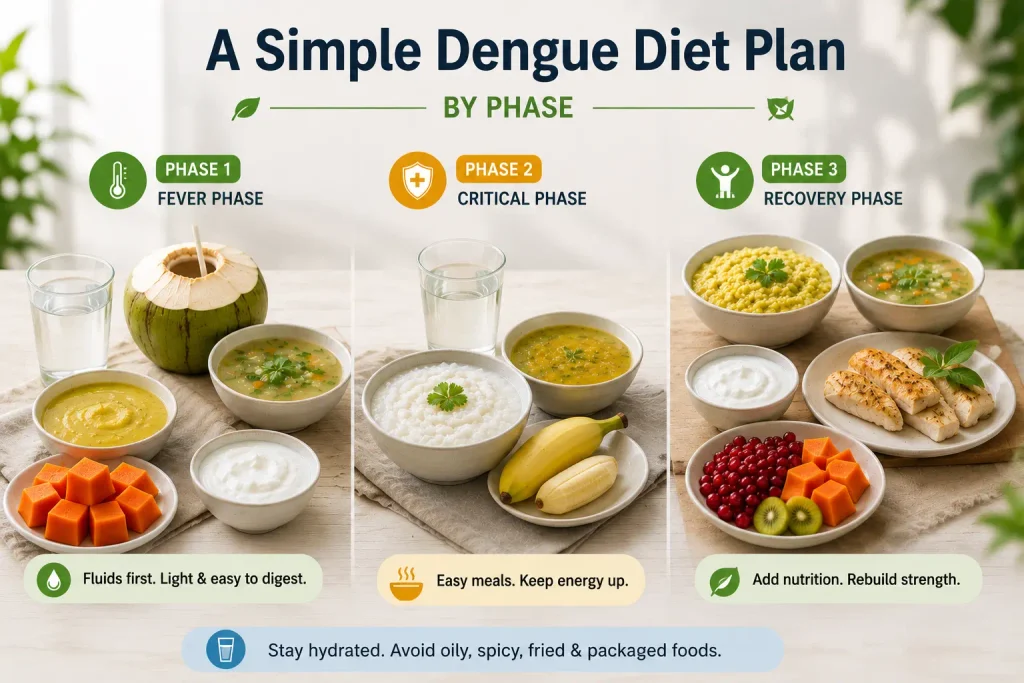
Your appetite and needs change as dengue moves through its phases. This is a general guide, not a fixed rule, and you should adjust it to what you can manage on the day.
Patient Tip: When you can barely eat, do not force full meals. Focus on fluids and a few spoons of soft food often. Getting enough to drink matters more than finishing a plate.
Does any diet increase platelets in dengue?
This is the question on most minds, so here is the honest answer. No food or drink reliably raises the platelet count or makes dengue recover faster. Platelets fall because of the virus, and they climb back on their own as your body clears the infection, usually over a few days.
A good diet still matters, just for a different reason. Staying hydrated and well nourished helps your body cope with the illness and recover its strength. So think of food as support for your whole recovery, not as a way to push a number up. The count is only one part of dengue, and the trend and warning signs matter more, as explained in our guide on the dengue platelet count.
When should diet take a back seat and you call a doctor?
Diet is helpful, but it is never the main treatment for dengue. If you cannot keep fluids down, or if warning signs appear, food is no longer the priority and you need medical care quickly.
Seek urgent medical care if there is severe belly pain, repeated vomiting, any bleeding from the gums or nose, black stools, difficulty breathing, or if you feel faint. These can be signs that dengue is becoming severe. Knowing these warning signs can help you seek care before the illness becomes serious, and you can read more about dengue in India in our guide.
When to Call Your Doctor: If you cannot drink or keep fluids down, or if any warning sign appears, do not rely on diet. Contact your doctor or go to hospital right away.
Key takeaways
- A dengue diet is simple: plenty of fluids and light, easy-to-digest food.
- Fluids come first. Water, coconut water, ORS and soups matter more than any single food.
- Rice, eggs, chicken and fish are all allowed. Cook them light, with little oil.
- No food reliably raises platelet counts or speeds recovery. Platelet counts usually recover as the infection settles.
- Diet supports recovery but is not the treatment. See a doctor if any warning sign appears.
Frequently asked questions about the dengue diet
What is the best food to eat in dengue?
Light, easy-to-digest food is best: khichdi, dal and rice, dalia, soups, curd and soft fruits like papaya and banana. Along with plenty of fluids, this supports recovery. No single food cures dengue or raises platelets on its own.
Can I eat rice in dengue?
Yes. Soft rice with dal, or as khichdi, is one of the most recommended foods in dengue. It is gentle, easy to digest and gives steady energy when the appetite is low.
Can I eat eggs and non-vegetarian food in dengue?
Yes. There is no ban on non-vegetarian food in dengue. Eggs, chicken and fish give useful protein for recovery. Cook them lightly with little oil, and choose boiled or soups over heavy fried dishes.
Which fruits are best for dengue patients?
Soft, water-rich fruits such as papaya, pomegranate, orange, sweet lime, kiwi and banana are good choices. They add vitamins and fluid and are gentle on the stomach, though no fruit raises platelets by itself.
Does papaya or papaya leaf juice increase platelets in dengue?
Some small studies suggest papaya leaf extract may raise the count a little faster, but reviews find the evidence too limited to confirm a real benefit, and its safety is not fully studied. It does not replace fluids, rest or monitoring. Ask your doctor first.
What foods and drinks should be avoided in dengue?
Avoid oily, fried and spicy food, packaged and processed items, caffeine, alcohol and sugary drinks. They are hard to digest or add to dehydration. Also avoid aspirin and ibuprofen for fever unless your doctor advises otherwise.
Can I drink milk during dengue?
Usually yes. Milk and curd are good sources of protein and are generally fine. If your stomach feels upset or bloated, switch to lighter fluids like water, coconut water and soups until you feel better.
What should a dengue patient eat to recover faster?
Stay well hydrated with water, coconut water, ORS and soups, eat small frequent light meals with some protein, and include soft fruits. Rest matters as much as food. See a doctor promptly if any warning sign appears.
This article is general information about the dengue diet and cannot replace advice from your own doctor. If you have dengue, follow your doctor and go to hospital at once if any warning sign appears.
References
- Clinical Care of Dengue, including supportive care and hydration. Centers for Disease Control and Prevention, 2026.
- Symptoms of Dengue and Testing, including warning signs. Centers for Disease Control and Prevention.
- Dengue case management, including fluid advice. World Health Organization.
- Carica papaya extract in dengue: a systematic review and meta-analysis. BMC Complementary Medicine and Therapies, 2019.
- Carica papaya extract in dengue: evidence insufficient to recommend routine use. BMC Complementary Medicine and Therapies (PubMed), 2019.
- National guidance on dengue prevention and management. Ministry of Health and Family Welfare, Government of India.
- Dengue Situation in India. National Center for Vector Borne Diseases Control, Government of India.
- Dengue and severe dengue: key facts. World Health Organization.
Written by
Iraphan Khan, BSN, RN, D.Pharm
Founder of RealMedVision and Public Health Researcher. Registered nurse who writes evidence based health explainers using trusted medical and public health sources.
Medically reviewed by
Dr Praveen Verma, MBBS, MD (Pathology)
Dr Himanshu Morya, MBBS, Medical Educator
Last medically reviewed: August 2026