
A low dengue platelet count can be worrying, but the number alone does not tell you how serious the illness is.
A patient-friendly guide from RealMedVision
10 to 12 minute read
Quick answer
A normal platelet count is 1,50,000 to 4,50,000 per microlitre. In dengue, the platelet count can fall as the illness progresses, but a low count alone does not mean the dengue is severe. Doctors also look at how quickly the count is falling, along with warning signs such as bleeding, severe belly pain and other changes in your condition.
What is a normal platelet count, and what counts as low in dengue?
Platelets are tiny blood cells made in the bone marrow that help the blood clot. A normal count is 1,50,000 to 4,50,000 per microlitre, often written as 1.5 to 4.5 lakh.
A low platelet count is a common finding in dengue, though not everyone drops below the normal range. Any count under 1,50,000 is called thrombocytopenia, meaning low platelets. On its own, this is not a reason to panic.
Doctors group the fall into levels to read it safely, but the level alone does not decide how sick you are.
Chart 1: How to read a platelet count in dengue
| Platelet count (per microlitre) | What it means |
|---|---|
| 1,50,000 to 4,50,000 | Usual adult reference range |
| Below 1,50,000 | Low platelet count (thrombocytopenia) |
| Below 1,00,000 | Thrombocytopenia is more marked |
| A very low count | Needs closer medical assessment, especially if falling fast or with any bleeding |
No platelet number by itself defines severe dengue or means you need hospital admission. Doctors look at the platelet trend, any bleeding, warning signs, blood pressure, urine output and hydration together. Other monsoon fevers such as Chandipura virus and H1N1 flu can look similar early on, so a blood test is what confirms dengue.
Clinical Note: The platelet count can keep falling after the fever settles. This can happen during the critical phase, so feeling better does not always mean the risk has passed. Watch closely for warning signs during this period.
What platelet count is the danger level in dengue?
There is no single platelet number that means dangerous dengue. Many people believe a count below 20,000 equals severe dengue, but that is not how doctors define it. Some patients stay stable at very low counts, while others run into trouble at higher counts.
The risk of bleeding becomes more of a concern as platelets fall very low, but in dengue the number alone does not predict who will bleed seriously. So the danger level is read together with how you feel, any bleeding and how fast the count is falling. Severe dengue is defined by severe bleeding, fluid leakage or organ problems, not by a platelet figure.
Why the trend matters more than one reading
A count of 60,000 that fell fast from 1,50,000 in a day can worry a doctor more than a steady 40,000. So doctors repeat the test and follow the trend. A rapid fall, or a rising haematocrit (thicker blood) with falling platelets, is a bigger warning than the number. With dengue cases rising across India, this keeps the focus right.
Myth vs Fact
Myth: A platelet count below 20,000 always means severe dengue.
Fact: Severe dengue is defined by bleeding, plasma leakage or organ problems, not by the count alone.
Myth: The lower the count, the more medicine you need.
Fact: There is no medicine that raises platelets quickly. Care is about fluids, rest and watching for warning signs.
Why does dengue lower the platelet count?
Dengue lowers platelets in two ways at once. This explains why the drop is expected and why it recovers on its own.
- Less production: Dengue can temporarily reduce platelet production in the bone marrow, so fewer new platelets enter the blood.
- More destruction: Immune and inflammatory processes can also increase the destruction of existing platelets.
Because both happen together, the count can fall quickly. The good news is that once the virus clears, the bone marrow recovers and the count climbs back up within a few days, without any treatment aimed at the platelets.
How does the platelet count change day by day in dengue?
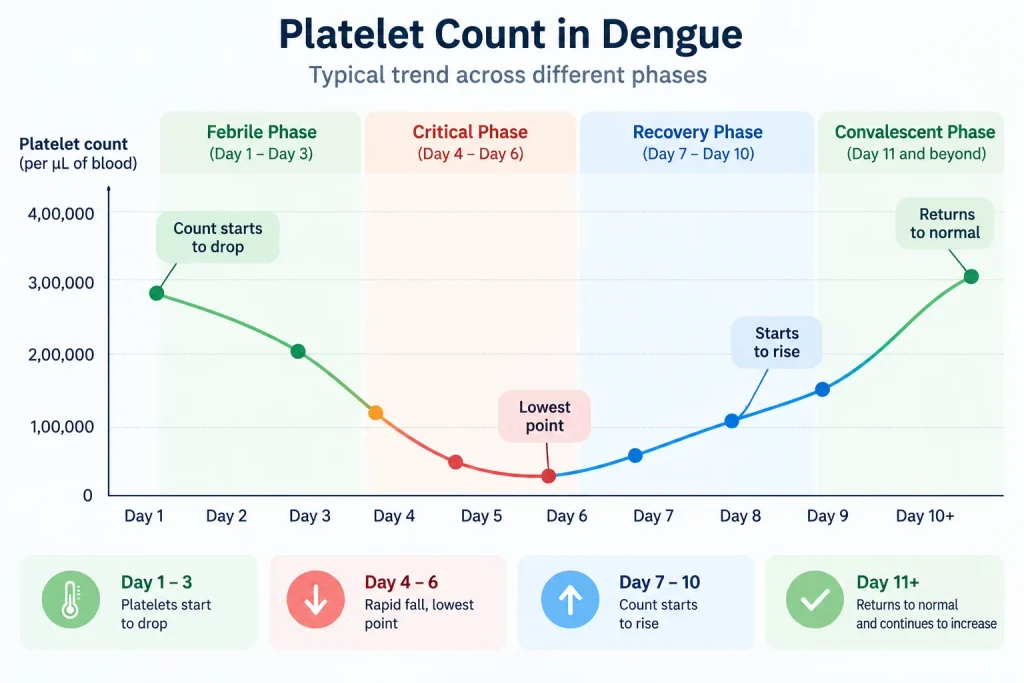
Dengue moves through three phases, and platelet counts often fall in the later part of the illness. The exact timing varies. Seeing the number fall can be scary, but knowing what usually happens in each phase makes it easier.
Chart 2: Platelet count through the phases of dengue
| Phase | What usually happens |
|---|---|
| Febrile phase | Fever is the main symptom. Platelets may begin to fall |
| Critical phase | Around the time the fever settles, some people develop warning signs and platelets may fall further |
| Recovery phase | Fluid leakage settles and platelet counts usually begin to recover |
The trickiest time is when the fever comes down. The critical phase begins around then and warning signs are most likely, so keep testing after the fever settles.
Keep in Mind: One low reading is not the full story. Your doctor may repeat the blood count daily or more often, depending on your symptoms, the platelet trend, your haematocrit and how you are doing.
How can you increase your platelet count in dengue?
There is no quick fix and no medicine that raises platelets fast. The count rises on its own as your body clears the virus. You can support recovery and avoid anything that makes bleeding more likely.
- Drink enough fluids: Water, oral rehydration solution, coconut water, soups and dal water. Stay hydrated unless your doctor has advised you to restrict fluids.
- Rest fully: Rest helps your body recover while the infection runs its course.
- Use paracetamol for fever: Paracetamol is generally preferred. Avoid aspirin and NSAIDs such as ibuprofen unless your doctor says otherwise, as they can raise bleeding risk.
- Eat simple, regular meals: Small frequent meals help when the appetite is low. Diet supports recovery but does not raise platelets by itself.
- Keep testing: Follow your doctor and repeat the blood count as advised.
Does papaya leaf juice work?
Papaya leaf extract is very popular in India, and several studies, many of them Indian, do show it can raise the platelet count a little faster. But a higher number is not the same as a safer illness. Reviews of this research find no clear proof that it lowers bleeding, hospital stay or the risk of severe dengue, and its safety has not been fully studied. No health authority recommends it as a treatment. It does not replace fluids, rest or monitoring. If you are considering it, discuss it with your doctor first.
What are the warning signs to watch for in dengue?
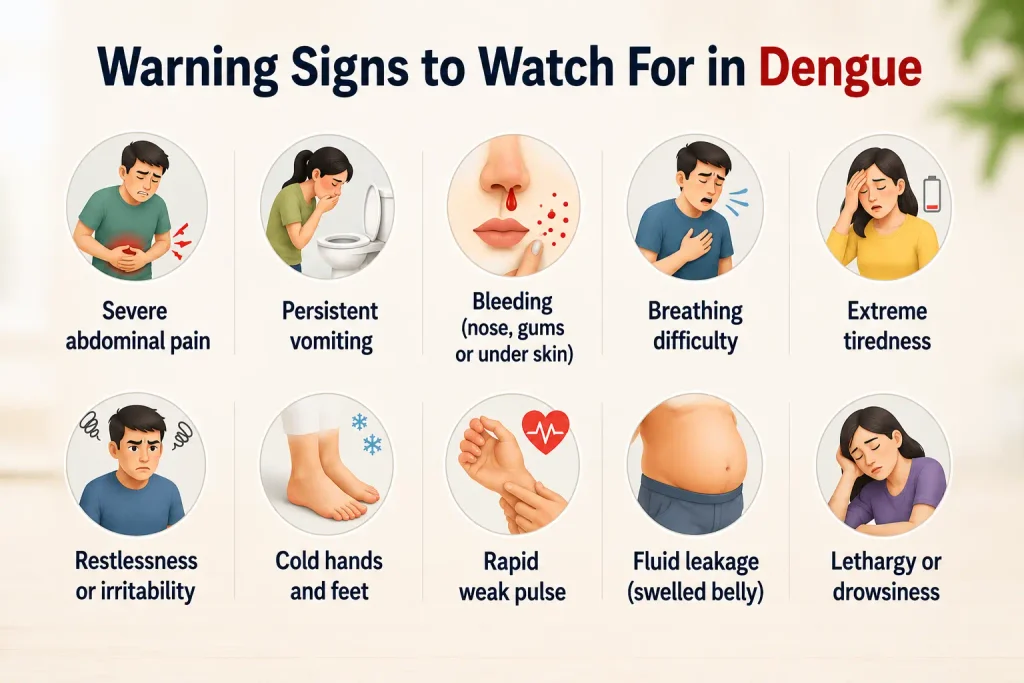
This is the part that matters most. The warning signs, not the platelet number, tell you when to reach a hospital. They usually appear as the fever settles, so stay alert then.
Get urgent medical care if you or a family member with dengue develops any of the warning signs below.
- Severe or constant belly pain
- Persistent or repeated vomiting
- Bleeding from the gums or nose, or blood in vomit or stools
- Black, tar-like stools
- Extreme tiredness, restlessness or confusion
- Difficulty breathing
- Cold, clammy skin, or feeling faint
Minor signs such as small red spots on the skin or easy bruising can also occur and are worth telling your doctor, though the warning signs above matter most.
What to do about your platelet count
| Your situation | What matters | What to do |
|---|---|---|
| Low count but no warning signs | The trend and how you are doing | Follow your doctor’s monitoring plan |
| Count falling quickly | Rapid change may need closer assessment | Contact your doctor promptly |
| A very low count | Bleeding risk needs careful assessment | Seek medical advice promptly |
| Any warning sign | Possible progression to severe dengue | Get urgent medical care |
These signs can mean the dengue is becoming severe, which needs hospital care. When in doubt, it is safer to get checked than to wait and watch the number.
When should you see a doctor about your dengue platelet count?
See a doctor as soon as dengue is suspected or confirmed, so your counts are tracked from the start. Early testing lets the doctor spot a fast fall before it becomes a problem.
Get medical help the same day, or go to an emergency department, if the count is dropping quickly, if there is any bleeding, or if any warning sign above appears. A sudden drop in blood pressure can happen in severe dengue, so feeling faint is never something to ignore. Dengue in pregnancy, in babies and in people with other illnesses may need closer medical care.
When to Call Your Doctor: Any bleeding, a rapidly falling count, severe belly pain, repeated vomiting, or feeling faint means call your doctor or go to hospital now, whatever the exact number is.
Key takeaways
- A normal platelet count is 1,50,000 to 4,50,000 per microlitre, although laboratory reference ranges can vary. A low count is common in dengue, but the number alone does not tell you how severe the illness is.
- No single platelet number defines severe dengue. The trend, any bleeding and warning signs matter more.
- Platelets are usually lowest around the critical phase, then recover during the recovery phase.
- No medicine or food reliably raises platelets quickly. Fluids, rest and avoiding aspirin and ibuprofen can support recovery.
- Most people recover without a platelet transfusion. Warning signs and the overall clinical condition matter more than the number alone.
Frequently asked questions about dengue platelet count
What is the normal platelet count in dengue?
A common adult reference range is 1,50,000 to 4,50,000 per microlitre, though laboratory ranges can vary. In dengue, the count can fall below this range as the illness progresses. Doctors watch the trend and your symptoms, not one reading.
What platelet count is dangerous in dengue?
There is no fixed danger number. Severe dengue is defined by severe bleeding, fluid leakage or organ problems, not by a platelet figure. The trend, any bleeding and warning signs matter far more.
What is the minimum platelet count for dengue before hospital admission?
There is no single cutoff. Admission depends on warning signs, how fast the count is falling, bleeding, blood pressure and whether you can drink fluids. No platelet number by itself decides hospital care.
How can I increase my platelet count in dengue fast?
No food or medicine raises platelets quickly. The count usually rises as the body clears the virus. Fluids, rest and avoiding aspirin and ibuprofen can support recovery, while regular testing helps track the trend.
When does the platelet count start rising again in dengue?
Platelets usually reach their lowest point around the critical phase, when the fever settles, and then begin to rise during recovery. The exact timing varies, so a repeat test done early may still look low.
Does a low platelet count always mean a transfusion?
No. Most people recover without any transfusion. Current guidance advises against preventive platelet transfusion when there is no active bleeding, even at low counts. A transfusion is not decided by the platelet number alone.
Does papaya leaf juice really increase platelets in dengue?
Some small studies suggest it may help the count recover slightly faster, but reviews find the evidence too limited to confirm a clear benefit. It does not replace fluids, rest or monitoring. Ask your doctor first.
How often should the platelet count be checked in dengue?
Your doctor may repeat the blood count daily or more often, depending on your symptoms, the platelet trend, your haematocrit and how you are doing. People with warning signs usually need more frequent testing.
This article is general information about the dengue platelet count and cannot replace an examination by your own doctor. If you have dengue, follow your doctor’s advice and go to hospital at once if any warning sign appears.
References
- Clinical Care of Dengue . Centers for Disease Control and Prevention, 2026.
- Clinical Features of Dengue, including warning signs and severe dengue . Centers for Disease Control and Prevention, 2026.
- Dengue case management . World Health Organization.
- Evaluation of the WHO revised criteria for classification of clinical disease severity in acute adult dengue infection . BMC Infectious Diseases, 2012.
- Efficacy and safety of Carica papaya leaf extract in severe thrombocytopenia in adult dengue: a pilot study . PLoS ONE, 2020.
- Correlation of platelet parameters with the severity of thrombocytopenia in dengue fever in children . Cureus, 2024.
- Symptoms of Dengue and Testing . Centers for Disease Control and Prevention.
- Dengue Situation in India . National Center for Vector Borne Diseases Control, Ministry of Health and Family Welfare, Government of India.
Written by
Iraphan Khan, BSN, RN, D.Pharm
Founder of RealMedVision and Public Health Researcher. Registered nurse who writes evidence based health explainers using trusted medical and public health sources.
Medically reviewed by
Dr Praveen Verma, MBBS, MD (Pathology)
Dr Himanshu Morya, MBBS, Medical Educator
Last medically reviewed: August 2026