
A patient-friendly guide by RealMedVision.
Medically reviewed | 10 to 12 min read
ype 2 diabetes is affecting more young Indians, with cases being diagnosed in the 20s and 30s as well as at lower body weights.
You feel fine at 25. But your blood sugar can be rising quietly, years before anything feels wrong.
Type 2 diabetes was once seen as an older person’s problem. Not anymore. Doctors across India are now finding it in people in their 20s and 30s, sometimes with no obvious symptoms at all. The early signs are easy to brush off as stress, poor sleep, or a busy routine, which is exactly why so many young adults find out late. The good news is that a simple blood test can catch it early, often before any real damage begins.
Quick Answer
The most common early signs of type 2 diabetes in young adults are:
- Passing urine often, especially at night
- Feeling very thirsty
- Constant tiredness
- Blurred vision
- Slow-healing cuts and repeated infections
- Dark, velvety patches on the neck or underarms
Many young people have no clear symptoms. If you have several of these signs, or risk factors like a family history or extra belly fat, ask for an HbA1c or fasting blood sugar test.
What Is Type 2 Diabetes in Young Adults?
Type 2 diabetes is a long-term condition that changes how your body uses sugar for energy. Insulin is the hormone that lets sugar move from your blood into your cells. In type 2 diabetes, the body stops responding to insulin properly and slowly struggles to make enough of it, so sugar builds up in the blood.
This is different from type 1 diabetes, where the immune system destroys the insulin-making cells. Type 1 can begin at any age, though it often appears in children and young adults. This matters, because a young adult with high blood sugar should not simply be assumed to have type 2.
The World Health Organization notes that more than 9 in 10 people with diabetes have type 2. Many people also pass through a stage called prediabetes first, where blood sugar is higher than normal but not yet in the diabetes range. [prediabetes in normal-weight Indians]
How Common Is It in Young Indians?
India has one of the highest diabetes burdens in the world. The national ICMR-INDIAB study, published in The Lancet Diabetes and Endocrinology in 2023, found that about 11 percent of Indian adults have diabetes and another 15 percent are in the prediabetes range. That is more than 100 million people with diabetes and around 136 million with prediabetes.
What concerns doctors most is the age. Indians tend to develop type 2 diabetes younger, and at a lower body weight, than people in Western countries.
A 2025 cross-sectional study of 273 adults aged 18–40 attending a tertiary hospital in southern India found young-onset type 2 diabetes in 17.2% of participants. The authors recommended screening by age 25, but this single-center finding should not be treated as the prevalence for all young Indians.
Metric | Figure | Source |
|---|---|---|
Indians with diabetes | 100+ million | ICMR-INDIAB, Lancet D&E (2023) |
Indians with prediabetes | 136 million | ICMR-INDIAB (2023) |
Risk can start around | Age 25 (South Asians) | Diabetes UK |
Type 2 share of all diabetes | Over 90 percent | World Health Organization |
Why Type 2 Diabetes Is Rising in Young Indians
There is no single cause. It usually comes from a mix of body type, genetics, daily habits, and how the body handles insulin.
The thin-fat body type
You can look slim and still carry hidden fat deep inside the body, around organs like the liver. This is called visceral fat, and it can push blood sugar up even when your weight looks normal. The term thin-fat was first described in the Pune Maternal Nutrition Study, led by Dr C S Yajnik, to describe the body composition of Indian babies. In adults, higher visceral and central fat can drive insulin resistance at a lower BMI than in many Western populations, which is why waist size matters more than weight alone.
Insulin trouble can start young
In many young Indians, the pancreas struggles to keep up with insulin demand earlier than expected. Research on Asian Indians has shown lower insulin-producing beta-cell function, which means type 2 diabetes is not only about being overweight. Some young people are simply more vulnerable. [insulin resistance]
Lifestyle and family history
Long sitting hours, desk jobs, late nights, stress, poor sleep, and meals heavy in refined carbs and sugar all slowly raise blood sugar. The ICMR-INDIAB study found that nearly half of Indian adults do not move enough during the day. Family history adds to this. If a parent or sibling has type 2 diabetes, your own risk is much higher, even at a young age.
Early Warning Signs of Type 2 Diabetes
The early signs often start so mild that young adults explain them away. According to the American Diabetes Association and the NHS, these are the most common ones to watch for.
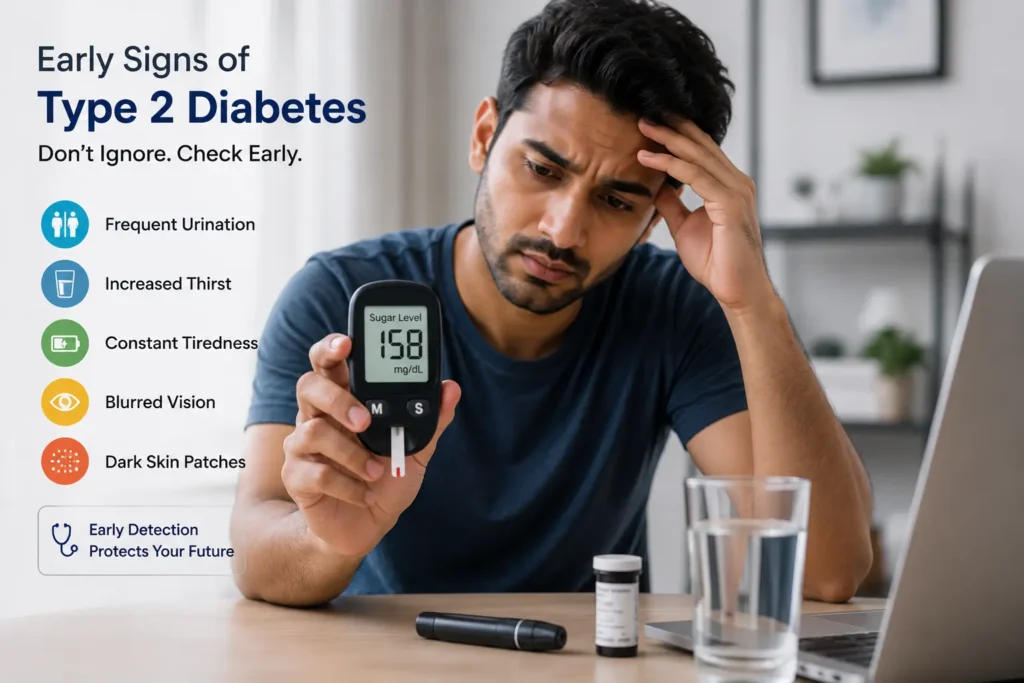
Passing urine often, especially at night. When blood sugar rises, the kidneys work to clear the extra sugar through urine, so you go more often.
Feeling very thirsty. Losing more fluid through urine leaves you thirsty even when you drink enough water.
Constant tiredness. When cells cannot use sugar for energy, you feel drained for much of the day, even after rest.
Blurred vision. High blood sugar can affect the lens of the eye and blur your vision on and off. Many young adults blame screen time.
Slow-healing cuts and repeated infections. High blood sugar slows healing and lowers the body’s defence, so cuts linger and skin, urinary, or fungal infections keep coming back.
Keep in Mind:
Some skin changes, like dark velvety patches (acanthosis nigricans) or small skin tags on the neck, and stubborn belly fat, can point to insulin resistance. On their own they do not diagnose diabetes, but alongside the symptoms above they are a reason to get tested.
Can a Slim Young Person Get Type 2 Diabetes?
Yes. This is what catches most young Indians off guard. Because of the thin-fat pattern, blood sugar can rise without obvious weight gain. For Indian adults, a waist above 90 cm in men or 80 cm in women is a warning sign set by the ICMR, even when overall weight looks normal. So the absence of visible fat does not rule out diabetes, which is why testing, not appearance, is the only way to know.
Do Symptoms Differ in Young Men and Women?
The main signs are similar for both. The clearest difference is that in young women, type 2 diabetes is often linked with PCOS (polycystic ovary syndrome), which drives insulin resistance and raises diabetes risk at a younger age. Irregular periods, weight gain around the waist, and acne alongside the usual symptoms are worth flagging to a doctor. [PCOS and diabetes]
How Is Type 2 Diabetes Diagnosed?
Symptoms alone cannot confirm diabetes. It needs a blood test. According to the American Diabetes Association, the main tests are the fasting blood sugar test, the HbA1c test, and the oral glucose tolerance test.
The fasting test is done after at least 8 hours without food. The HbA1c shows your average blood sugar over the past 2 to 3 months and needs no fasting. [HbA1c normal range] The oral glucose tolerance test measures blood sugar 2 hours after you drink a standard 75-gram glucose solution, not simply after a normal meal. If you do not have clear symptoms, one abnormal result is usually confirmed with a repeat test before a diagnosis is made.
Test | Normal | Prediabetes | Diabetes |
|---|---|---|---|
Fasting blood sugar | Below 100 mg/dL | 100 to 125 mg/dL | 126 mg/dL or higher |
HbA1c | Below 5.7 percent | 5.7 to 6.4 percent | 6.5 percent or higher |
2-hour OGTT (75 g) | Below 140 mg/dL | 140 to 199 mg/dL | 200 mg/dL or higher |
Type 2, Type 1, or Another Type?
Not every young adult with high blood sugar has type 2 diabetes, and this is an important safety point. Type 1 diabetes, where the body makes little or no insulin, can appear at any age and usually needs insulin from the start. Some adults have LADA, a slowly developing autoimmune form that is often mistaken for type 2 at first. A smaller number have MODY, an inherited type caused by a single gene change.
These look similar early on but are managed differently, so a doctor may run extra tests to tell them apart. If you are young, slim, and losing weight fast with very high blood sugar, say so, because that pattern can point away from ordinary type 2 and change the treatment you need.
When Should Young Indians Get Tested?
Because diabetes can start early here, do not wait for symptoms. It is worth checking your blood sugar if you are over 25 and have any of these: a family history of diabetes, extra belly fat or a growing waistline, a mostly sitting lifestyle, PCOS or past gestational diabetes, or high blood pressure or cholesterol. [blood sugar chart by age] If you are closer to middle age, the picture shifts a little. [type 2 diabetes signs over 40]
Good to Know: A fasting blood sugar test or HbA1c is quick, low-cost, and widely available. Catching prediabetes early is the best chance you get, because this stage can often be turned around.
How to Lower Your Risk
If you have risk factors but no diagnosis yet, this is the best window to act, because prediabetes can often be reversed before it turns into diabetes. A few high-value habits do most of the work.
- Know your numbers. A yearly HbA1c or fasting test from age 25 catches trouble before symptoms.
TFor South Asian adults, a waist measurement of 90 cm or more in men or 80 cm or more in women is associated with higher metabolic risk.
- Break up long sitting hours, and take a short walk after meals to blunt the sugar spike.
- Swap sugary drinks for water, buttermilk, or unsweetened nimbu pani.
- Protect your sleep and manage stress, since both affect blood sugar and insulin.
Why Early Diabetes Is More Serious
When type 2 diabetes starts young, the body lives with high blood sugar for many more years, so complications can appear sooner. The TODAY study, funded by the National Institutes of Health and published in the New England Journal of Medicine, found that many young people with type 2 diabetes developed at least one complication within about 15 years.
Over time, poorly controlled blood sugar can damage the small blood vessels in the eyes and kidneys, the nerves in the feet, and raise the risk of heart disease and stroke. This is not meant to frighten you. It is why finding it early, and acting, protects more healthy years.
Treatment and Reversal
Treatment depends on how high your blood sugar is and your overall health. For many young people diagnosed early, lifestyle changes make the biggest difference. Regular activity, balanced meals, better sleep, and lower stress are the base. Even a 30-minute brisk walk on most days helps the body use insulin better.
On the plate, lean on whole grains like brown rice, jowar, and bajra, with vegetables, dals, curd, eggs, or fish, and cut back on sugary drinks, sweets, maida foods, and large portions of white rice. [diabetes diet chart] If lifestyle changes are not enough, a doctor may add medicine such as metformin, which the ADA and ICMR list as a common first choice. The right plan always depends on your own health, so it should be decided with a qualified doctor.
Can it be reversed? Sometimes, yes. When caught early, steady lifestyle change can push type 2 diabetes into remission, where blood sugar returns to a non-diabetic range for a time, often without medicine. It is not a permanent cure and needs ongoing follow-up, but Lifestyle changes can substantially lower the risk of progressing from prediabetes to type 2 diabetes.
Emergency Warning Signs
Very high blood sugar can become an emergency. The NHS advises getting urgent help right away for sudden confusion or trouble speaking, severe weakness or fainting, fast or deep breathing, fruity-smelling breath, or vomiting with very high blood sugar.These can be signs of diabetic ketoacidosis (DKA), a medical emergency that can occur in type 1 diabetes and sometimes in type 2 diabetes.
Key Takeaways
- Type 2 diabetes now appears in Indians in their 20s and 30s, often at a normal weight because of the thin-fat pattern.
- The core early signs are frequent urination, thirst, tiredness, blurred vision, and slow-healing cuts. Many people have none at all.
- Watch your waist, not just your weight. Above 90 cm in men or 80 cm in women is a warning sign.
- If you are over 25 with any risk factor, get an HbA1c or fasting blood sugar test. Do not wait for symptoms.
- Caught early, type 2 diabetes can often be controlled with lifestyle change, and sometimes pushed into remission.
Frequently Asked Questions
Can a 25-year-old get type 2 diabetes?
Yes. Diabetes UK reports that people of Indian and South Asian background can be at risk from around age 25, earlier than in many Western populations. Young adults often miss it because they do not expect diabetes at their age, so the early signs get blamed on stress or a busy routine.
What are the first signs of type 2 diabetes in young adults?
The most common early signs, according to the ADA and NHS, are passing urine often (especially at night), feeling very thirsty, constant tiredness, blurred vision, slow-healing cuts, and dark patches on the neck or underarms.If you notice several of these symptoms, or have important risk factors, talk to a doctor about getting your blood sugar checked.
Can a slim person get type 2 diabetes?
Yes. Many Indians carry hidden fat around their organs even at a normal weight, a pattern linked to the thin-fat body type first described in the Pune Maternal Nutrition Study. This visceral fat can raise blood sugar without obvious weight gain, so a slim build does not rule out diabetes.
Which test confirms diabetes, and what level is diabetic?
A fasting blood sugar of 126 mg/dL or higher, or an HbA1c of 6.5 percent or higher, is in the diabetes range, per the ADA. A 2-hour value of 200 mg/dL or higher during a 75-gram oral glucose tolerance test also qualifies. Without clear symptoms, an abnormal result is usually confirmed with a repeat test.
Why is type 2 diabetes rising in young Indians?
It comes from a mix of factors: the thin-fat Indian body type, lower insulin-producing capacity, family history, desk jobs and low activity, high-sugar diets, stress, and poor sleep. Together these push blood sugar up earlier in life than in many other populations.
Is diabetes at a young age more dangerous?
It can be. The TODAY study, published in the New England Journal of Medicine, found that young people with type 2 diabetes may develop complications sooner than those diagnosed later, because the body spends more years with high blood sugar. Early diagnosis and good control greatly lower this risk.
Can type 2 diabetes be reversed at a young age?
Some young people diagnosed early can reach remission, meaning blood sugar returns to a non-diabetic range without medicine for a time. It is not a permanent cure and still needs long-term lifestyle changes and medical follow-up, but the earlier you start, the better the odds.
At what age should young Indians get tested?
If you have risk factors like a family history, extra belly fat, PCOS, or a mostly sitting lifestyle, it is worth testing from around age 25. Indian young-adult research supports screening this early, since diabetes can appear well before the age at which it is usually expected.
Medical Disclaimer
This article is for general education and awareness only. It is not medical advice, diagnosis, or treatment. Always talk to a qualified doctor before making decisions about your health. If you think you may have diabetes, or you are facing a medical emergency, get medical care right away.
About the author:
Iraphan Khan, BSN, RN, D.Pharm is the founder of RealMedVision and a Public Health Researcher who creates evidence-based health content from trusted medical sources.
Medically reviewed by:
This guide was checked for medical accuracy by our review board before publishing.
Dr. Praveen Verma, MBBS, MD (Pathology), Pathologist and Clinical Laboratory Specialist.
Dr. Himanshu Morya, MBBS, Medical Educator.
References
- Anjana RM et al. Metabolic Non-Communicable Disease Health Report of India (ICMR-INDIAB-17). The Lancet Diabetes and Endocrinology, 2023.
- Diabetes Fact Sheet. World Health Organization, 2024.
- Type 2 Diabetes and Young Adults. Diabetes UK, 2024.
- Prevalence of Young-Onset Diabetes and Associated Physical Activity Profile in Southern India. Diabetes and Metabolic Syndrome, 2025.
- Diagnosis and Classification of Diabetes. Standards of Care in Diabetes, American Diabetes Association, 2025.
- Type 2 Diabetes. National Health Service (NHS).
- TODAY Study Group. Long-Term Complications in Youth-Onset Type 2 Diabetes. New England Journal of Medicine, 2021.
- Yajnik CS et al. Neonatal Anthropometry: The Thin-Fat Indian Baby, Pune Maternal Nutrition Study. International Journal of Obesity, 2003.
- Anjana RM, Mohan V et al. Beta-Cell Function in Young-Onset Type 2 Diabetes in Asian Indians (INSPIRED). Diabetes Care, 2021.
- IDF Diabetes Atlas. International Diabetes Federation, 2025.
- About Diabetes. Centers for Disease Control and Prevention (CDC).
- Guidelines for Management of Type 2 Diabetes. Indian Council of Medical Research (ICMR).