
136 Million Indians Have Prediabetes. Most Don't Know It.
Is Your Blood Sugar Already Crossing the Line?
A patient-friendly guide by RealMedVision
Key Takeaways
• Normal weight does not always mean healthy blood sugar. Many Indians develop prediabetes despite looking slim.
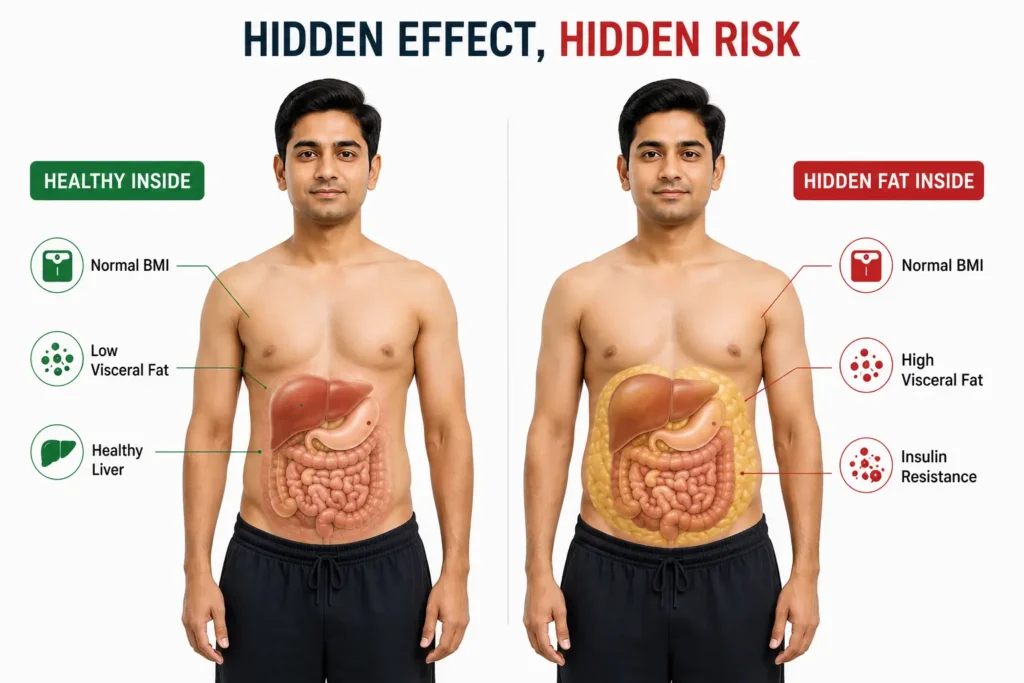
• Indians often store fat around internal organs rather than under the skin. This hidden fat can increase diabetes risk even when BMI is normal.
• Around 136 million Indians are living with prediabetes, and many do not know it.
• Dark patches on the neck, tiredness after meals, stubborn belly fat, and sugar cravings can be early warning signs.
• Indians are often advised to start diabetes screening from age 30 because the condition tends to develop earlier than in many Western populations.
•Prediabetes can be fully reversed when caught early. A simple blood test and honest lifestyle changes are enough to stop type 2 diabetes before it starts.
Introduction
One in six Indian adults already has prediabetes. Most of them look completely healthy.
Ravi is one of them. He is 34, works a desk job in Bengaluru, eats mostly home-cooked meals, and has never had a reason to worry about his blood sugar. When a routine test showed prediabetes, his first question was simple—how is that even possible?
He is not overweight. He does not eat junk food every day. He looks healthy because, by most measures, he is.
But looking healthy and having healthy blood sugar are not always the same thing, especially in India. Many Indians store excess fat around internal organs even when their body weight appears completely normal. This fat does not show on the outside. It does not show on a weighing scale. It just quietly raises blood sugar, year after year, until one day a blood test catches what the mirror never could.
Ravi’s story is becoming far more common than most people realize.
Quick Answer
Prediabetes in normal-weight Indians can develop because many Indians store excess visceral fat around internal organs even when their body weight appears healthy. This hidden fat can lead to insulin resistance, causing blood sugar levels to rise silently over time.
Common warning signs include dark patches on the neck, stubborn belly fat, tiredness after meals, and frequent sugar cravings. A simple blood test can confirm prediabetes, and early lifestyle changes can stop type 2 diabetes before it ever starts.
What Is Prediabetes?
Prediabetes is a condition where blood sugar levels are higher than normal but not high enough to be diagnosed as type 2 diabetes. Think of it as your body sending a quiet warning before things get serious.
According to WHO guidelines, prediabetes is usually defined as a fasting blood sugar level of 110 to 125 mg/dL or an HbA1c of 5.7 to 6.4 percent. HbA1c measures your average blood sugar over the past three months.
The main reason prediabetes develops is insulin resistance. This happens when the body’s cells stop responding properly to insulin, forcing the pancreas to work harder to keep blood sugar under control.
Many people with prediabetes feel completely healthy. However, changes inside the body have already begun. If left untreated, prediabetes can progress to type 2 diabetes and increase the risk of heart disease, kidney problems, and nerve damage.
Why Early Detection Matters
Prediabetes does not become type 2 diabetes overnight. There is usually a window of time when the condition can be detected early and managed before serious health problems develop.
Research from the Indian Diabetes Prevention Programme found that healthy lifestyle changes reduced the risk of developing type 2 diabetes by nearly 58 percent in Indian adults. This shows how powerful early action can be.
The challenge is that many people do not realize they have prediabetes. By the time symptoms such as frequent urination, blurred vision, or slow-healing wounds appear, blood sugar levels may have been rising for years.
Experts such as Dr. V. Mohan have highlighted that Indians often progress from prediabetes to type 2 diabetes faster than many Western populations. This is why Indian health organizations, including ICMR and RSSDI recommend diabetes screening from age 30 for people with risk factors.
A simple blood test today can save you from years of complications tomorrow.
Warning Signs of Prediabetes in Normal-Weight Indians
Most people with prediabetes feel perfectly fine. That is exactly what makes it dangerous. However, the body often gives small warning signs long before type 2 diabetes develops.
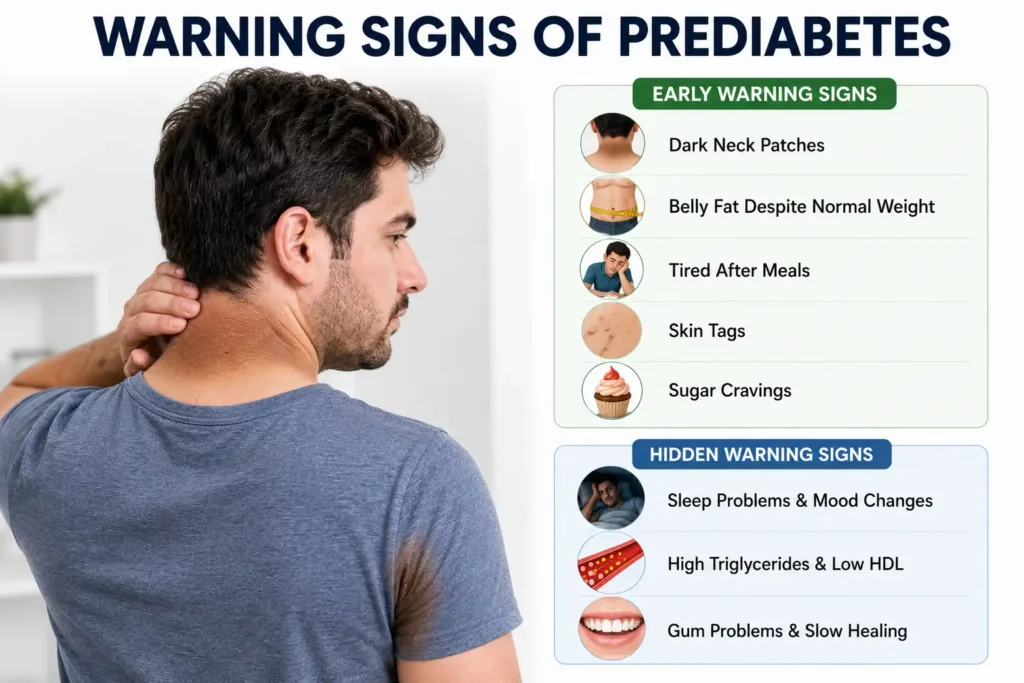
Dark Patches on the Neck or Underarms
One of the earliest signs of insulin resistance is a condition called acanthosis nigricans. These are dark, velvety skin patches that usually appear on the back of the neck, under the arms, around the knuckles, or in the groin area.
Many people mistake them for dirt, tanning, or normal skin pigmentation. In reality, they can be an early sign that blood sugar levels are starting to rise.
Belly Fat Despite Normal Weight
You may have a normal body weight but still notice extra fat around your waist. This is often a sign of visceral fat stored around internal organs such as the liver and pancreas.
Your BMI may look normal, but a growing waistline can still increase the risk of prediabetes. For Indian adults, a waist size above 90 cm in men and 80 cm in women is considered a warning sign.
Feeling Tired After Meals
Do you often feel sleepy or unusually tired one to two hours after eating? This is especially common after meals rich in rice, roti, sweets, or sugary drinks.
Many people blame this on work stress, poor sleep, or hot weather. In some cases, it may be a sign that the body is struggling to control blood sugar levels properly.
Skin Tags
Skin tags are small, soft growths that usually appear around the neck, eyelids, or underarms. They are harmless by themselves, but having multiple skin tags may be linked to insulin resistance and a higher risk of prediabetes.
If skin tags appear along with dark skin patches, it is worth discussing blood sugar testing with your doctor.
Frequent Sugar Cravings
Strong cravings for sweets, biscuits, sugary tea, or other refined carbohydrates can sometimes be linked to insulin resistance.
When the body’s cells do not use glucose efficiently, the brain may continue sending hunger signals even after a meal. This can make sugar cravings difficult to ignore.
Blurred Vision
Blood sugar fluctuations can temporarily affect the lens inside the eye, causing mild blurred vision that comes and goes.
Many people assume this is due to screen time or eye strain. However, if blurred vision happens repeatedly, especially after large meals, it may be worth getting your blood sugar checked.
Having one symptom does not mean you have prediabetes. But several of them together should not be ignored. A simple blood test can give you answers that your body alone cannot.
Hidden Symptoms of Prediabetes
Some signs of prediabetes have nothing to do with blood sugar, at least that is what most people think. These are the ones that get ignored the longest.
Sleep Problems and Mood Changes
Many people with prediabetes notice sleep problems before anything else. You may wake up during the night, struggle to sleep deeply, or feel tired even after a full night of rest. Poor sleep can also affect mood, causing irritability, low energy, and difficulty concentrating. Most people blame stress or a busy lifestyle, but blood sugar changes may sometimes be part of the reason.
High Triglycerides and Low HDL
This warning sign causes no obvious symptoms. A routine blood test may show high triglycerides and low HDL, which is the good cholesterol. Both are commonly linked to insulin resistance. Many people focus only on cholesterol numbers and never connect them to blood sugar. In some cases, these results appear years before diabetes is ever diagnosed.
Gum Problems and Slow Healing
Slightly raised blood sugar can affect the body’s ability to fight infections and heal properly. Some people notice bleeding gums, frequent mouth problems, or cuts that take longer to heal than normal. These issues may seem completely unrelated, but they can sometimes be early clues that insulin resistance is already developing inside the body.
If two or three of these sound familiar, do not keep waiting. A simple blood test costs very little and takes minutes. What it finds early can save you from years of problems later.
Why Prediabetes Is Often Missed
Prediabetes is often missed because its symptoms can look like common everyday problems.
Dark patches on the neck may be blamed on tanning or skin pigmentation. Feeling tired after meals is often linked to poor sleep, stress, or a busy work schedule. A growing waistline may be dismissed as a normal part of aging, while sugar cravings are often seen as nothing more than a sweet tooth.
In women, prediabetes is sometimes confused with PCOS (Polycystic Ovary Syndrome). Both conditions can cause fatigue, weight gain around the abdomen, irregular periods, and insulin resistance. In fact, they often occur together and can make each other worse.
In men, symptoms such as low energy, mood changes, and difficulty concentrating are frequently blamed on work stress or burnout.
Older adults may assume that tiredness, blurred vision, or reduced energy are simply part of getting older. However, these can also be early signs of rising blood sugar.
This is why symptoms alone cannot confirm prediabetes. A simple blood test is the most reliable way to know what is really happening inside the body.
Causes of Prediabetes in Normal-Weight Indians
Prediabetes does not happen suddenly. It builds up quietly over years, often without any visible signs. The main reason behind it is insulin resistance, which is when the body’s cells stop responding properly to insulin.
Insulin Resistance
Insulin helps move glucose from the bloodstream into the body’s cells for energy. When cells become resistant to insulin, glucose starts building up in the blood and sugar levels begin to rise over time.
The Thin-Fat Indian Phenotype
Many Indians appear slim on the outside but carry excess fat around internal organs such as the liver and pancreas. Researchers describe this as the thin-fat phenotype. This hidden fat increases the risk of insulin resistance even when body weight and BMI appear completely normal.
Hidden Fat Around Muscles and Organs
Studies have found that some normal-weight Indians carry excess fat inside muscle tissue and around abdominal organs. This hidden fat makes it harder for the body to use glucose effectively, raising the risk of prediabetes without any obvious signs of obesity.
Lifestyle and Family Factors
Several everyday factors can also raise the risk. A diet high in refined carbohydrates, long hours of sitting, low physical activity, a family history of diabetes, chronic stress, and poor sleep all play a role. When these combine with genetic risk, blood sugar levels can begin rising even in people who look perfectly healthy.
Risk Factors for Prediabetes in Normal-Weight Indians
Prediabetes does not only affect overweight people. Check how many of these risk factors apply to you.
Family History of Diabetes:
If a parent or sibling has type 2 diabetes, your risk is significantly higher regardless of your body weight. Family history is one of the strongest predictors of prediabetes.
Age Over 30:
Risk begins rising in Indians from the late twenties onward, much earlier than in many Western populations.
Physical Inactivity:
A sedentary lifestyle is a major driver of insulin resistance. Muscles are the body’s main glucose absorbers, and inactive muscles stop doing their job properly. The ICMR-INDIAB study found that nearly half of Indian adults are physically inactive.
High Carbohydrate Diet:
Polished rice, refined wheat, potatoes, sweets, and sugary drinks can cause repeated blood sugar spikes and increase diabetes risk over time.
Unhealthy Cholesterol Levels:
High triglycerides and low HDL cholesterol are commonly linked to insulin resistance and prediabetes.
PCOS or Gestational Diabetes:
Women with PCOS or a history of gestational diabetes face a higher risk of developing prediabetes and should get screened regularly.
Chronic Stress and Poor Sleep:
Long-term stress and poor sleep can affect hormones that regulate blood sugar. Shift workers and people with irregular sleep schedules are often at greater risk.
How Prediabetes Develops
To understand prediabetes, think of insulin as a key and the body’s cells as locked doors.
After you eat, blood sugar levels rise. The pancreas releases insulin, which acts like a key that helps sugar move from the bloodstream into the body’s cells for energy. In a healthy body, this process works smoothly and blood sugar returns to normal within a couple of hours.
In prediabetes, the cells stop responding properly to insulin. The keys are still there, but the locks do not open as easily. This is called insulin resistance.
To overcome this, the pancreas starts producing more insulin. For some time, this helps keep blood sugar under control. However, the pancreas cannot keep working overtime forever.
As the years pass, the insulin-producing cells in the pancreas become less effective. Blood sugar levels slowly begin to rise, and prediabetes can eventually progress to type 2 diabetes.
This process may happen faster in many Indians because of genetic factors and the tendency to store fat around internal organs, even when body weight appears normal.
The good news is that prediabetes is not a life sentence. When it is detected early, healthy lifestyle changes can often help bring blood sugar levels back to a healthier range and reduce the risk of type 2 diabetes.
Early vs Advanced Signs of Prediabetes
Feature | Early Stage | Advanced Stage |
|---|---|---|
Blood Sugar | Slightly above normal | Close to the diabetes range |
Symptoms | None or very mild | Fatigue, thirst, frequent urination |
Skin Changes | Mild darkening of the skin | Dark patches and skin tags |
Energy Levels | Tiredness after meals | Frequent daytime fatigue |
Belly Fat | Slight increase around the waist | More noticeable abdominal fat |
Vision | Occasional blurring | Frequent blurred vision |
Health Risk | Increased diabetes risk | Higher risk of diabetes complications |
Diagnosis
Prediabetes cannot be diagnosed by how you look or feel. The only way to know for sure is a blood test.
Doctors commonly use three tests to diagnose prediabetes.
Fasting Blood Sugar Test:
This test is done after fasting for at least 8 hours. A fasting blood sugar level between 100 and 125 mg/dL may indicate prediabetes.
HbA1c Test:
The HbA1c test measures your average blood sugar over the past 2 to 3 months. It does not require fasting and can be done at any time of day. A result between 5.7 percent and 6.4 percent is considered prediabetes.
Oral Glucose Tolerance Test (OGTT):
For this test, blood sugar is measured before and after drinking a glucose solution. It is one of the most effective ways to detect prediabetes, especially in people whose fasting blood sugar appears normal.
In some people, prediabetes may not appear on a fasting blood sugar test but can be detected with an OGTT.
Your doctor may also recommend a cholesterol profile, waist measurement, or other metabolic assessments to better understand your overall health.
People with high blood pressure, heart symptoms, or a strong family history of heart disease may sometimes need tests such as an ECG or 2D Echo. These tests do not diagnose prediabetes, but they can help check overall heart health.
Tests Used to Diagnose Prediabetes
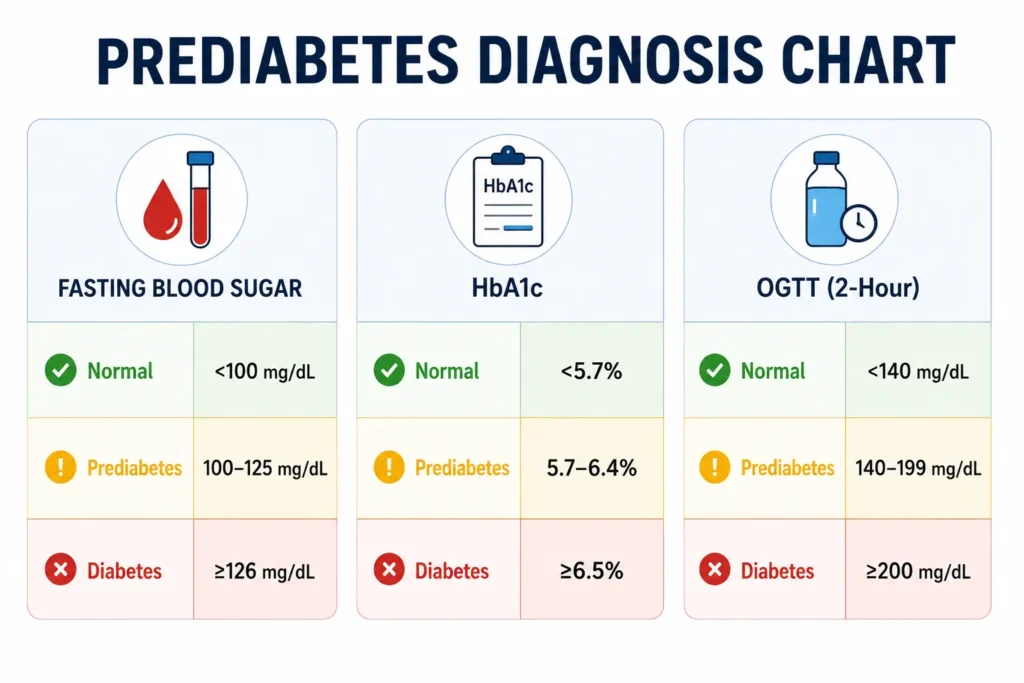
Test | Normal | Prediabetes | Diabetes |
|---|---|---|---|
Fasting Blood Sugar | Below <100 mg/dL | 100–125 mg/dL | ≥126 mg/dL or above |
HbA1c | Below 5.7% | 5.7–6.4% | 6.5% or above |
OGTT (2-Hour Blood Sugar) | Below 140 mg/dL | 140–199 mg/dL | 200 mg/dL or above |
Treatment Options
For most normal-weight Indians with prediabetes, lifestyle changes are the most effective treatment. In many cases, no medication is needed at this stage. The body still has a real chance to recover, but only if action is taken early.
Lifestyle Changes
Research from the Indian Diabetes Prevention Programme found that healthy lifestyle changes reduced the risk of developing type 2 diabetes by nearly 58 percent in Indian adults. Regular physical activity, balanced eating, and better sleep remain the foundation of treatment.
Replacing polished white rice with millets, eating vegetables before carbohydrates at each meal, avoiding sugary drinks, and adding a short walk after meals are simple changes that work well for most Indians.
When Medication May Be Needed
Some people walk regularly, eat better, and still their blood sugar does not come down enough. In these cases, a doctor may recommend metformin. It is safe, widely used, and helps the body use glucose more efficiently. But this decision should always be made by a qualified doctor based on your full health picture. Never start or stop any medication on your own.
Regular Follow Up
People with prediabetes should get their blood sugar checked every three to six months. Regular monitoring helps track progress and catch any changes before they become harder to manage.
Prevention Tips
If you have risk factors but have not been diagnosed with prediabetes yet, now is the best time to act. Prevention is always easier than treatment.
Get your blood sugar checked from age 30 onward even if you feel completely fine. A fasting blood sugar test costs under 500 rupees and takes minutes. Do not wait for symptoms because prediabetes rarely shows any.
Watch your waist, not just your weight. Even at a normal BMI, a waist above 90 cm for men or 80 cm for women is worth taking seriously. Visceral fat around the organs is what raises diabetes risk, and the waist measurement catches it when the weighing scale does not.
Take a short walk after meals. Even 10 to 15 minutes after lunch or dinner can noticeably reduce the blood sugar spike that happens after eating. It is one of the simplest habits you can build.
Avoid sugary drinks completely. Soft drinks, packaged juices, sweetened chai, and sugary lassi spike blood sugar faster than almost any solid food. Replace them with plain water, buttermilk, or nimbu pani without sugar.
Start meals with vegetables first, then protein, then rice or roti. This one small change flattens your blood sugar rise after eating without any major diet overhaul.
Stay active through the day. Sitting for long hours without movement makes insulin resistance worse over time. A short walk or even standing for a few minutes every hour adds up more than most people realize.
Complications
Prediabetes is not a harmless waiting stage. Even before type 2 diabetes develops, high blood sugar can quietly damage the body over time.
- Heart and Blood Vessels: Prediabetes raises the risk of heart disease, heart attack, angina, and stroke. This damage can begin years before a diabetes diagnosis is ever made.
- Kidneys: Early kidney stress can start at prediabetic blood sugar levels. Mild protein leakage in urine is sometimes seen even before diabetes is officially diagnosed.
- Nerves: Some people develop early nerve damage, causing tingling, numbness, or burning sensations in the hands and feet.
- Eyes: Fluctuating blood sugar can affect the eyes and slowly increase the risk of vision problems over time.
- Progression to Type 2 Diabetes: Without intervention, prediabetes can develop into full type 2 diabetes, bringing a much higher risk of kidney failure, vision loss, and serious heart disease.
The good news is that catching prediabetes early and making honest lifestyle changes can protect you from most of these complications before they ever begin.
When to See a Doctor
Do not wait for symptoms to get worse. Talk to your doctor if any of the following apply to you.
- Dark, velvety patches on the neck, underarms, or other skin folds that were not there before.
- Frequent tiredness after meals, especially when combined with sugar cravings or a growing waistline.
- A parent, sibling, or close family member with type 2 diabetes.
- A history of gestational diabetes during any pregnancy, even if blood sugar returned to normal afterward.
- High triglycerides or low HDL cholesterol showing up on a routine blood test.
- Unexplained blurred vision, frequent thirst, or noticeable changes in energy levels.
- You are over 30 and have never had your blood sugar checked despite having risk factors.
A simple blood test costs very little and takes minutes. What it can catch early is worth far more than what you might spend treating diabetes later
Conclusion
Prediabetes in normal-weight Indians is far more common than most people realize. You do not need to be overweight to have high blood sugar. Many Indians carry hidden fat around internal organs that raises diabetes risk silently, with no visible warning on the outside.
The good news is that prediabetes is reversible. Simple lifestyle changes like regular walking, eating better, sleeping well, and managing stress can bring blood sugar back to normal before type 2 diabetes ever develops.
If you have a family history of diabetes, a growing waistline, or any of the warning signs discussed in this article, do not ignore them. Your body has likely been sending signals for longer than you think.
A blood test under 500 rupees can give you answers that no mirror ever will. Get checked. Act early. The window to reverse this does not stay open forever.
Frequently Asked Questions (FAQs)
Q1. Can a person with normal weight really get prediabetes?
Yes. Normal weight does not always mean healthy blood sugar. Many Indians carry hidden fat around internal organs, which can increase the risk of insulin resistance and prediabetes even at a normal BMI.
Q2. What is the normal blood sugar range for Indians?
A fasting blood sugar level below <100 mg/dL is generally considered normal. Levels between 100–125 mg/dL fall into the prediabetes range, while 126 mg/dL or higher may indicate diabetes.
Q3. Can prediabetes be reversed?
In many cases, yes. When detected early, healthy lifestyle changes such as regular exercise, better food choices, improved sleep, and weight management can bring blood sugar back to normal completely.
Q4. Is dark skin on the neck a sign of prediabetes?
It can be. Dark, velvety patches on the neck or underarms may be a sign of insulin resistance. If you notice these changes, it is a good idea to discuss blood sugar testing with your doctor.
Q5. At what age should Indians get screened for prediabetes?
Many experts recommend screening from age 30, especially if you have a family history of diabetes, a sedentary lifestyle, PCOS, or other risk factors. Do not wait for symptoms.
Q6. Which test is best for detecting prediabetes early?
The Oral Glucose Tolerance Test is considered one of the most sensitive tests for Indians. However, fasting blood sugar and HbA1c tests are also commonly used and are often the first step in screening.
Q7. Can prediabetes affect heart health?
Yes. Prediabetes can increase the risk of heart disease, heart attack, and stroke. Early action protects your heart, not just your blood sugar.
Q8. What foods should a normal-weight Indian with prediabetes avoid?
Try to limit sugary drinks, sweets, packaged snacks, refined flour products, and large portions of white rice. These foods cause rapid blood sugar spikes that worsen insulin resistance over time.
Q9. Does stress increase the risk of prediabetes?
Yes. Long-term stress affects hormones that regulate blood sugar. Over time, this can contribute to insulin resistance and raise the risk of prediabetes, especially in people who already have a genetic predisposition.
Q10. Is exercise alone enough to reverse prediabetes?
Exercise is extremely helpful, but it works best when combined with healthy eating, good sleep, and stress management. Together, these habits give your body the best chance to fully recover.
References:
1. Anjana RM, Deepa M, Pradeepa R, et al. *Prevalence of Diabetes and Prediabetes in 15 States of India: Results From the ICMR-INDIAB Study*. The Lancet Diabetes & Endocrinology. 2023.
2. Mohan V. *Lessons Learned From Epidemiology of Type 2 Diabetes in South Asians*. Diabetes Care. 2025;48(2):153–163.
3. ICMR-INDIAB-23 Study Group. *High Prevalence of Metabolic Obesity in India*. Indian Journal of Medical Research. 2025.
4. American Diabetes Association. *Standards of Care in Diabetes—2026*. Diabetes Care. 2026.
5. Ramachandran A, Snehalatha C, Mary S, et al. *Prevention of Diabetes From Prediabetes in a Real-World Setting in South India*. Diabetes & Metabolic Syndrome. 2024.
6. Yajnik CS, Fall CHD, Coyaji KJ, et al. *Neonatal Anthropometry: The Thin-Fat Indian Baby—The Pune Maternal Nutrition Study*. International Journal of Obesity and Related Metabolic Disorders. 2003;27:173–180.
7. Patidar PP, Ramachandran R, Philip R, et al. *Correlation of Acanthosis Nigricans With Insulin Resistance, Anthropometric and Metabolic Parameters in Diabetic Indians*. Indian Journal of Endocrinology and Metabolism. 2012.
8. Krishnamurthy S, et al. *Association of Acanthosis Nigricans and Insulin Resistance in Indian Children and Youth: A HOMA2-IR Based Cross-Sectional Study*. 2019.
9. Cleveland Clinic. *Insulin Resistance: Causes, Symptoms, and Treatment*. Updated 2024.
10. StatPearls Publishing. *Prediabetes*. National Center for Biotechnology Information (NCBI Bookshelf).
11. UC Davis Health. *Prediabetes: Symptoms, Causes, and Risk Factors*. 2024.
12. International Diabetes Federation (IDF). *IDF Diabetes Atlas, 11th Edition*. 2025.
Medical Disclaimer
This article is written for informational and educational purposes only. It is not a substitute for professional medical advice, diagnosis, or treatment. Always consult a qualified healthcare provider before making any changes to your diet, exercise routine, medication, or health management plan.
If you suspect you may have prediabetes, diabetes, or any metabolic condition, please visit a qualified physician or endocrinologist for proper evaluation and testing.
Never ignore professional medical advice or delay seeking treatment based on information found in this article.
Medically Reviewed by
Dr. Praveen Verma, MBBS, MD (Pathology), Pathologist and Clinical Laboratory Specialist
Dr. Himanshu Morya, MBBS, Medical Educator and College Faculty
About the Author
Iraphan Khan, BSN, D.Pharm, Founder – RealMedVision | Public Health Researcher
Iraphan Khan is the founder of RealMedVision, where he creates clear, evidence-based health content for patients and families using trusted medical sources like the WHO, ADA, and NHS.