
Medically reviewed: 14 September 2026 · Last updated: 14 September 2026
Is 5.7% already a warning? See where your number sits on the HbA1c normal range, in plain words.
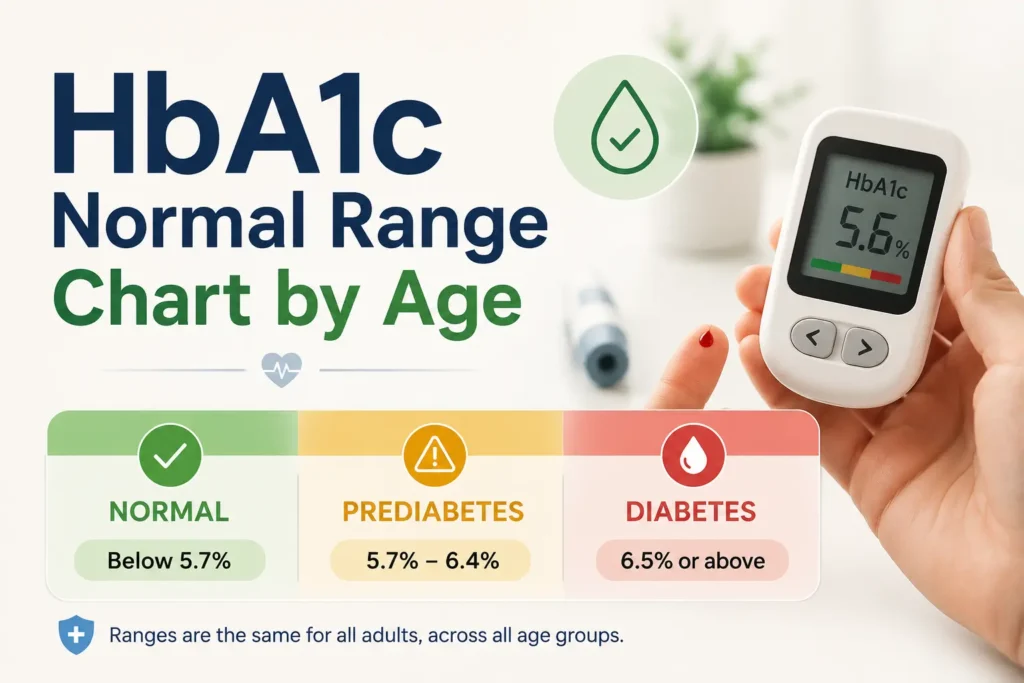
You got your report, and now you want one clear answer. Is this number okay? Maybe it says 6.1%, or your doctor used the word prediabetes. This guide walks you through the HbA1c normal range with a simple chart and plain explanations. One point upfront. The cutoffs that diagnose diabetes are the same for every adult, young or old. Age can change your treatment goal later, but it does not move the line between normal, prediabetes, and diabetes.
Quick Answer
- The HbA1c normal range is below 5.7%. A result of 5.7% to 6.4% means prediabetes, and 6.5% or higher means diabetes.
- These cutoffs come from the American Diabetes Association and stay the same at every adult age.
- The test shows your average blood sugar over the last 2 to 3 months, with no fasting needed.
- Age can change your treatment goal after diagnosis, not the diagnosis line itself.
- A high result can often improve within months through food, activity, and medicine when needed.
What Is the HbA1c Test?
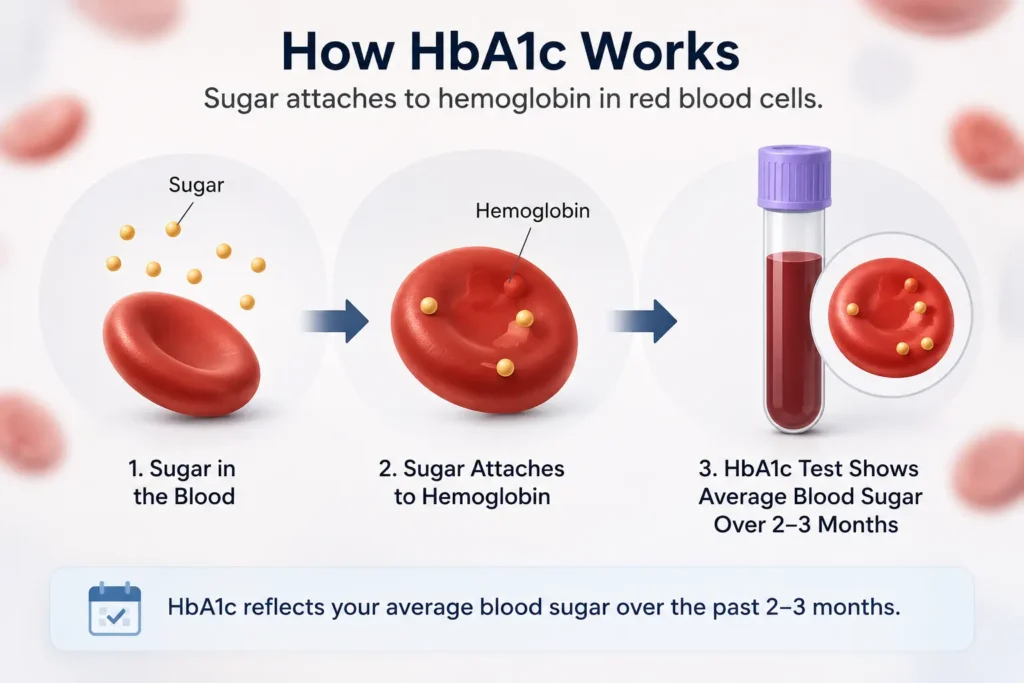
The HbA1c test, also called the A1c test, measures your average blood sugar over the past 2 to 3 months. Sugar sticks to hemoglobin, the part of your red blood cells that carries oxygen. The more sugar circulating over time, the higher your result climbs. A finger-prick shows your blood sugar at one moment. HbA1c gives a broader picture of your average blood sugar over the past few months. You can eat and drink normally before the test.
HbA1c Normal Range Chart: Normal, Prediabetes, and Diabetes
Use this HbA1c normal range chart to understand where your result falls. It applies to all adults and follows American Diabetes Association criteria. The 6.5% diabetes cutoff is also the level the World Health Organization accepts.
| HbA1c Level | What It Means |
|---|---|
| Below 5.7% (below 39 mmol/mol) | Normal |
| 5.7% to 6.4% (39 to 47 mmol/mol) | Prediabetes |
| 6.5% or higher (48 mmol/mol or higher) | Diabetes |
If your number crosses 6.5% for the first time, your doctor will usually repeat the test on another day. One result alone is rarely enough for a diagnosis.
Good to Know: Some lab reports show mmol/mol instead of a percentage. Both describe the same thing, so 6.5% and 48 mmol/mol sit on the same line of the chart.
Does the HbA1c Normal Range Change With Age?
Many people search for HbA1c levels by age expecting a different normal number for each decade. There is no separate HbA1c normal range for each age group. The line that separates normal, prediabetes, and diabetes stays exactly where it is whether you are 25 or 65.
What changes with age is the treatment goal your doctor sets after diabetes is diagnosed. A young, healthy person may aim tighter. An older adult with other health problems may get a slightly relaxed target so treatment stays safe. If you are concerned about diabetes as you get older, see these warning signs of diabetes.
HbA1c Goals by Age and Health
The table below shows common treatment targets used after diagnosis. These targets are separate from the HbA1c normal range used for diagnosis, and doctors adjust them for age, other illnesses, and the risk of low blood sugar.
| Group | Common HbA1c Goal |
|---|---|
| Children and teens with diabetes | Individualized, often around 7% |
| Most adults with diabetes | Below 7% |
| Older adults with complex health problems | Often below 8%, depending on health and treatment safety |
| During pregnancy | HbA1c has limitations, so glucose based testing is used to evaluate gestational diabetes |
What Your HbA1c Number Means
Here is where common results sit on the HbA1c normal range, one by one.
- 5.7%: the start of the prediabetes band. An early warning, not diabetes.
- 6.0%: still prediabetes. A good moment for small, steady changes.
- 6.4%: the top edge of prediabetes, close to the diabetes line.
- 6.5%: usually means diabetes. Your doctor will confirm with a repeat test.
- 7.0%: inside the diabetes range, roughly an average blood sugar of 154 mg/dL. Control could be better.
- 8.0%: higher than most treatment goals. It suggests blood sugar has stayed high for some time and needs attention.
If you have landed in the prediabetes band, do not panic, and do not ignore it either. It is a warning that arrives early enough to act on. If your weight is normal, you can also read about prediabetes in normal-weight people.
Why Your HbA1c Number Matters
This one number does more work than almost any other on your report. It sums up months of blood sugar in one figure you can compare against the HbA1c normal range, and it guides treatment decisions.
Large studies, including the UK Prospective Diabetes Study, found that keeping HbA1c under control lowers the risk of serious diabetes complications over the years. Results varied between participants, but the overall direction was clear. Better control protects the body.
What Can Affect Your HbA1c Result?
The chart works well for most people, but the test is not perfect. Before comparing your report with the HbA1c normal range, know that the result can read higher or lower than your true blood sugar if you have any of the following:
- Iron deficiency anemia: can falsely raise the result.
- Recent blood loss or a transfusion: can make the result unreliable.
- Inherited blood conditions: disorders like thalassemia change how hemoglobin behaves.
- Pregnancy: HbA1c has limitations here, and glucose based tests are generally used to assess gestational diabetes.
Keep in Mind: In these situations doctors read HbA1c alongside other sugar tests, which is standard NIH and CDC practice.
How Often Should You Get Tested?
There is no single schedule for everyone. If you sit inside the HbA1c normal range and your risk is low, testing every few years may be enough. In the prediabetes band, most doctors want a repeat within a year.
With diagnosed diabetes, HbA1c is often checked at least twice a year when treatment is stable, and more often, such as every three months, when treatment changes or goals are not being met. If you are younger and unsure about your risk, you can also check this blood sugar chart for age based readings.
How to Bring a High HbA1c Down
A high number is a starting point, not a verdict. Many people move back toward the HbA1c normal range with small, steady changes:
- Rethink the chai routine: cut the sugar in your chai and skip the biscuits that ride along with it.
- Shrink the white rice portion: fill more of the plate with vegetables, dal, and protein instead.
- Walk after meals: even 10 to 15 minutes after meals softens the sugar spike.
- Change what you drink: swap soft drinks for water, plain buttermilk, or unsweetened nimbu pani.
- Cover the basics: sleep well, manage stress, and take any medicine your doctor has prescribed.
Your response will vary. Some people see meaningful improvement after changing their diet, activity, and sleep, and after adjusting treatment with their doctor. Your doctor can help decide when to repeat the test and whether your treatment needs to change. If you have prediabetes, knowing how long it can take to improve can help you set realistic expectations.
Doctor's Tip: Retest after about three months of changes, one full life cycle of your red blood cells, so the new number reflects your new habits.
What Happens if a High HbA1c Is Ignored?
High blood sugar works quietly. Over years it can damage the small vessels of the eyes and kidneys, the nerves in the feet and hands, and the larger vessels of the heart. It also raises the risk of heart attack and stroke.
None of this happens overnight, which is why an early warning on the HbA1c normal range chart is valuable. Catching a rising number early can help prevent or delay many of these problems.
When to See a Doctor
Book an appointment if your HbA1c is above the normal range, or if you feel very thirsty, pass urine often, feel unusually tired, or lose weight without trying. These symptoms deserve a proper check even with a borderline result.
When to Call Your Doctor: If you feel confused, very weak, breathless, or unable to keep fluids down, get urgent medical help right away.
Key Takeaways
- Check your report against the HbA1c normal range chart first, then read what your band means.
- Ignore any chart that promises a different HbA1c normal range for every age. Diagnosis lines do not move with birthdays.
- If you already have diabetes, ask your doctor for your personal treatment target, because that is the number that should guide you.
- Mention anemia, pregnancy, or any blood disorder before the test so your doctor interprets the result correctly.
- Treat a prediabetes result as a three month project, then retest and measure your progress.
Frequently Asked Questions
Is an HbA1c of 6.0 normal?
No. A result of 6.0% sits above the HbA1c normal range, in the prediabetes band of 5.7% to 6.4%. It is an early warning, and it can usually be improved with lifestyle changes.
Is there a different HbA1c normal range for each age?
For diagnosis, no. The cutoffs are the same for all adults. Only the treatment goal after diagnosis may change with age and overall health.
Do I need to fast before the HbA1c test?
You can eat and drink as normal. The test reflects the past 2 to 3 months, so a recent meal does not change the result.
What HbA1c level means diabetes?
According to the American Diabetes Association, 6.5% or higher falls in the diabetes range. Doctors usually confirm it with a second test on a different day.
What does an HbA1c of 7% mean in daily blood sugar?
Roughly an average blood sugar of 154 mg/dL over the previous 2 to 3 months.
Can anemia affect HbA1c?
Yes. Iron deficiency anemia can falsely raise HbA1c. Recent blood loss, a transfusion, and some blood disorders can also make the result unreliable, so your doctor may use other glucose tests to cross-check.
Is HbA1c reliable during pregnancy?
HbA1c has limitations during pregnancy, because changes in red blood cell turnover can affect the result. Glucose based tests are generally used when evaluating gestational diabetes.
Can a high HbA1c come down?
Often, yes. Better food choices, regular activity, and any medicine your doctor advises can lower the number within months.
How quickly can HbA1c change?
Slowly, because red blood cells live for about three months. Expect a repeat test after roughly 3 months to see the real effect of new habits or medicines.
How much does the HbA1c test cost in India?
Home collection at large labs often starts near 300 rupees, while hospital labs can charge more. A rough range of 300 to 800 rupees covers most cases, depending on the city and provider.
References and Sources
- American Diabetes Association. Diagnosis and Classification of Diabetes: Standards of Care in Diabetes. 2026.
- American Diabetes Association. Understanding A1C.
- World Health Organization. Diabetes Fact Sheet.
- Centers for Disease Control and Prevention. A1C Test for Diabetes and Prediabetes.
- National Institute of Diabetes and Digestive and Kidney Diseases, NIH. The A1C Test and Diabetes.
- MedlinePlus, U.S. National Library of Medicine. Hemoglobin A1C (HbA1c) Test.
- Mayo Clinic. A1C Test.
- Cleveland Clinic. A1c: What It Is, Test, Levels and Chart.
- Diabetes UK. What is HbA1c? Blood Test and Target Levels.
- StatPearls, NCBI Bookshelf. Hemoglobin A1C.
Written by
Iraphan Khan, BSN, RN, D.Pharm, Public Health Researcher
Founder of RealMedVision, writing patient-focused health content based on clinical guidelines and peer-reviewed research.
Medically reviewed by
Dr Praveen Verma, MBBS, MD (Pathology), Pathologist and Clinical Laboratory Specialist
Dr Himanshu Morya, MBBS, Medical Educator
Medical Disclaimer: This article is for information and education only. It is not a substitute for professional medical advice, diagnosis, or treatment. Always talk to a qualified doctor before making decisions about your health. If you think you may have diabetes or are facing a medical emergency, get medical care right away.