
Prediabetes is a warning, not a life sentence. Here is what the research actually shows about timing, without the guesswork.
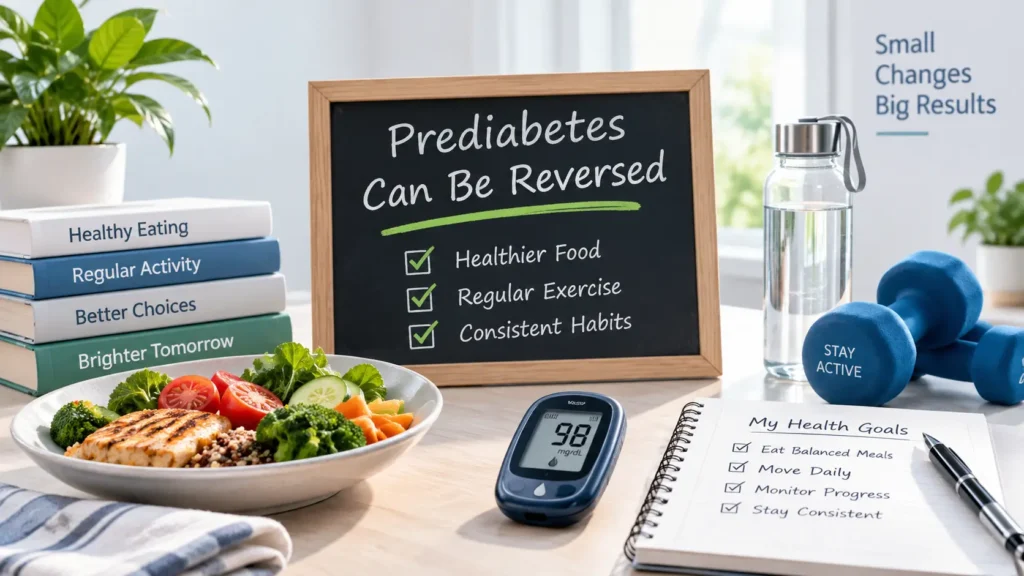
If you were just told you have prediabetes, the first question is usually the most practical one. How long does it take to reverse prediabetes? That reaction is normal, and you are not alone. India has an estimated 136 million people with prediabetes, per the ICMR-INDIAB study.
This guide gives an honest timeline grounded in research, a realistic Indian diet plan, and a clear answer for what to do if your numbers do not move as fast as you hoped.
Quick Answer
- Measurable change often shows within a few months, while others need a year or more.
- HbA1c reflects average blood sugar over roughly 2 to 3 months, with recent weeks carrying more weight.
- Your starting HbA1c, weight, and consistency shape your specific timeline.
- Improvement is not permanent. Long-term habits are what keep numbers down.
Why There Is No Single Timeline
The main test used to track this is HbA1c, which reflects your average blood glucose over roughly the past 2 to 3 months, with more recent weeks carrying greater weight. That is why a repeat test after about 3 months can show meaningful change, though improvement in your actual blood sugar can begin sooner.
If you are actively working on your blood sugar, your doctor may repeat HbA1c around 3 months to assess your response. Beyond that active phase, people with prediabetes are generally advised to continue regular monitoring based on individual risk, not one fixed schedule.
A Realistic Timeline, Based on Evidence
Some people see measurable improvement within a few months. Others need longer, sometimes a year or more. The timeline depends on your starting glucose levels, weight, genetics, and consistency. A repeat HbA1c around 3 months can help show whether your recent changes are working, but it is a checkpoint, not a deadline.
Your starting HbA1c matters. Someone near the lower end of the prediabetes range has less distance to the normal range than someone closer to the diabetes threshold. Higher HbA1c is also associated with greater diabetes risk. This describes the starting point, not how quickly your number will improve.
What Do Your Numbers Actually Mean?
The table shows the standard diagnostic categories. One distinction matters. Fasting and HbA1c cutoffs apply directly, but 2-hour glucose thresholds are diagnostic criteria for a standardized 75 gram OGTT, not a reading taken 2 hours after an ordinary meal.
| Test | Normal | Prediabetes | Diabetes |
|---|---|---|---|
| HbA1c | Below 5.7% | 5.7% to 6.4% | 6.5% or higher |
| Fasting plasma glucose | Below 100 mg/dL | 100 to 125 mg/dL | 126 mg/dL or higher |
| 2 hour, 75 g OGTT | Below 140 mg/dL | 140 to 199 mg/dL | 200 mg/dL or higher |
These 2-hour thresholds apply specifically to a formal 75 gram OGTT performed in a lab. A home glucometer reading 2 hours after your usual dinner is not interpreted against these cutoffs. For the full breakdown of HbA1c by age, see the dedicated guide.
What Actually Changes the Speed for You
A few factors shift how long to reverse prediabetes takes. Your starting HbA1c is one, as covered above. Weight is another. For adults with overweight or obesity at high risk, losing and maintaining about 5 to 7 percent of body weight is an evidence-based target. The Diabetes Prevention Program used a 7 percent goal specifically, and found this weight loss, combined with regular activity, cut progression risk by 58 percent.
Other factors also matter, including your overall health, family history, activity level, weight, and how consistently you can maintain lifestyle changes. Indians often develop blood sugar problems earlier and at lower weight, which is why prediabetes in normal-weight Indians is worth reading if that fits you.
Can a Thin Person Reverse Prediabetes?
Yes, though the approach differs. The 5 to 7 percent weight loss target is specifically framed for adults with overweight or obesity at high risk, not a universal instruction. If your BMI is already normal, losing weight is not automatically the right lever.
For a normal-weight person, the focus usually shifts to meal composition, activity, sleep, and stress management rather than weight loss itself. This is a genuine gap in most generic prediabetes advice, and it matters more in India than elsewhere.
Regression vs Remission: What the Words Actually Mean
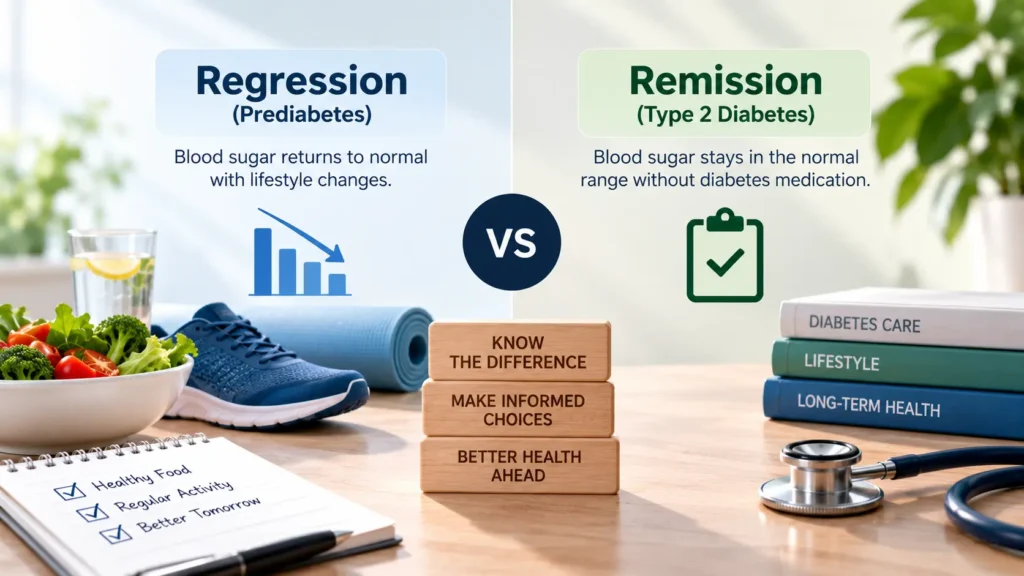
Prediabetes can improve and return to the normal glucose range. Research often calls this regression to normal glucose regulation. The word remission is more formally used for type 2 diabetes, with a specific consensus definition tied to sustained HbA1c improvement without medication.
Even when your numbers return to normal, your future risk may remain higher than someone who never had prediabetes, so long-term habits still matter. Think of it as a switch you keep on, not a finish line.
An Indian Diet Plan Worth Starting With
Food, activity, and weight management all matter together. The strongest evidence supports a sustainable lifestyle plan rather than one specific diet. The 2024 ICMR NIN dietary guidelines emphasize a balanced diet with vegetables, pulses, fruits, cereals, and millets, with quantities adjusted to your body weight and activity.
| Meal | What to Eat |
|---|---|
| Breakfast | Vegetable poha, oats upma, or 2 besan chillas with curd |
| Mid-morning | One small fruit like guava, apple, or papaya |
| Lunch | 1 to 2 multigrain rotis, dal, sabzi, salad, and a small bowl of curd |
| Evening | Roasted chana or makhana with green tea |
| Dinner | Light roti or vegetable soup with dal and cooked vegetables |
This is a starting point, not a fixed prescription. Adjust portions and choices to your calorie needs, weight goals, and any other medical conditions.
Foods to Favor and Foods to Limit
Favor whole grains and millets like jowar, bajra, oats, and brown rice, along with dals, beans, paneer, eggs, vegetables, and small amounts of nuts. Limit white rice, maida, sugar and sweets, sugary drinks, and deep-fried or ultra-processed foods.
Doctor's Tip
Aim for 7 to 8 hours of regular sleep. Poor sleep can affect appetite, insulin sensitivity, and glucose control, even with a consistent diet.
Beyond Diet: Movement and Daily Habits
Aim for 150 minutes of activity a week, roughly 30 minutes of brisk walking most days. A short walk after a meal can help reduce the rise in post-meal blood sugar.
What If Your HbA1c Does Not Improve After 3 Months?
This happens, and it does not mean you are doing something wrong. Confirm whether your original diagnosis was based on HbA1c, fasting glucose, or an OGTT, since they do not always move at the same pace. Review whether your weight, diet, and activity have genuinely shifted, or whether changes were smaller than they felt. If your doctor has also raised your blood pressure as a related concern, that is worth tracking alongside your glucose numbers.
Ask whether any medications could be raising your glucose, and consider whether sleep or stress has been working against you. Some other health conditions can also affect HbA1c independent of blood sugar itself. Your doctor may repeat or confirm testing before deciding on next steps, which sometimes includes a conversation about medication.
Do You Need Medicine?
Lifestyle changes are the foundation for most people. Metformin may be considered in adults at high risk, particularly with a BMI of 35 or higher, higher fasting glucose, a higher HbA1c, or prior gestational diabetes. Your doctor decides based on your specific risk profile. This is also relevant to type 2 diabetes in younger Indians, where these same risk factors apply earlier than expected.
The India-Specific Evidence
The Indian Diabetes Prevention Programme studied 531 Asian Indian adults with impaired glucose tolerance. Lifestyle modification reduced the relative risk of progressing to diabetes by 28.5 percent over a median follow-up of 30 months. This provides useful India-specific evidence that lifestyle intervention can reduce diabetes risk among Asian Indian adults with impaired glucose tolerance.
What Happens If Prediabetes Is Left Unaddressed?
Prediabetes increases the risk of type 2 diabetes, but progression is not inevitable. Lifestyle intervention meaningfully reduces that risk, and many people never cross the line. If it does progress, the focus shifts to long-term management, which is one reason early action is worth taking seriously. Recognising the early warning signs of type 2 diabetes can help you act before that shift happens.
When to See a Doctor
See a doctor if your HbA1c is rising, remains in the prediabetes range despite consistent lifestyle changes, or if you have other risk factors for diabetes. A doctor can help you understand how long improvement may take in your situation and whether further testing or treatment is needed. Checking your normal blood sugar range by age alongside HbA1c gives a fuller picture.
Key Takeaways
- No single date applies to everyone. Starting point and consistency matter more than the calendar.
- Keep OGTT and ordinary meal readings separate, since they use different diagnostic cutoffs.
- A normal-weight diagnosis needs a different plan than a weight-loss-focused one.
- If numbers do not move after 3 months, that is a prompt to investigate, not a failure.
- Improvement is not permanent. The habits that lower blood sugar are what help keep it in a healthier range.
Frequently Asked Questions
Can prediabetes be reversed in 3 months?
For some, yes. HbA1c reflects roughly 2 to 3 months of average blood sugar, so a repeat test around 3 months can show real change, depending on your starting number and consistency.
What HbA1c number means prediabetes?
5.7 to 6.4 percent falls in the prediabetes range. Below 5.7 percent is normal, and 6.5 percent or higher meets the diabetes threshold. A fasting glucose of 100 to 125 mg/dL also points to prediabetes.
What blood sugar level is normal 2 hours after a 75 g glucose test?
During a formal 75 g OGTT, below 140 mg/dL is normal, 140 to 199 indicates impaired tolerance, and 200 or higher meets the diabetes criterion. These cutoffs differ from a routine post-meal reading.
Does prediabetes always turn into diabetes?
No. Studies including the Indian Diabetes Prevention Programme show steady diet and activity changes lower the chance of progression, and many people never cross that line.
How much weight do I need to lose to reverse prediabetes?
For adults with overweight or obesity at high risk, about 5 to 7 percent of body weight is the target, roughly 3.5 to 5 kg for a 70 kg person. This is not automatic for someone at a normal weight.
Can prediabetes come back after it improves?
Yes. This is best thought of as ongoing regression rather than a cure. The habits that lowered your sugar are what keep it low, and stopping them can let numbers climb again.
Do I need medicine to reverse prediabetes?
Lifestyle changes are the foundation of prediabetes management. Metformin may also be considered for adults at higher risk, such as those with BMI 35 or above, higher fasting glucose or HbA1c, or prior gestational diabetes. Your doctor decides based on your risk.
What should I do if my HbA1c has not improved after 3 months?
Talk to your doctor rather than assuming failure. Review your diet, activity, sleep, and stress, check for medications that might raise glucose, and confirm whether your original diagnosis came from HbA1c, fasting glucose, or an OGTT.
Can a thin or normal-weight person have prediabetes?
Yes. A normal BMI does not rule out prediabetes, and Asian Indians can develop metabolic risk at lower BMI levels than many other populations. The American Diabetes Association uses a lower overweight screening threshold of BMI 23 for people of Asian ancestry, compared with 25 for the general population.
Which Indian foods help with reversing prediabetes?
Whole grains and millets, dals and beans, vegetables, paneer, eggs, nuts, and low-sugar fruits like guava and apples all support the plan. Limit white rice, sweets, sugary drinks, and fried snacks.
References and Sources
- NIDDK. Classification and Diagnosis of Diabetes, Diabetes in America, 3rd Edition.
- The Diabetes Prevention Program and Its Outcomes Study, Diabetes Care, American Diabetes Association.
- Ramachandran A, et al. The Indian Diabetes Prevention Programme (IDPP-1), Diabetologia, 2006.
- American Diabetes Association. Standards of Care in Diabetes 2026: Prevention or Delay of Diabetes.
- The Lancet Diabetes and Endocrinology. ICMR-INDIAB Study: Diabetes and Prediabetes Prevalence in India.
- NIDDK. Your Game Plan to Prevent Type 2 Diabetes.
Written by
Iraphan Khan, BSN, RN, D.Pharm, Public Health Researcher
Founder of RealMedVision, writing patient-focused health content based on clinical guidelines and peer-reviewed research. This article is not a substitute for consultation with a licensed physician.
Medically reviewed by
Dr Praveen Verma, MBBS, MD (Pathology), Pathologist and Clinical Laboratory Specialist
Dr Himanshu Morya, MBBS, Medical Educator
This article is for information and education only, and is not a substitute for professional medical advice. Prediabetes differs for each person, so always talk to your doctor before changing your diet, exercise, or medication. In an emergency, contact your doctor right away.