
Written by Published: 2 October 2026
Medically reviewed Published: 2 October 2026
How to recognise jaundice early, what usually causes it, and which symptoms need urgent care.
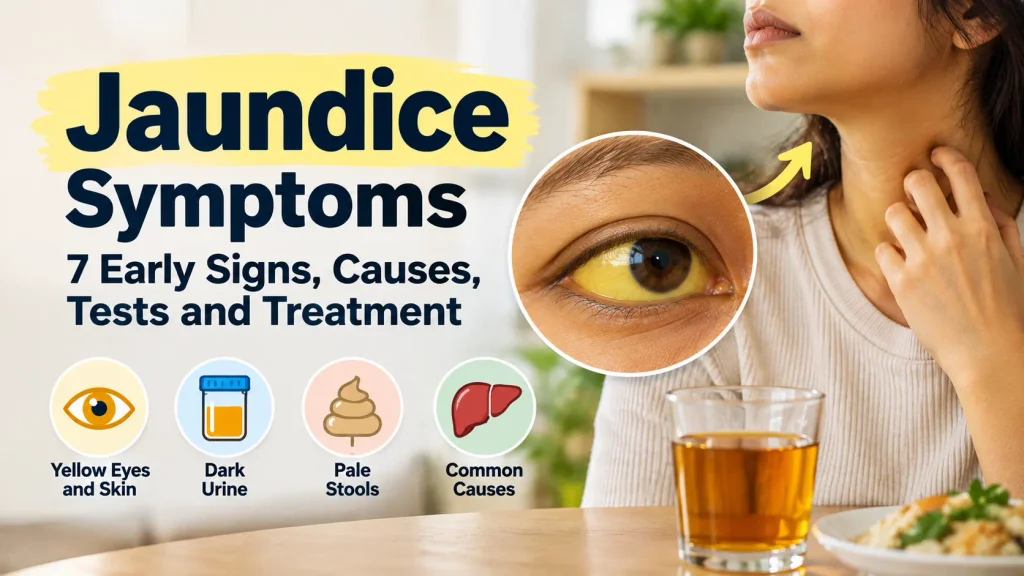
Jaundice symptoms commonly include yellowing of the whites of the eyes and skin, along with dark urine and pale stools. Jaundice is not a disease in itself. It is a sign that bilirubin, a yellow pigment made when old red blood cells break down, is building up in the blood because the liver, the bile ducts or the blood cells have a problem.
In India, hepatitis A and E are important causes of acute hepatitis and jaundice, especially where water and sanitation are unsafe. Other causes include gallstones, alcohol-related liver disease, medicines and blood disorders. Treatment depends on the cause, and some causes need urgent medical care. This guide covers the common signs, the red flags, the usual causes and how doctors find and treat them.
Quick Answer
- Common signs: Yellowing of the whites of the eyes, dark urine, pale stools, tiredness and itching.
- Cause: Bilirubin building up because of a liver, bile duct or blood problem.
- Common causes: Hepatitis A and E (important in India), gallstones, alcohol, medicines, blood disorders.
- Emergency: Jaundice with confusion, bleeding, severe stomach pain with fever, or in pregnancy.
Jaundice Symptoms: 7 Common Signs
- Yellow whites of the eyes: often one of the first visible signs. Check in daylight, not under a yellow bulb.
- Yellow skin: becomes more noticeable as bilirubin rises, and can be harder to see on darker skin.
- Dark, tea-coloured urine: can occur when conjugated bilirubin is passed into the urine. It may appear before or along with visible yellowing.
- Pale or clay-coloured stools: occur when less bile reaches the intestine, which can happen with a blocked bile duct or some liver disorders.
- Itching: can occur when bile flow is reduced.
- Tiredness, loss of appetite and nausea: common with acute viral hepatitis, and may appear before the yellowing.
- Pain under the right ribs: where the liver and gallbladder sit.
Yellowing usually becomes visible when blood bilirubin reaches about 2 to 3 mg/dL, although this varies between people. Mild jaundice can be missed in darker skin, so the eyes and urine are the more reliable clues.
Red Flags: When Jaundice Is an Emergency
New jaundice needs prompt medical assessment. These signs need urgent or emergency care:
Get Urgent Care
Confusion, unusual drowsiness or personality change, which can be signs of severe liver dysfunction. Vomiting blood, black stools or unusual bleeding, which can occur with serious liver disease. Severe pain under the right ribs with fever or shivering, which can be a sign of a serious gallbladder or bile duct problem. Jaundice during pregnancy, because hepatitis E can be particularly severe in the second and third trimesters. Jaundice in a newborn in the first 24 hours of life.
What Causes Jaundice?
Doctors group the causes of jaundice into three broad categories: problems before the liver, problems within the liver, and problems with bile flow after the liver.
Sources: NHS and MSD Manual. A doctor confirms the cause with blood tests and a scan.
Liver and bile duct disorders are among the most common causes of jaundice in adults. A grade 1 fatty liver rarely causes jaundice on its own, but as fatty liver advances through grade 2 to grade 3 and scarring, the liver can lose its ability to handle bilirubin.
Common Causes of Jaundice in India
Hepatitis A and E remain important causes of viral hepatitis in India, with transmission linked to unsafe water, poor sanitation and contaminated food. WHO notes that hepatitis E outbreaks can occur when drinking water becomes contaminated, including during flooding. Hepatitis A infection is common in children where transmission is widespread, though adults are more likely to develop noticeable symptoms, and most people recover fully. Hepatitis E is usually mild too, but in pregnancy it can be dangerous: the WHO reports that up to 20 to 25% of women infected in the third trimester can die from it.
In a 2016 study of 43 pregnant women with jaundice at a Mumbai tertiary hospital, hepatitis E was the most common identified cause, at about 42% of cases. That is one hospital, not all of India, but it shows why yellowing in pregnancy needs prompt assessment. Alcohol-related liver disease and gallstones are other common causes in adults, and severe dengue can inflame the liver. Our guide to platelet count in dengue explains what to monitor during dengue.
Jaundice Symptoms in Adults vs Newborns
In adults, new jaundice usually needs medical assessment because it can have many different causes. In newborns, mild jaundice is usually normal. About 60% of full-term babies and 80% of premature babies turn yellow in the first week, partly because newborns produce more bilirubin and their liver has a limited ability to process it in the first days of life. It typically appears after the first 24 hours, peaks around day 3 to 5 and, in full-term babies, usually resolves within about 2 weeks.
Newborn Jaundice: The Typical Pattern
How bilirubin usually rises and falls in a healthy full-term baby
Source: NICE guideline NG98 and Mayo Clinic on newborn jaundice. Shape is illustrative, not exact values. Premature babies and jaundice lasting beyond 2 weeks need a doctor’s check.
A baby needs medical assessment if jaundice appears in the first 24 hours, becomes more pronounced, lasts beyond 14 days in a full-term baby, or if the baby is very sleepy, feeding poorly or has pale stools. Looking at the skin cannot tell how high the bilirubin is, so doctors measure it. Very high levels can harm a baby’s brain, which is why hospitals treat with phototherapy, specific light that helps the body remove bilirubin, when the level crosses the threshold for the baby’s age.
Tests Your Doctor Will Do
A doctor chooses tests based on your symptoms and examination.
Our guides to the CBC test price, CT scan price and MRI scan cost explain what these tests involve and what they cost in India.
Jaundice Treatment Depends on the Cause
Jaundice is treated by addressing the underlying cause:
- Hepatitis A or uncomplicated hepatitis E: supportive care: rest, fluids, nutrition and avoiding alcohol and unnecessary medicines while the liver recovers. Severe illness may need hospital care. Hepatitis E in pregnancy needs prompt specialist assessment.
- Gallstones or bile duct blockage: treatment may include an endoscopy procedure (ERCP), surgery or other procedures, depending on the cause and location of the blockage.
- Alcohol-related or advanced fatty liver disease: treating the underlying liver damage, including stopping alcohol, weight management and diabetes control where appropriate. Fatty liver without advanced liver damage rarely causes jaundice on its own.
- Hepatitis B or C: antiviral medicines prescribed by a specialist.
- Newborns: phototherapy when bilirubin crosses the treatment threshold for the baby’s age.
Herbal “liver tonics” and unprescribed medicines can make liver damage worse. Do not take more than the recommended dose of paracetamol or any other medicine without medical advice, especially if you have liver disease.
What to Eat and Avoid
Food does not cure jaundice. A balanced diet and enough fluids help maintain nutrition while the cause is treated. Small, easy meals such as rice, dal, khichdi, boiled vegetables and fruit are usually well tolerated. Avoid alcohol completely, and limit fried and oily food if it causes nausea. Safe drinking water and good hand hygiene reduce the spread of infections such as hepatitis A and E within the family.
When to See a Doctor
See a doctor the same day if you notice yellow eyes or skin, dark urine or pale stools, even if you feel otherwise well. Go sooner if you are pregnant, drink alcohol regularly, have had a recent dengue or hepatitis episode, or if a newborn looks yellow. Seek emergency care for any of the red flags above.
Key Takeaways
- Watch for common jaundice symptoms such as yellow eyes, dark urine and pale stools.
- Treat confusion, bleeding, severe pain with fever, or jaundice in pregnancy as emergencies.
- Understand that treatment depends on the cause, so testing comes first.
- Use safe drinking water and wash hands well to prevent hepatitis A and E.
Frequently Asked Questions
What are the first signs of jaundice?
Yellowing of the whites of the eyes and dark, tea-coloured urine are usually the first signs, often with tiredness and loss of appetite. Pale stools and itching may follow.
Is jaundice serious?
It depends on the cause. Hepatitis A usually clears on its own, while a blocked bile duct, liver failure or jaundice in pregnancy can be serious. Any new jaundice needs a doctor’s assessment.
What causes jaundice in adults?
Causes include hepatitis, gallstones, alcohol-related liver disease, medicines, blood disorders and other liver or bile duct problems. In India, hepatitis A and E are important causes of acute viral hepatitis.
Can jaundice go away on its own?
Some causes, such as uncomplicated hepatitis A, can resolve without specific antiviral treatment. Bile duct blockage and serious liver disease need treatment. Hepatitis E can be severe, especially in pregnancy.
Is jaundice contagious?
Jaundice itself is not. Some causes are: hepatitis A and E spread through contaminated water and food, and hepatitis B and C through blood and body fluids.
What bilirubin level causes jaundice?
Yellowing usually becomes visible when total bilirubin rises to about 2 to 3 mg/dL. Many laboratories use an adult upper limit around 1.2 mg/dL, but ranges vary by laboratory.
How is jaundice treated?
By treating the cause: supportive care for hepatitis A, a procedure or surgery for gallstones, antivirals for hepatitis B or C, and phototherapy for newborns when needed.
Is newborn jaundice normal?
Jaundice that appears after the first 24 hours is often part of normal newborn jaundice. The bilirubin level is read against the baby’s age and other factors to decide whether treatment is needed. Jaundice in the first 24 hours, or lasting beyond 14 days in a full-term baby, needs a doctor’s check.
References
- NHS. Jaundice.
- Cleveland Clinic. Adult jaundice.
- MSD Manual Consumer Version. Jaundice in adults.
- World Health Organization. Hepatitis E fact sheet.
- World Health Organization. Hepatitis A fact sheet.
- Journal of Obstetrics and Gynaecology of India. Jaundice in pregnancy: aetiology and outcomes in an Indian hospital.
- National Institute for Health and Care Excellence. Jaundice in newborn babies under 28 days (NG98).
- Mayo Clinic. Infant jaundice: symptoms and causes.
Written By
Iraphan Khan, BSN, RN, D.Pharm, Public Health Researcher. Iraphan writes evidence-based patient guides that turn medical reports and research into plain language.
Medically Reviewed By
Dr Praveen Verma, MBBS, MD Pathology
Dr Himanshu Morya, MBBS, Medical Educator
Published and reviewed: 2 October 2026. Next scheduled review: October 2027.
Disclaimer: This article is for general education and does not replace advice from your own doctor, nurse or pharmacist. New jaundice always needs a doctor’s assessment. If you have confusion, bleeding, severe pain with fever, or jaundice in pregnancy or a newborn, seek urgent care.