
Medically reviewed: September 2026 | Last updated: September 28, 2026 | 8 to 10 minute read
What vildagliptin does, how the 50 mg tablet is taken, and the safety checks that come with it.
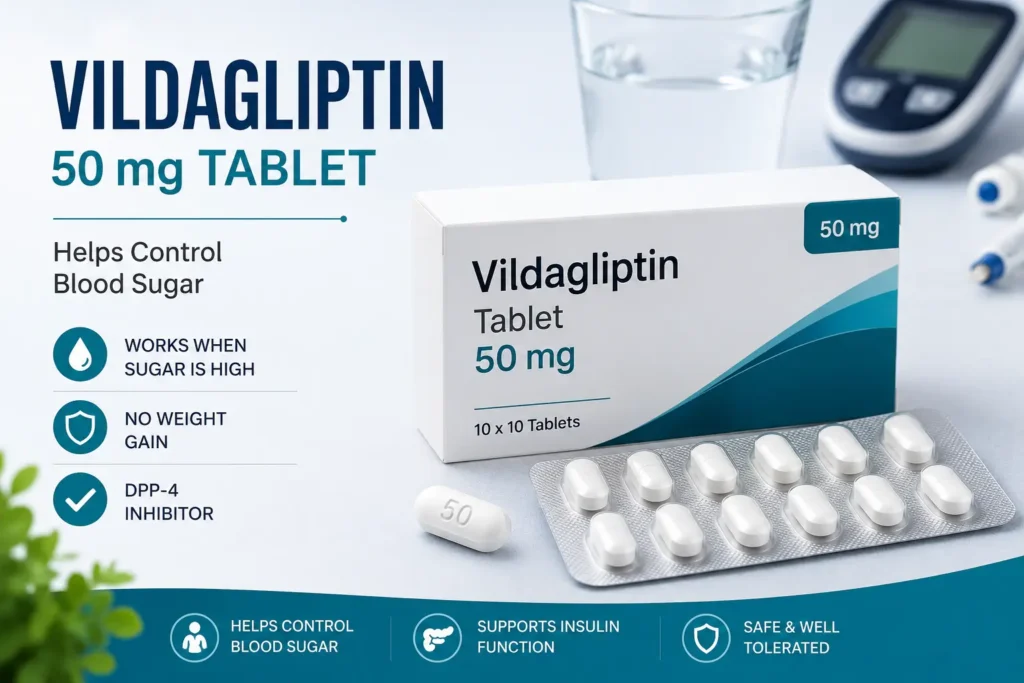
Vildagliptin tablet uses centre on lowering blood sugar in adults with type 2 diabetes. It belongs to a group of medicines called DPP-4 inhibitors, or gliptins. The usual dose is 50 mg twice a day, or 50 mg once each morning when taken with a sulfonylurea.
It rarely causes low blood sugar when used on its own and does not usually cause weight gain. Liver function tests are part of routine safety monitoring, especially in the first year.
Quick Answer
- Used for: Type 2 diabetes in adults, alone or with other medicines.
- Usual dose: 50 mg twice daily. Maximum 100 mg a day.
- With food? With or without food.
- Safety checks: Liver tests before starting and every 3 months in the first year.
How Vildagliptin Works
After a meal, the gut releases hormones called incretins that tell the pancreas to release insulin and the liver to release less sugar. An enzyme called DPP-4 breaks these hormones down quickly.
Vildagliptin blocks that enzyme, so the hormones last longer. It helps the pancreas release more insulin when blood sugar is high and has little effect on insulin release when blood sugar is low. That is why low blood sugar is uncommon when it is used alone.
Vildagliptin Tablet Uses
The main vildagliptin tablet uses are in adults with type 2 diabetes, alongside diet and exercise. Doctors may use it:
- On its own when metformin is not suitable.
- With metformin when blood sugar stays above target.
- With a sulfonylurea such as glimepiride, or with insulin.
It is not used for type 1 diabetes or diabetic ketoacidosis. If you have not been diagnosed yet, read about the early warning signs of type 2 diabetes first.
Vildagliptin 50 mg Uses and Dose
The 50 mg tablet is the standard strength. How often you take it depends on your other medicines.
Source: Galvus product information (UK and EU). This is not a personal dose. Follow your doctor’s prescription.
Doses above 100 mg a day are not recommended. You can take it with or without food, so choose times you will remember. Your doctor will check how well it is working with your home readings and your HbA1c.
Missed a dose? Take it as soon as you remember, but never take a double dose on the same day.
Vildagliptin and Metformin Together
Metformin mainly lowers the sugar released by the liver, while vildagliptin works through gut hormones and the pancreas. Because they work in different ways, they are often prescribed together, sometimes in one combination tablet taken twice daily with food.
The lactic acidosis warning comes from the metformin part. Kidney checks matter for both medicines, because kidney function affects metformin safety and vildagliptin dosing.
How Long Does Vildagliptin Take to Work?
Vildagliptin starts working from the first dose, and blood sugar may begin to improve soon after treatment starts. The full effect is judged over time. Because HbA1c reflects your average blood sugar over about 2 to 3 months, doctors usually recheck it after around three months before deciding whether the dose or plan needs to change.
Keep a simple record of your home readings in the meantime, and bring it to your appointments. One high or low number on its own does not tell you whether the medicine is working.
Vildagliptin Side Effects
Dizziness is the most commonly reported side effect. Headache, constipation, nausea and swelling of the ankles can also occur. Swelling is more likely when it is taken with pioglitazone.
When vildagliptin is combined with a sulfonylurea or insulin, the risk of low blood sugar increases. Your doctor may lower the dose of the other medicine.
Get Urgent Help
Seek urgent care for severe, ongoing stomach pain that spreads to the back, especially with vomiting, as it can be a sign of pancreatitis. Get emergency help for swelling of the face, lips, tongue or throat, or trouble breathing. Report any blistering or peeling skin to your doctor straight away.
Liver Tests: What Doctors Check
Rarely, vildagliptin can affect the liver, usually without symptoms. The product information recommends liver function tests before starting, every 3 months during the first year, and from time to time after that.
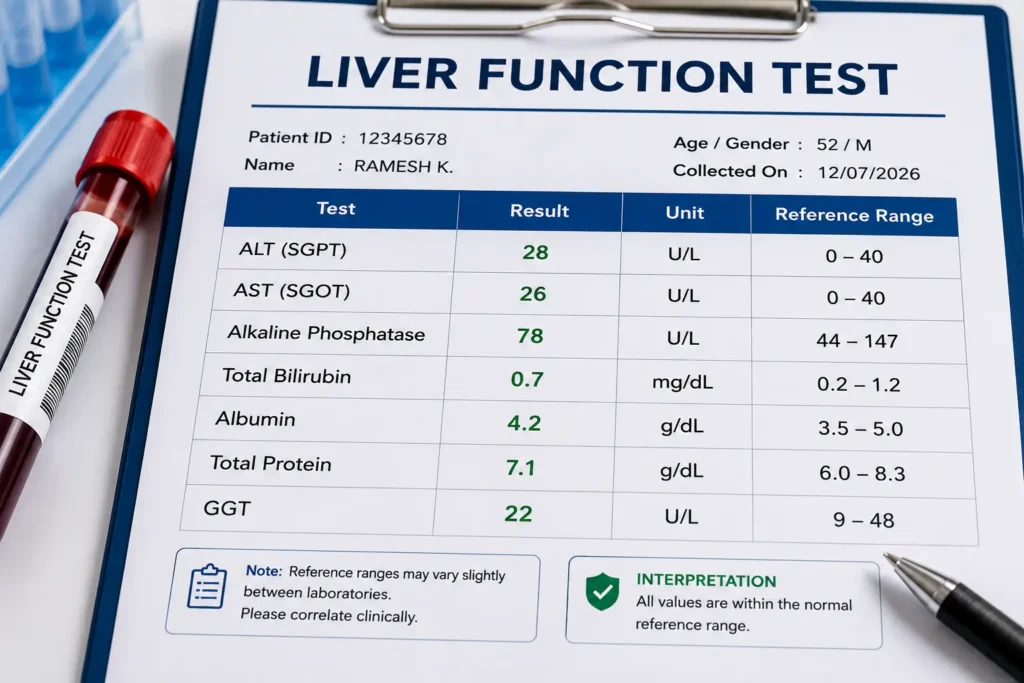
- Not started if liver enzymes (ALT or AST) are already more than 3 times the upper normal limit.
- Stopped if these enzymes stay 3 or more times above normal.
- Not restarted once it has been stopped for a liver problem, even after the tests return to normal.
If you notice yellowing of the eyes or skin, dark urine, unusual tiredness, loss of appetite or pain in the upper right tummy, contact your doctor promptly. If liver problems are suspected, your doctor may advise you to stop vildagliptin. People with existing liver disease, such as advanced fatty liver, need a doctor’s advice before using it.
Low Blood Sugar: When It Can Happen
On its own, vildagliptin rarely causes low blood sugar. With a sulfonylurea or insulin, the risk of low blood sugar increases. Early signs include shakiness, sweating, a fast heartbeat, hunger and confusion. Our blood sugar chart by age and after-meal sugar range guides explain the usual numbers.
If your reading is below 70 mg/dL, take 15 grams of fast-acting sugar, such as about 120 ml of regular fruit juice or 1 tablespoon of sugar in water. Check again after 15 minutes and repeat if still low. Sugar-free products will not help.
Emergency
Call emergency services if someone is very drowsy, confused, having a fit or cannot swallow safely. Do not give food or drink to someone who is not fully awake.
Medicines That Need Attention
Vildagliptin has relatively few important interactions, but a few combinations need attention:
- Sulfonylureas and insulin: raise the risk of low blood sugar.
- ACE inhibitors such as ramipril, often used for high blood pressure: a higher rate of angioedema, a sudden swelling of the lips, tongue or face, has been reported.
- Steroids and some water tablets: can raise blood sugar, so glucose may need closer monitoring.
Vildagliptin vs Other Diabetes Tablets
Doses shown are common adult doses and may need adjustment for kidney function, other medicines and the product prescribed. Gliptins are weight neutral, while glimepiride can cause modest weight gain.
Sitagliptin and teneligliptin are usually taken once daily, while vildagliptin is commonly taken twice daily and needs liver monitoring. A once-weekly gliptin also exists, as our guide to trelagliptin 100 mg explains. The right choice depends on your kidney and liver function, other medicines, cost and treatment goals.
Who Should Not Take Vildagliptin?
- Allergy to vildagliptin or any ingredient in the tablet.
- Type 1 diabetes or diabetic ketoacidosis.
- Liver problems, including ALT or AST above 3 times normal before starting.
- Severe heart failure (NYHA class IV), where it is not recommended.
- Pregnancy: not recommended unless specifically advised by a specialist. Breastfeeding: it should not be used.
- Under 18: not recommended, as safety has not been established.
Older adults do not usually need a different dose, and people with kidney problems can often use it at 50 mg once daily.
Is Vildagliptin Approved in the US?
No. Vildagliptin is not approved in the United States. It is authorised in the European Union and used in many other countries, including India, where it is sold under several brand names and in combination tablets with metformin.
Key Takeaways
- Know that vildagliptin tablet uses are limited to type 2 diabetes in adults, alongside diet and exercise.
- Take vildagliptin 50 mg as prescribed, and never double a missed dose.
- Keep up liver tests before starting and every 3 months in the first year.
- Watch for lows if you also take a sulfonylurea or insulin.
- Seek urgent help for severe stomach pain or facial swelling.
Frequently Asked Questions
What are vildagliptin tablet uses?
Vildagliptin is used to lower blood sugar in adults with type 2 diabetes, on its own or with metformin, a sulfonylurea or insulin, alongside diet and exercise.
What is vildagliptin 50 mg used for?
The 50 mg tablet is the standard strength for type 2 diabetes. It is usually taken twice daily, or once each morning with a sulfonylurea.
Should vildagliptin be taken before or after food?
Either is fine. Food does not affect it, so take it at the same times each day.
Is vildagliptin safe for the kidneys?
It can be used with kidney problems at an adjusted dose. Moderate or severe kidney problems usually need 50 mg once daily, decided by your doctor.
Does vildagliptin need liver tests?
Yes. Liver tests are recommended before starting, every 3 months in the first year and from time to time after that.
Can vildagliptin cause low blood sugar?
Rarely on its own. The risk increases with a sulfonylurea or insulin, and your doctor may lower the dose of the other medicine.
Which is better, vildagliptin or sitagliptin?
Both lower blood sugar. The choice depends on kidney and liver function, dosing schedule, other medicines, cost and your treatment goals.
Is vildagliptin the same as metformin?
No. They work in different ways and are often prescribed together, sometimes in one combination tablet.
References
- Electronic Medicines Compendium (UK). Galvus 50 mg tablets, Summary of Product Characteristics.
- European Medicines Agency. Galvus (vildagliptin): EPAR.
- European Medicines Agency. Vildagliptin and metformin combination: EPAR.
- Novartis. Galvus prescribing information: heart failure, pregnancy and breastfeeding.
- American Diabetes Association. Pharmacologic approaches to glycemic treatment: Standards of Care in Diabetes 2026.
- American Diabetes Association. Hypoglycemia and the 15-15 rule.
- National Institute for Health and Care Excellence. Type 2 diabetes in adults: management (NG28).
Written By
Iraphan Khan, BSN, RN, D.Pharm, Public Health Researcher. Iraphan writes evidence-based patient guides that turn medical reports and research into plain language.
Medically Reviewed By
Dr Praveen Verma, MBBS, MD Pathology
Dr Himanshu Morya, MBBS, Medical Educator
First published: 30 July 2026. Updated and reviewed: 28 September 2026. Next scheduled review: March 2027.
Disclaimer: This article is for general education and does not replace advice from your own doctor, nurse or pharmacist. Do not start, stop or change any diabetes medicine based on this article. Always follow your doctor’s advice.