
Medically reviewed: 1 September 2026 · Last updated: 1 September 2026
Leg pain, aching, or cramping that starts while walking and usually eases after you stop and rest.
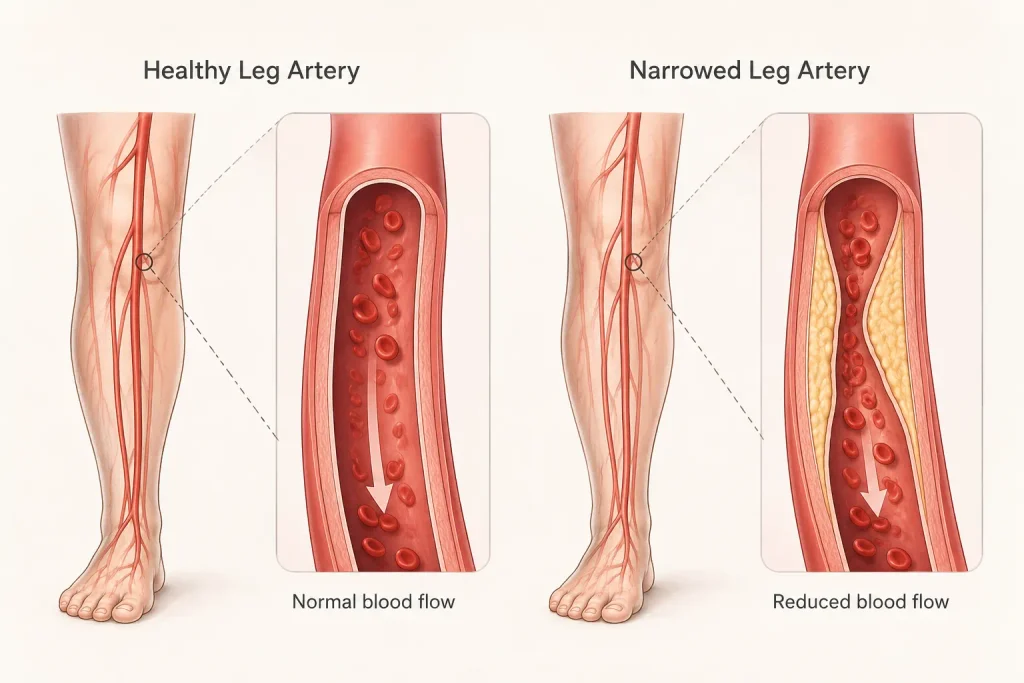
Claudication is muscle pain, cramping, or heaviness that starts when you walk and eases within a few minutes of standing still. The word comes from the Latin claudicare, which means to limp.
The calf is the most common site, though the thigh, hip, or buttock can hurt instead. Most cases trace back to peripheral artery disease (PAD), where narrowed arteries cannot send enough blood to working muscles. That link matters because PAD is also a sign of disease affecting the body’s wider blood vessels. People with PAD have a higher risk of problems such as heart attack and stroke, so knowing the warning signs of a heart attack is important.
This guide covers the symptoms, the difference between vascular and neurogenic claudication, the tests doctors use, and the treatments current guidelines support.
Quick Answer
Claudication means pain, aching, cramping, or tiredness in the leg muscles that begins during walking or exercise and usually improves with rest. It is most often a symptom of peripheral artery disease rather than a disease in itself. Pain that returns at a fixed distance and settles on standing still should always be medically assessed.
What Is Claudication?
Claudication is pain, aching, cramping, heaviness, or tiredness in the leg that starts when you walk or exercise and usually improves after you rest.
It is most often linked to peripheral artery disease (PAD). The discomfort commonly affects the calf, but it can also occur in the thigh, buttock, hip, or foot, depending on where blood flow is reduced.
Not everyone with PAD has typical claudication. Some people notice weakness, numbness, or fatigue while walking, while others may have no clear leg symptoms at all.
What Does Claudication Feel Like?
Patients rarely use the word pain on its own. They describe cramping, aching, burning, tightness, heaviness, or a leg that simply gives up. The feeling builds while you walk, forces you to slow or stop, then fades without any rubbing or massage. Uphill stretches, stairs, and fast walking bring it on sooner. It sits in the muscle rather than in a joint, and it returns at a strangely predictable point.
Where the Pain Appears
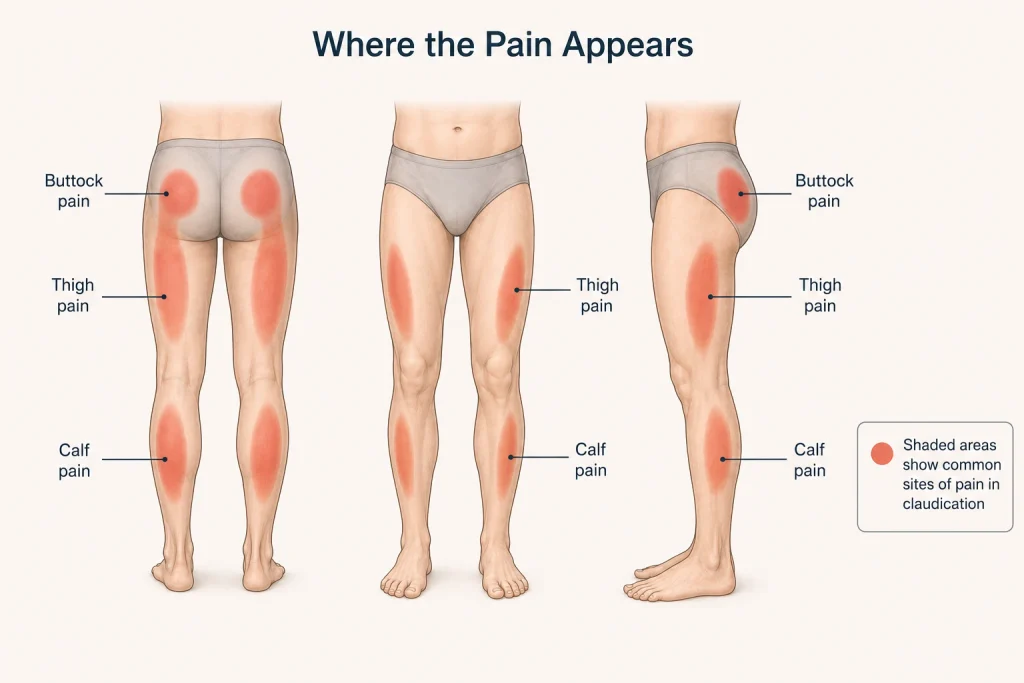
Where the pain appears can give doctors a clue about where blood flow may be reduced. The calf is the most common site, but pain can also occur in the thigh, hip, or buttock.
| Where it hurts | What it may suggest |
|---|---|
| Calf | Reduced blood flow in arteries supplying the lower leg |
| Thigh or hip | Narrowing higher up in the leg or pelvic arteries |
| Buttock | May occur with reduced blood flow in the aortoiliac arteries |
Pain location is only a clue. Doctors use the pattern of symptoms, physical examination, and vascular tests to identify the cause.
The Pattern That Gives It Away
Two details can help distinguish claudication from ordinary tiredness. First is the walking distance. The pain often starts after a similar amount of walking or exercise. Second is the recovery. It usually improves within a few minutes of stopping and resting, but may return when you start walking again.
Other Signs of Poor Blood Flow
Claudication is one signal among several. Advanced narrowing can also cause a foot that feels cold, skin that looks pale or bluish, hair loss on the lower leg, weak foot pulses, and cuts that heal slowly. Pain in the toes or foot at night, eased by hanging the leg out of bed, suggests the disease has moved beyond claudication and needs prompt vascular review.
Vascular vs Neurogenic Claudication
Not all walking-related leg pain is vascular. Neurogenic claudication comes from pressure on nerves in the lower spine, usually from lumbar spinal stenosis. The relief position is the sharpest difference. Vascular pain stops when you simply stand still. Neurogenic pain often needs you to sit down or lean forward, which is why many sufferers feel better pushing a trolley in a supermarket. The treatments are completely different, so the distinction matters.
| Feature | Vascular claudication | Neurogenic claudication |
|---|---|---|
| Underlying problem | Reduced blood flow from narrowed arteries | Nerve compression in the lower spine |
| Typical trigger | Walking a set distance, worse uphill | Standing or walking, often worse downhill |
| What relieves it | Standing still for a few minutes | Sitting down or leaning forward |
| Usual cause | Peripheral artery disease | Lumbar spinal stenosis |
| Ankle-brachial index | Usually abnormal | Usually normal |
What Causes Claudication?
Atherosclerosis is the main cause of most cases. Fatty plaque builds up inside the artery and reduces blood flow to the muscles during activity. Because PAD is part of a wider vascular disease process, people with claudication also have a higher risk of heart and blood vessel problems. This is why treatment focuses on protecting the whole cardiovascular system, not just the legs. Understanding measures of heart function, such as ejection fraction, can also help patients understand their overall heart health.
Risk Factors
Smoking is one of the strongest modifiable risk factors for PAD. Diabetes is another major risk factor. A 2024 review found PAD in about 18 percent of Indian adults with type 2 diabetes. Other risks include high blood pressure, high cholesterol, older age, kidney disease, and a family history of early heart disease.
Leriche Syndrome and Buttock Claudication
When plaque blocks the point where the aorta splits into the two iliac arteries, the result is aortoiliac occlusive disease, better known as Leriche syndrome. The classic triad is claudication in both buttocks and thighs, weak or absent pulses in the groin, and erectile dysfunction in men. It develops slowly, and smaller bypass vessels often mask it while symptoms quietly worsen.
How Is Claudication Diagnosed?
Diagnosis starts with the story: where the pain sits, how far you walk before it begins, and what settles it. The doctor then examines the legs, feels the pulses at the groin, knee, and foot, and checks the skin and any wounds.
Ankle-Brachial Index (ABI)
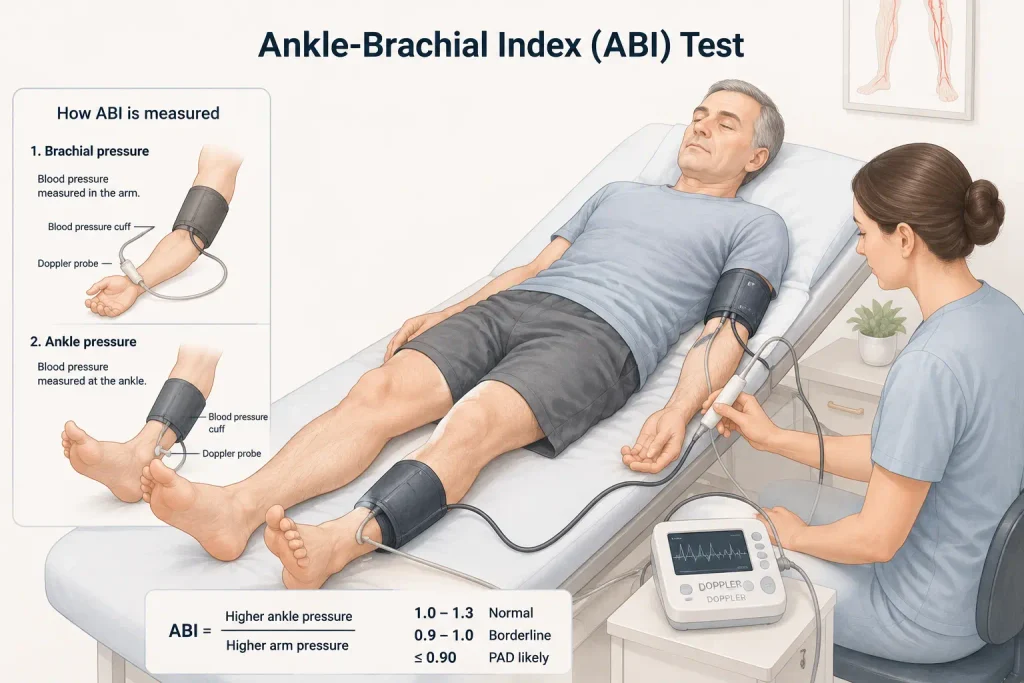
The ankle-brachial index is the standard first test. A cuff measures blood pressure at the ankle and at the arm, and the two readings are compared as a ratio. Healthy legs give a value close to 1.0 or slightly above. A value of 0.90 or below usually indicates peripheral artery disease. It is quick, painless, and available in most clinics.
Doppler Ultrasound and Other Tests
Doppler ultrasound maps blood flow and shows where an artery narrows. If resting results look normal despite a classic story, walking on a treadmill and repeating the ABI can unmask the problem. CT or MR angiography gives a detailed road map of the arteries, usually reserved for people being considered for a procedure. Blood tests for sugar, cholesterol, and kidney function complete the picture.
How Is Claudication Treated?
Treatment follows a clear order in current guidance: exercise and risk control first, symptom medicines for some, procedures for the few who need them. The 2024 American College of Cardiology and American Heart Association guideline names supervised exercise therapy as the first-line care for claudication, ahead of any stent or bypass.
Structured Exercise Comes First
Treating walking pain with walking sounds backwards, but structured exercise is a core part of claudication treatment. NICE recommends about two hours of supervised exercise a week for three months, usually walking until the pain becomes difficult, resting, then starting again. Regular training helps the muscles use oxygen more efficiently and improves walking ability. Structured home-based programmes can also help when supervised exercise is not available.
Medicines and What They Are For
Medicines have two main roles. Antiplatelet treatment and statins help reduce the risk of heart attack and stroke linked with PAD. Some medicines can also improve walking symptoms. In the United States, cilostazol may improve walking distance in some people with intermittent claudication. In the UK, NICE recommends naftidrofuryl oxalate in selected patients after exercise has not helped enough. NICE does not recommend cilostazol or pentoxifylline for this use. The choice of medicine depends on the person and should be decided with a doctor.
Risk Factor Control
Smoking is one of the strongest modifiable risk factors for PAD, so stopping is an important part of treatment. Managing blood sugar, blood pressure, and cholesterol also helps reduce cardiovascular risk. Daily foot checks matter because poor blood flow can make wounds harder to heal. The 2024 guideline recommends regular foot care for people with PAD.
When Procedures Are Considered
Angioplasty, stenting, or bypass surgery can restore blood flow through a narrowed or blocked artery. For claudication, revascularization is generally considered when symptoms remain functionally limiting despite medical treatment and structured exercise. It is also used urgently when blood flow is threatened and the limb is at risk. A procedure treats the blocked artery, so exercise and risk factor control still remain important afterwards.
When Should You See a Doctor?
Book an appointment for any leg pain that keeps returning during walking and easing with rest, even if it feels mild. Go sooner if you smoke or have diabetes. Carry three details with you: how far you can walk before pain starts, exactly where it hurts, and how long rest takes to settle it. Men should also mention erectile dysfunction if present, because it can be a vascular sign. These details often point to the diagnosis before any scan is ordered.
Emergency Warning Signs
A limb can lose its blood supply suddenly when a clot forms on a plaque or travels down from the heart. Treat the following as an emergency and call for help immediately:
- Sudden severe leg or foot pain that continues at rest
- A foot that turns cold, pale, or blue
- New numbness or weakness in the limb
- Loss of a pulse that was present before
Doctors call this acute limb ischaemia (ischemia), and every hour matters for saving the leg. Emergency numbers: 911 in the United States, 999 in the UK, 112 in India.
Key Takeaways
- Claudication usually starts during walking and settles within minutes of rest.
- The calf is the most common site, but the thigh, hip, or buttock can be involved.
- Peripheral artery disease is the usual cause, and it also raises heart attack and stroke risk.
- Structured walking, not surgery, is the first treatment guidelines recommend.
Bottom Line
Claudication is a warning that there is still time to act. A predictable pattern of leg pain on walking deserves an ankle-brachial index test, not reassurance. Once PAD is confirmed, structured walking, protective medicines, and risk-factor control can improve symptoms and protect the heart. Keeping diabetes under control also matters. Start with your family doctor before your walking distance shrinks further.
Frequently Asked Questions
What does claudication pain feel like?
Most people describe cramping, aching, tightness, or heaviness in the muscle, most often the calf, that builds during walking and forces them to stop. The discomfort fades within a few minutes of standing still. Some feel weakness or numbness rather than true pain.
Is claudication always caused by peripheral artery disease?
No. PAD is the most common cause, but nerve compression in the lower spine produces neurogenic claudication, which mimics it closely. An ankle-brachial index test, and a spine assessment when needed, separate the causes.
Does claudication go away with rest?
Yes, and that is its signature. The pain settles within a few minutes once you stop walking, without massage, then returns at a similar distance. Pain that persists at rest or wakes you at night suggests more advanced disease and needs prompt review.
What is the difference between vascular and neurogenic claudication?
Vascular claudication comes from narrowed arteries and eases when you stand still. Neurogenic claudication comes from nerve compression in the spine and usually needs sitting or leaning forward for relief. The ankle-brachial index is typically abnormal in the vascular type and normal in the neurogenic type.
Is walking good or bad for claudication?
Walking is the treatment, not the threat. Guidelines rank structured exercise as first-line care. Walking to the point of significant pain, resting, and repeating, for a total of about two hours a week as UK guidance suggests, gradually extends pain-free distance. It does not damage the leg.
Which doctor should you see for claudication?
Start with your family doctor, who can examine the pulses and arrange an ankle-brachial index test. If PAD is confirmed or suspected, you may be referred to a vascular specialist or vascular surgeon. In India, larger hospitals usually list vascular surgery as a separate department.
Buttock claudication is seen in which syndrome?
Leriche syndrome, also called aortoiliac occlusive disease. Plaque blocks the lower end of the aorta where it divides into the iliac arteries. The classic triad is claudication in both buttocks and thighs, weak or absent femoral pulses, and erectile dysfunction in men.
Can claudication be cured?
The symptom often improves dramatically even though the artery disease stays. Structured exercise can markedly extend walking distance, procedures can reopen blocked segments, and risk-factor control slows further narrowing. Think of it as a condition you control for life rather than one you cure once.
Medical Disclaimer: This article is for education and general awareness. It does not replace a consultation, examination, or advice from a qualified doctor. Always follow what your doctor tells you about your own condition and medicines. If you notice the emergency signs described above, contact local emergency services immediately.
Written by
Iraphan Khan, BSN, RN, D.Pharm
Founder of RealMedVision and creator of evidence-based health content.
Medically reviewed by
Dr Praveen Verma, MBBS, MD (Pathology)
Dr Himanshu Morya, MBBS, Medical Educator
Last medically reviewed: 1 September 2026
References
- 2024 ACC/AHA/Multisociety Guideline for the Management of Lower Extremity Peripheral Artery Disease. Circulation. 2024.
- NICE CG147. Peripheral arterial disease: diagnosis and management. 2012, updated 2020.
- NICE TA223. Cilostazol, naftidrofuryl oxalate, pentoxifylline and inositol nicotinate for intermittent claudication. 2011.
- Brown T, et al. Cilostazol for intermittent claudication. Cochrane Database of Systematic Reviews. 2021.
- Prevalence of peripheral arterial disease among individuals with type 2 diabetes mellitus in India: a systematic review and meta-analysis. 2024.
- Leriche Syndrome. StatPearls, NCBI Bookshelf. 2023.
- Mayo Clinic. Claudication: symptoms and causes.
- Cleveland Clinic. Claudication: symptoms and treatment.