
Medically Reviewed: 2 October 2026 • Last Updated: 2 October 2026 • 9 minute read
What a viral fever looks like, how long it usually lasts, what helps, and the signs that mean it is something else.
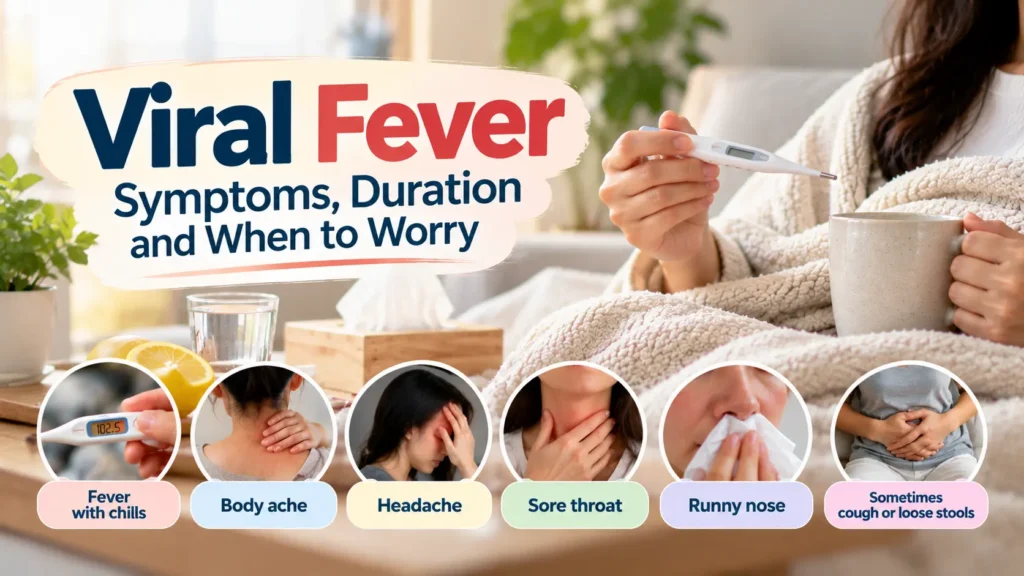
Viral fever symptoms include fever with chills, body ache, headache, tiredness, a sore throat or runny nose, and sometimes cough or loose stools. The fever may start suddenly or build over a short period, depending on the virus. “Viral fever” is not one disease. Many different viruses cause fever with similar symptoms, and in parts of India the same season that brings respiratory viruses also brings dengue, scrub typhus and typhoid.
Many uncomplicated viral infections improve within a few days, though the course depends on the virus and the person. Antibiotics do not work on viruses. Most mild viral infections need time, fluids and rest. What matters is knowing when the fever is not behaving like a simple viral illness.
Quick Answer
- Common signs: Fever with chills, body ache, headache, tiredness, sore throat, runny nose, sometimes cough or loose stools.
- How long: Many uncomplicated infections improve within a few days, some last about a week or longer depending on the virus.
- What helps: Rest, fluids and paracetamol. Antibiotics do not help.
- See a doctor: Fever that is not improving after a few days, rash, bleeding, breathlessness, severe weakness, or any fever in a baby under 3 months.
What “Viral Fever” Actually Means
In everyday medical conversations in India, “viral fever” is used to describe a short feverish illness thought to be caused by a virus. Many different viruses can be responsible: influenza, rhinoviruses, adenoviruses, enteroviruses and others. The fever is the body’s response to the infection, not the infection itself. The symptoms and duration depend on the virus and the person.
These viruses spread through droplets from coughs and sneezes, and through hands and surfaces. Children often pick up respiratory infections because of close contact with other children in schools and daycare, and they can pass them on at home.
Viral Fever Symptoms: 8 Common Signs
- Fever with chills.
- Body and muscle aches, sometimes severe enough to make getting up hard.
- Headache.
- Tiredness and weakness that can last a few days after the fever settles.
- Sore throat, runny or blocked nose with many respiratory viruses.
- Dry cough, which may linger after other symptoms go.
- Loss of appetite and nausea, sometimes with loose stools.
- Mild rash in some viral infections, usually faint and not itchy.
In Adults
Viral fever symptoms in adults usually include fever, aches and respiratory symptoms, with tiredness often lasting a little longer than the fever itself. People with long-term conditions such as asthma, diabetes or heart disease should see a doctor earlier, because infections can affect them more.
In Children
Children with viral infections may be irritable, off their food or sleepy. A baby under 3 months with any fever, and any child who is unusually drowsy, not drinking, or having a fit, needs urgent medical care.
How Long Does Viral Fever Last?
Many uncomplicated viral infections improve within a few days, while some can last about a week or longer depending on the virus. The fever may improve over the first few days, depending on the virus. A cough or tiredness can sometimes linger after the fever settles. If the fever is not starting to improve after a few days, lasts beyond 3 to 4 days, returns after settling, or comes with warning signs, see a doctor. Whether tests are needed depends on your symptoms, age, exposure and which infections are circulating locally.
General Viral Infection Timeline
A general pattern for uncomplicated viral infections. The exact course depends on the virus and the person
This is a general guide, not a fixed timeline. Different viruses can follow different courses. Based on NHS and CDC guidance on self-limiting viral illness. It does not apply to dengue, typhoid, malaria or scrub typhus.
Red Flags: When It Is Not Just Viral
These signs mean the fever needs a doctor’s assessment, and some need emergency care:
Get Medical Help
Breathlessness or chest pain. Confusion, unusual drowsiness or a fit. A rash with tiny red or purple spots, or any bleeding from the gums or nose. Persistent vomiting, or not passing urine for 8 hours or more. Severe stomach pain. Yellow eyes or skin. A stiff neck with severe headache. Fever in a baby under 3 months, or in anyone with diabetes, a weak immune system, or who is pregnant. Fever that is not improving after a few days, or returning after it had settled.
Is It Viral Fever or Something Else?
Dengue, scrub typhus, typhoid and malaria can cause fever and other symptoms that look similar to a viral infection early on. These clues help doctors decide what to test for. They are clues, not diagnostic rules.
These patterns are clues, not diagnostic rules. Testing is needed when these infections are suspected.
Our guides cover each of these in detail: scrub typhus symptoms and the eschar to look for, platelet count in dengue, and H1N1 flu, which causes a more severe, sudden illness than an ordinary viral fever. If yellow eyes or dark urine appear, see our guide to jaundice symptoms.
When Do You Need Tests?
For a stable adult with a mild, uncomplicated fever, doctors may not need extensive testing in the first day or two. The decision depends on symptoms, age, medical history, exposure and which infections are circulating locally. In a Vellore emergency department study of stable adults seen on day 1 or 2 of fever, about three quarters recovered without any investigation, and early tests were unhelpful in most of the rest. Some infections do have useful early tests, such as the NS1 antigen test for dengue, so a doctor weighs this case by case.
The usual first tests are a complete blood count, which shows platelets and white cells, and in the dengue season a dengue test. Depending on the picture, doctors add typhoid, malaria, scrub typhus or liver tests. Ask your doctor which tests are being done and why, rather than ordering a “fever panel” yourself.
Viral Fever Treatment: What Works and What Does Not
Based on NHS, CDC and WHO guidance. Medicine choices are for your doctor or pharmacist to confirm.
Unnecessary antibiotic use is an important concern in India. In a study that followed 24,062 children across four Indian sites, an antibiotic was given in 35.8% of fever episodes, highlighting the risk of unnecessary antibiotic treatment. In a community survey of 250 adults in South-East Delhi, 36.4% had taken antibiotics without a prescription in the previous three months, mostly for colds and fever. Each unnecessary course adds to resistance that makes real bacterial infections harder to treat later.
What to Eat and Drink
Appetite drops with fever, and that is fine for a few days. Fluids matter more than food: water, ORS, nimbu pani, buttermilk, soups and coconut water, taken little and often. When hungry, light meals such as khichdi, dal-rice, curd, fruit and toast are easiest to manage. Avoid alcohol, which worsens dehydration, and very oily or spicy food while the stomach is unsettled. Eat what you can tolerate. You do not need a special diet unless your doctor has advised one.
When to See a Doctor
See a doctor if the fever is high or worsening, is not improving over several days, returns after settling, or comes with any warning sign. Go the same day for a baby under 3 months, an older adult, a pregnant woman, or anyone with diabetes, heart, kidney or lung disease, because viral infections hit harder in these groups. Viral conjunctivitis can occur with some viral infections and causes red, watery eyes, and our guide to eye flu covers that.
Key Takeaways
- Expect an uncomplicated viral infection to improve within a few days with rest, fluids and paracetamol.
- Do not take antibiotics for a viral fever. They do not work on viruses.
- If dengue is possible, avoid ibuprofen and aspirin until a doctor says they are safe.
- See a doctor if fever is not improving after a few days, returns, or brings any warning sign.
Frequently Asked Questions
How long does viral fever last?
Many uncomplicated viral infections improve within a few days, while some last about a week or longer depending on the virus and the person. Tiredness or a cough can sometimes linger afterwards. Fever that is not improving after a few days needs a doctor’s assessment.
What are the symptoms of viral fever in adults?
Viral fever symptoms in adults include fever with chills, body ache, headache, tiredness, sore throat, runny nose and sometimes cough, nausea or loose stools. They can improve within a few days, but the duration depends on the virus and the person.
Do antibiotics work for viral fever?
No. Antibiotics act on bacteria, not viruses. They do not shorten a viral fever and can cause side effects and antibiotic resistance. They are used only if a doctor finds a bacterial infection.
What medicine can help with viral fever?
Paracetamol can help reduce fever and body aches when used at the recommended dose. If dengue is possible, avoid aspirin and NSAIDs such as ibuprofen until a doctor advises they are safe. Antibiotics do not help.
How do I know if it is viral fever or dengue?
You cannot reliably tell viral fever from dengue by symptoms alone. Dengue can cause fever, headache, body aches, rash and sometimes low platelets. Warning signs such as severe stomach pain, persistent vomiting or bleeding need prompt medical assessment. Dengue tests are chosen according to the number of days since symptoms began, so your doctor may use an NS1 antigen, molecular or antibody test.
Is viral fever contagious?
Yes. Most viruses that cause it spread through coughs, sneezes and hands, especially in the first few days. Hand washing, covering coughs and staying home while feverish reduce the spread.
What should I eat during viral fever?
Fluids first: water, ORS, soups, buttermilk and coconut water. Light meals such as khichdi, dal-rice, curd and fruit when hungry. Eat what you can tolerate. No special diet is needed unless your doctor has advised one.
When should I see a doctor for viral fever?
If fever is not improving after a few days, returns after settling, or comes with breathlessness, rash, bleeding, confusion, persistent vomiting or very little urine. Babies under 3 months, pregnant women, older adults and people with chronic illness should see a doctor early.
References
- NHS. Fever in adults.
- NHS. High temperature (fever) in children.
- Mayo Clinic. Fever: symptoms and causes.
- MSD Manual Consumer Version. Fever in adults.
- Karthikeyan AS, et al. Antibiotics for fever among children: findings from the Surveillance for Enteric Fever in India cohorts. J Infect Dis, 2021.
- Cureus. Self-medication with antibiotics among adults in South-East Delhi: a mixed-method study, 2025.
- Abraham SV, et al. A protocol for the emergency department management of acute undifferentiated febrile illness in India. Int J Emerg Med, 2011.
- World Health Organization. Dengue and severe dengue fact sheet.
Written By
Iraphan Khan, BSN, RN, D.Pharm, Public Health Researcher. Iraphan writes evidence-based patient guides that turn medical reports and research into plain language.
Medically Reviewed By
Dr Praveen Verma, MBBS, MD Pathology
Dr Himanshu Morya, MBBS, Medical Educator
Published and reviewed: 2 October 2026. Next scheduled review: October 2027.
Disclaimer: This article is for general education and does not replace advice from your own doctor, nurse or pharmacist. Fever that is not improving after a few days, or that comes with any warning sign, should be assessed by a doctor. Do not take antibiotics without a prescription. If you have breathlessness, confusion, bleeding, a rash or very little urine with fever, seek urgent care.