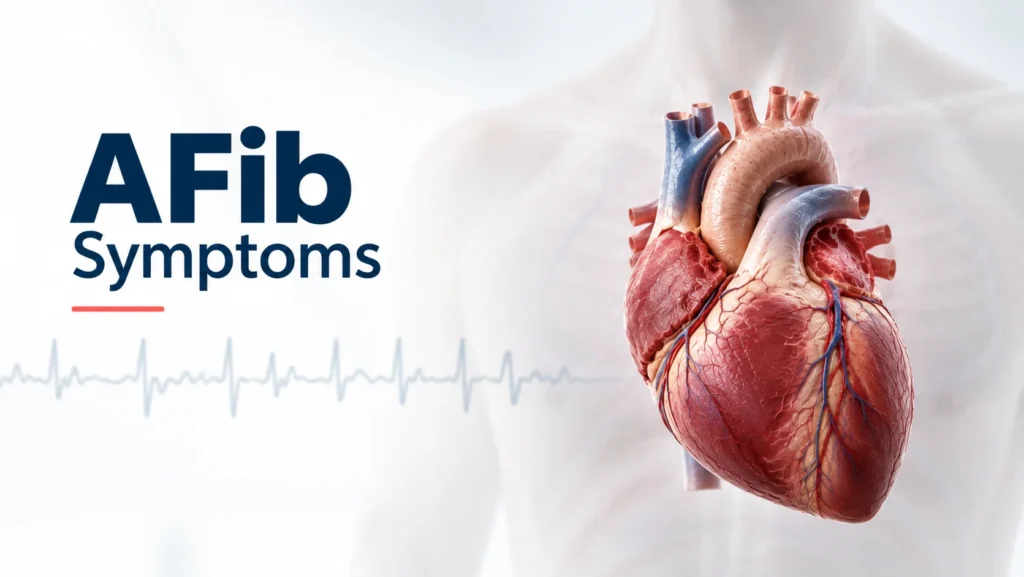
AFib 7 Early Symptoms in Adults: Never Ignore These Signs

The Warning Signs Were Always There. Most Adults Just Never Noticed Them

By the Time It Feels Serious, the Heart Has Already Been Struggling

A patient-friendly guide by RealMedVision 

Last Updated: June 2026

atrial fibrillation afib irregular heart rhythm

Key Takeaways

Early atrial fibrillation symptoms in adults include heart palpitations, unusual tiredness, shortness of breath, dizziness, chest discomfort, and an irregular pulse. The CDC reports 12.1 million Americans may have AFib by 2050. AFib raises stroke risk five times. Recognizing these warning signs early may help prevent stroke, heart failure, and other serious complications.

Introduction

You are sitting quietly when your heart suddenly starts fluttering inside your chest. Not painful, just strange. It lasts a minute, maybe two, then stops. You blame stress or too much coffee. You move on.

This is how atrial fibrillation (AFib) usually starts. Quietly. Without warning.

AFib is an irregular heartbeat condition where the upper chambers of the heart beat in a chaotic, uncoordinated way. Blood pools inside instead of flowing properly. That pooled blood can form clots. If a clot reaches the brain, it causes a stroke.

According to a 2024 study in the Journal of the American College of Cardiology, around 10.5 million US adults have AFib. Globally, the number crossed 59 million in 2019. In India, AFib is rising fast among adults with high blood pressure and diabetes.

Around one-third of all AFib cases show no symptoms at all. Millions of people have no idea their heart rhythm is already off.

Recognizing the early warning signs of AFib could help you seek treatment before a stroke or other serious complication occurs.

What You Will Learn in This Article

  • What early atrial fibrillation symptoms actually feel like
  • The 7 warning signs most adults miss
  • What silent AFib is and why it is dangerous
  • How AFib connects to stroke, heart failure, and Coronary Artery Disease
  • How doctors diagnose it using ECG Test and 2D Echo
  • Treatment options available today
  • When to call for emergency help

What Is Atrial Fibrillation?

Atrial fibrillation (AFib) is a heart rhythm problem where the heartbeat becomes fast, irregular, and completely unpredictable. Normally, the heart follows a steady electrical pattern to pump blood efficiently. In AFib, those electrical signals go haywire, causing the upper chambers of the heart to quiver instead of squeezing properly.

Most people first notice a fluttering feeling in the chest, a racing heartbeat, or unusual tiredness. Some feel short of breath even at rest. And some people feel nothing at all.

AFib matters because it directly raises stroke risk. According to the American Heart Association, people with AFib are five times more likely to have a stroke. When blood does not flow normally, clots can form inside the heart and travel to the brain.

Early detection of AFib warning signs can make a real difference.

The Growing Global Burden of Atrial Fibrillation

how atrial fibrillation develops inside the heart

How Many People Are Really Affected?

AFib is one of the fastest-growing heart rhythm problems in the world. Cases jumped from 33 million in 2010 to nearly 59 million by 2019. As populations age and conditions like high blood pressure and diabetes become more common, that number keeps climbing.

Why It Matters

What makes this truly concerning is how many people have no symptoms at all. AFib stays hidden for years while quietly raising stroke risk in the background. The CDC projects 12.1 million Americans could have AFib by 2050. India is seeing a similar rise driven by hypertension, obesity, and delayed diagnosis.

Why Early Detection Changes Everything

AFib makes stroke five times more likely. The 2024 ESC Guidelines recommend regular screening for adults over 65 and anyone with major heart risk factors. Catching it early genuinely saves lives.

7 Early Atrial Fibrillation Symptoms Adults Should Never Ignore

early atrial fibrillation symptoms in adults

Many people develop early atrial fibrillation symptoms without realizing anything is wrong. The signs often come and go. They feel harmless at first. That is exactly why so many adults ignore them for months before getting diagnosed.

1. Heart Palpitations

This is usually the first thing people notice. Your heart suddenly starts fluttering, racing, or beating in a way that feels completely off. Some people describe it as a fish flapping inside the chest. Others feel like the heart skipped a beat and then caught up suddenly. 

According to the NIH National Heart, Lung, and Blood Institute, palpitations are one of the most common early atrial fibrillation symptoms adults experience. The rhythm feels irregular, not just fast.

2. Unusual and Persistent Fatigue

This is not ordinary tiredness. You sleep a full night and still wake up exhausted. Simple tasks like cooking or climbing stairs suddenly feel draining for no clear reason. The NIH confirms fatigue as a recognized AFib symptom. 

When the heart beats irregularly, it pumps blood less efficiently. Less oxygen reaches the muscles and brain. The body feels the deficit even at rest. A 2022 PMC study found many AFib patients experienced significant fatigue long before their diagnosis.

3. Shortness of Breath

Getting breathless during activities that never bothered you before is a warning sign worth taking seriously. Walking upstairs or carrying bags suddenly feels harder than it should. Dr. Gregory M. Marcus of the University of California San Francisco has noted that breathlessness is often one of the earliest signs AFib is starting to affect heart function.

When the heart cannot pump blood efficiently, the lungs work harder to compensate. Any new unexplained breathlessness needs a proper medical check.

4. Dizziness or Lightheadedness

Most people blame dizziness on dehydration, low blood sugar, or standing up too fast. But AFib can reduce blood flow to the brain for short periods, causing that unsteady, lightheaded feeling. According to the CDC, dizziness is a commonly reported symptom among people with AFib. 

If it keeps happening with no clear explanation, especially alongside palpitations, it is worth discussing with your doctor sooner rather than later.

5. Chest Discomfort or Pressure

AFib does not always cause dramatic chest pain. Many people feel a mild tightness, heaviness, or uncomfortable pressure in the chest that comes and goes. It may not feel serious at first, which is exactly why people delay getting it checked.

The American Heart Association advises that any new chest discomfort should be medically evaluated, especially when it happens alongside an irregular heartbeat. Never dismiss even mild chest symptoms.

6. Getting Tired During Exercise Too Quickly

You used to walk thirty minutes without a problem. Now ten minutes leaves you winded. This sudden drop in exercise capacity is one of the most overlooked early atrial fibrillation symptoms in adults. The CDC officially lists exercise intolerance as a recognized AFib symptom.

When the heart rhythm becomes irregular, blood delivery to working muscles drops. The 2024 ESC Guidelines also highlight this symptom as something that often appears before AFib is even formally diagnosed.

7. An Irregular Pulse

This is the simplest warning sign and the most ignored. Place two fingers on your wrist and feel your heartbeat for one minute. In a healthy heart, beats follow a steady, predictable pattern. In AFib, the pulse feels completely random.

Dr. Prashanthan Sanders, Director of the Centre for Heart Rhythm Disorders at the University of Adelaide, has said pulse checking remains one of the easiest ways to detect possible AFib early. The NHS also recommends regular pulse checks for adults over 65.

Silent AFib: When There Are No Symptoms

Some people with AFib feel absolutely nothing. No fluttering. No dizziness. No warning at all. They go about their day feeling completely fine, not knowing their heart rhythm has already changed.

According to a retrospective cohort study reported by GE Healthcare, nearly 23% of AFib cases stayed undiagnosed over a two-year period. Most of these people had no symptoms whatsoever.

But silent AFib is not safe. Blood can still pool inside the heart, form clots, and travel to the brain. For many people, a stroke is literally the first sign that AFib was there all along.

This is why regular checkups matter so much, especially for adults over 60, and those living with high blood pressure, diabetes, Pericarditis (inflammation around the heart lining), or Rheumatic Heart Disease (heart damage caused by rheumatic fever).

AFib Symptoms Comparison Chart

The table below compares common early atrial fibrillation symptoms and the conditions they are often mistaken for.

Symptom

What It May Feel Like

Commonly Mistaken For

Heart Palpitations

Fluttering, racing, or irregular heartbeat

Anxiety, stress, too much caffeine

Fatigue

Feeling unusually tired even after rest

Poor sleep, stress

Shortness of Breath

Breathlessness during light activity or while lying down

Poor fitness, asthma, aging

Dizziness

Lightheadedness or feeling unsteady

Dehydration, low blood pressure

Chest Discomfort

Mild tightness, pressure, or heaviness in the chest

Indigestion, muscle strain

Exercise Intolerance

Getting tired much faster than before

Age, weight gain, lack of exercise

Irregular Pulse

Uneven, unpredictable heartbeat pattern

Normal heartbeat changes

Who Is Most At Risk?

common causes of atrial fibrillation afib

Some people are more likely to develop AFib than others. Knowing your risk factors is honestly one of the smartest things you can do for your heart.

Age over 65: The heart’s electrical system naturally becomes less stable with age. AFib becomes significantly more common after 65.

High Blood Pressure: Constant pressure on the heart walls gradually changes the shape and size of the upper chambers, making irregular rhythm more likely.

Diabetes: Damages the nerves and blood vessels that keep the heart rhythm stable over time.

Obesity: Extra body weight causes the heart to work harder and leads to atrial enlargement.

Sleep Apnea: Repeated drops in oxygen during sleep directly stress the heart and trigger irregular rhythms.

Heavy Alcohol Use: Even occasional binge drinking can trigger AFib episodes in sensitive individuals.

Smoking: Smoking damages blood vessels over time and can make irregular heart rhythms more likely.

Does AFib Run in Families?

Yes, genetics do play a role. If a parent or sibling has been diagnosed with AFib, your own risk is noticeably higher. Recent genetic studies have identified several gene variants directly linked to atrial fibrillation. These variants affect how electrical signals travel through the heart.

This does not mean AFib is guaranteed if it runs in your family. But it does mean you should be more alert. Mention your family history to your doctor, especially if you already have high blood pressure or diabetes. Early screening can catch problems before they become serious.

How Is Atrial Fibrillation Diagnosed?

ECG Test (Electrocardiogram)​

When early atrial fibrillation symptoms show up, the first test a doctor orders is usually an ECG Test. It is painless and takes just a few minutes. The machine records the heart’s electrical activity. In AFib, the normal P-waves disappear and the rhythm looks completely irregular on the tracing.

Holter Monitor

AFib often comes and goes. A regular ECG can easily miss an episode. That is where a Holter monitor helps. You wear this small portable device for 24 to 48 hours during your normal daily routine. It records every heartbeat continuously and helps doctors catch irregular rhythm patterns they would otherwise miss.

2D Echo (Echocardiogram)

A 2D Echo is an ultrasound scan that shows the heart from inside. Doctors use it to check how well the heart pumps blood, measure the ejection fraction, and spot valve problems like Aortic Stenosis. It also reveals any structural changes in the heart that may be contributing to AFib episodes.

Blood Tests

Blood tests are a quiet but important step. Doctors check thyroid function, kidney function, and electrolyte levels. An overactive thyroid can directly trigger AFib in some people and is a fully treatable cause. Catching it early through a simple blood test can sometimes resolve the rhythm problem completely.

Treatment Options for Atrial Fibrillation

Good news—AFib can often be managed successfully. Treatment usually focuses on three goals: slowing the heart rate, restoring normal rhythm, and reducing stroke risk. The right approach depends on the type of AFib, the patient’s age, overall health, and how severe the symptoms are.

Rate Control

When the heart is beating too fast, doctors prescribe medicines to bring it down to a safe level. Common options include beta-blockers like metoprolol and calcium channel blockers. These medicines help the heart work more efficiently and can ease symptoms like palpitations, dizziness, and shortness of breath fairly quickly.

Rhythm Control

Some patients need the heart rhythm fully restored, not just slowed down. Doctors may prescribe anti-arrhythmic medicines like flecainide or amiodarone. When medicines are not enough, electrical cardioversion is an option. This procedure uses a controlled electric shock to reset the heart’s rhythm while the patient is comfortably under sedation.

Stroke Prevention

Preventing stroke is honestly the most critical part of AFib treatment. Doctors prescribe anticoagulants (blood thinners) to stop dangerous clots from forming inside the heart. According to the 2023 ACC/AHA/ACCP/HRS guidelines, newer direct oral anticoagulants like apixaban and rivaroxaban are now preferred over older warfarin because they are safer and easier to manage.

Catheter Ablation

When medicines are not controlling symptoms well enough, catheter ablation becomes an option. A cardiologist guides thin tubes into the heart and uses heat or cold therapy to destroy the abnormal electrical pathways causing AFib.

According to a 2023 systematic review in PubMed Central, long-term success rates can reach nearly 80% with multiple procedures. Both the 2023 ACC/AHA and 2024 ESC guidelines recommend it for selected patients.

AFib Risk Factor Chart

The table below highlights some of the most common risk factors linked to atrial fibrillation and explains how they affect the heart.

Risk Factor

Why It Increases AFib Risk

High Blood Pressure

Enlarges and stresses the atria over time

Coronary Artery Disease

Damages heart structure and electrical pathways

Diabetes

Damages nerves and blood vessels supplying the heart

Obesity

Causes atrial enlargement and inflammation

Rheumatic Heart Disease

Damages heart valves, disrupting rhythm

Heavy Alcohol Use

Directly toxic to heart muscle tissue

Age Over 65

Natural atrial tissue changes increase instability

Smoking

Damages blood vessels and increases AFib risk

Lifestyle Changes That Genuinely Help

Medicines alone are not always enough. Daily habits play a real role in managing AFib. Small consistent changes can reduce symptoms, lower episode frequency, and protect your heart over the long term.

Keep Blood Pressure Under Control:

High blood pressure puts constant strain on the heart over time. It is one of the biggest drivers of AFib. Data from both ICMR and the NHS confirm that uncontrolled hypertension significantly raises the risk of developing an irregular heart rhythm.

Limit or Avoid Alcohol:

Even small amounts of alcohol can trigger AFib episodes in some people. Researchers have consistently linked alcohol consumption to irregular heart rhythms. If you already have AFib, cutting back or stopping completely may noticeably reduce how often episodes occur.

Maintain a Healthy Weight:

Extra weight puts added pressure on the heart. A clinical trial published in the Journal of the American College of Cardiology found that sustained weight loss significantly reduced both the frequency and severity of AFib episodes in overweight patients.

Stay Physically Active:

Walking, cycling, and swimming are all good for heart health and can help manage AFib symptoms. However, the 2024 ESC guidelines note that extreme endurance exercise like marathon training may actually increase AFib risk in some individuals.

Quit Smoking and Manage Other Conditions:

Stopping smoking, controlling diabetes, reducing stress, and treating sleep apnea are all evidence-backed steps that support heart health. These changes not only help manage AFib but also lower the risk of future complications like stroke and heart failure.

When to See a Doctor

If you notice palpitations, unusual fatigue, shortness of breath, or an irregular pulse, do not wait.

These are recognized early atrial fibrillation symptoms that deserve a proper medical check.

Many people delay because the symptoms come and go and feel manageable.

That delay is exactly what allows AFib to progress quietly.

AFib is not a condition that gets better on its own without treatment.

The earlier it is caught, the easier it is to control and the lower your risk of stroke or heart failure.

Book an appointment. Get an ECG Test done. It is simple, painless, and could genuinely change your outcome.

Emergency Warning Signs

Call 999 (UK) / 911 (USA) / 112 (India) immediately if you or someone around you experiences any of these:

  • Sudden severe chest pain or crushing pressure
  • Sudden weakness or numbness on one side of the face, arm, or leg (possible stroke)
  • Sudden difficulty speaking or understanding speech
  • Sudden severe headache with no known cause
  • Fainting or complete loss of consciousness
  • Sudden severe breathlessness that does not improve with rest

These are signs of a stroke or acute cardiac emergency. Every minute matters.

Prognosis and Recovery

Most people with AFib go on to live full, active, and healthy lives. The key is staying consistent with treatment.

The 2023 ACC/AHA guidelines confirm that managing risk factors early, taking blood thinners for stroke prevention, and keeping heart rhythm under control all lead to significantly better long-term outcomes.

Dr. Mellanie True Hills, founder of StopAfib.org and a widely recognized patient advocate in cardiology awareness, has noted that AFib patients who stay actively engaged with their care consistently report better quality of life and fewer serious complications over time.

The earlier AFib is caught, the more options you have. And the lower your risk of stroke, heart failure, and other complications becomes.

One important reminder. Heart Attack symptoms can sometimes feel very similar to AFib. Both can cause chest discomfort and breathlessness. If you are ever unsure which one you are dealing with, do not try to figure it out alone. Get medical help immediately.

Frequently Asked Questions (FAQs)

Q1: Can AFib go away on its own?

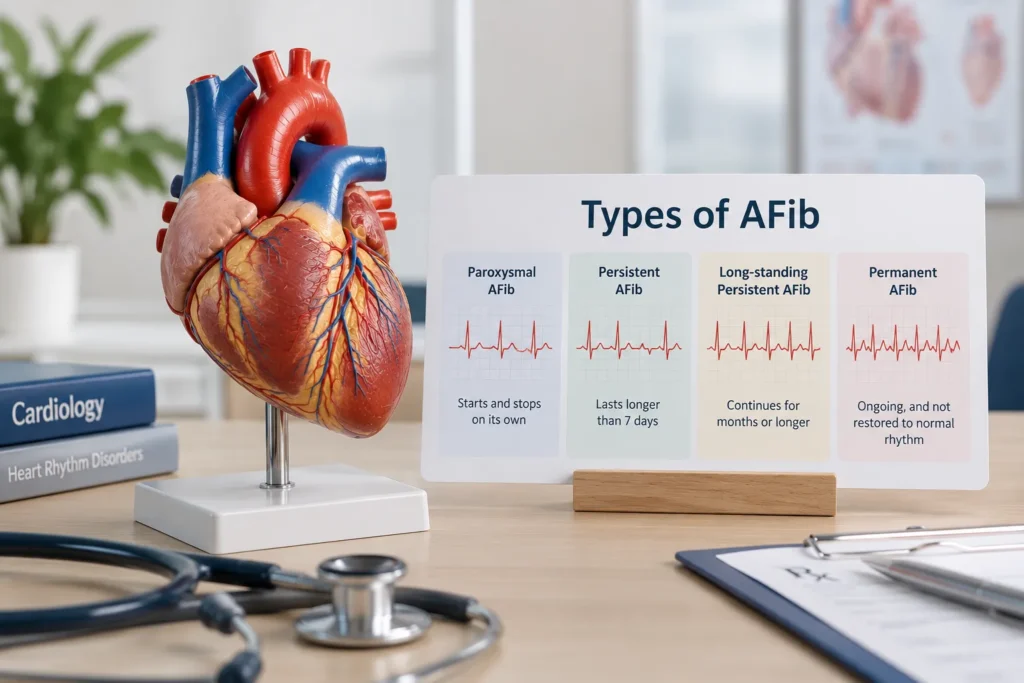
Sometimes yes, but not always. In early stage AFib, called paroxysmal AFib, episodes can stop on their own within minutes or hours. But without treatment, AFib usually comes back more often and lasts longer each time. According to the 2023 ACC/AHA guidelines, even early AFib needs medical care to prevent stroke. It rarely fixes itself permanently without treating the root cause.

Q2: Can young people get early atrial fibrillation symptoms?

Yes, they can. AFib is more common after age 65, but younger adults get it too. Common reasons include an overactive thyroid (hyperthyroidism), heavy drinking, congenital heart disease (a heart problem present from birth), or extreme exercise. Any young adult with repeated palpitations or an irregular pulse should get an ECG Test done. Do not assume it is just anxiety.

Q3: Is AFib the same as a heart attack?

No, they are two different things. A heart attack happens when blood flow to the heart muscle gets blocked, usually because of Coronary Artery Disease. There are two types, STEMI vs NSTEMI, based on how severe the blockage is. AFib is an electrical problem, not a blockage. But both can cause chest discomfort and breathlessness, which is why people confuse them. If you are unsure, always get checked immediately.

Q4: Can AFib cause memory loss or dementia?

Research suggests it can. AFib is linked to a higher risk of memory decline and dementia. The reason is that AFib can cause tiny silent clots to reach the brain repeatedly over time. According to research reviewed in the 2023 ACC/AHA guidelines, taking blood thinners properly may help reduce this risk. This is another reason early atrial fibrillation symptoms should never be ignored.

Q5: What does an irregular pulse actually feel like?

It feels like your heartbeat has no steady pattern. Some beats come quickly, others have a small gap, and nothing feels predictable. It is different from a heartbeat that is just fast. Place two fingers on your wrist and count for one minute. If the rhythm feels random and uneven, tell your doctor and ask for an ECG Test.

Q6: Can AFib damage the kidneys?

Yes, over time it can. When the heart beats irregularly, it pumps less blood efficiently. The kidneys receive less blood flow as a result. Research shows that AFib and chronic kidney disease are closely connected. This also matters for treatment because many blood-thinning medicines need dose adjustments depending on how well the kidneys are working.

Q7: Is AFib passed down in families?

Genetics can play a role. Several studies have identified gene variants linked to higher AFib risk. If a close family member was diagnosed with AFib before age 60, it is worth mentioning to your doctor. Especially if you also have high blood pressure, diabetes, or other heart risk factors. Early screening can catch early atrial fibrillation symptoms before they become a bigger problem.

Medical Disclaimer

This article is written for general educational awareness only. It is not medical advice, diagnosis, or a treatment plan. If you notice any early atrial fibrillation symptoms such as palpitations, irregular pulse, breathlessness, or chest discomfort, please see a qualified doctor for proper evaluation. In an emergency, call 999 (UK), 911 (USA), or 112 (India) immediately.

About the Author

Iraphan Khan, BSN | D.Pharm | CMLT, is a Healthcare SEO Strategist and Medical Content Writer at RealMedVision, creating clinically accurate content optimized for Google and AI search.

Medically Reviewed By

Dr Praveen Verma, MBBS, MD—Diagnostic & Pathology

Dr Himanshu Morya MBBS—Clinical Accuracy & Patient Safety

Kalpna Singh Shekhawat BSN NP—Patient Care & Practical Accuracy

References & Sources:

1. Centers for Disease Control and Prevention (CDC). Atrial Fibrillation — About AFib, Risk Factors, and Prevention. Updated 2024.

2. American Heart Association (AHA). What Is Atrial Fibrillation? Symptoms, Causes and Treatment.

3. National Heart, Lung, and Blood Institute (NHLBI), NIH. Atrial Fibrillation — Symptoms, Causes, Treatment.

4. Joglar JA et al. 2023 ACC/AHA/ACCP/HRS Guideline for the Diagnosis and Management of Atrial Fibrillation. Circulation. 2024.

5. Rienstra M et al. Spotlight on the 2024 ESC Guidelines for Management of Atrial Fibrillation. Europace. PubMed Central. 2024.

6. Noubiap JJ et al. Global and Regional Prevalence of Atrial Fibrillation. Journal of the American College of Cardiology. 2024.

7. Chugh SS et al. Worldwide Epidemiology of Atrial Fibrillation — A Global Burden of Disease Study. Circulation. American Heart Association Journals. 2014.

8. NHS UK. Atrial Fibrillation — Symptoms, Diagnosis and Treatment.

9. Mayo Clinic. Atrial Fibrillation — Symptoms and Causes.

10. Cleveland Clinic. Atrial Fibrillation (AFib) — Overview, Symptoms and Treatment Options.

11. GE Healthcare. Silent AFib — Risks of Undiagnosed Atrial Fibrillation for Patients and the Healthcare System. 2024.

12. Indian Council of Medical Research (ICMR). Cardiovascular Disease Burden and Risk Factors in India — National Report.

Scroll to Top